
Enhanced Geothermal Systems
Deep beneath our feet, the earth holds a vast reservoir of heat that remains trapped within solid rock layers. While traditional geothermal plants rely on natural steam vents, we must now look toward tapping these dry, hot rock formations to scale our global energy production.
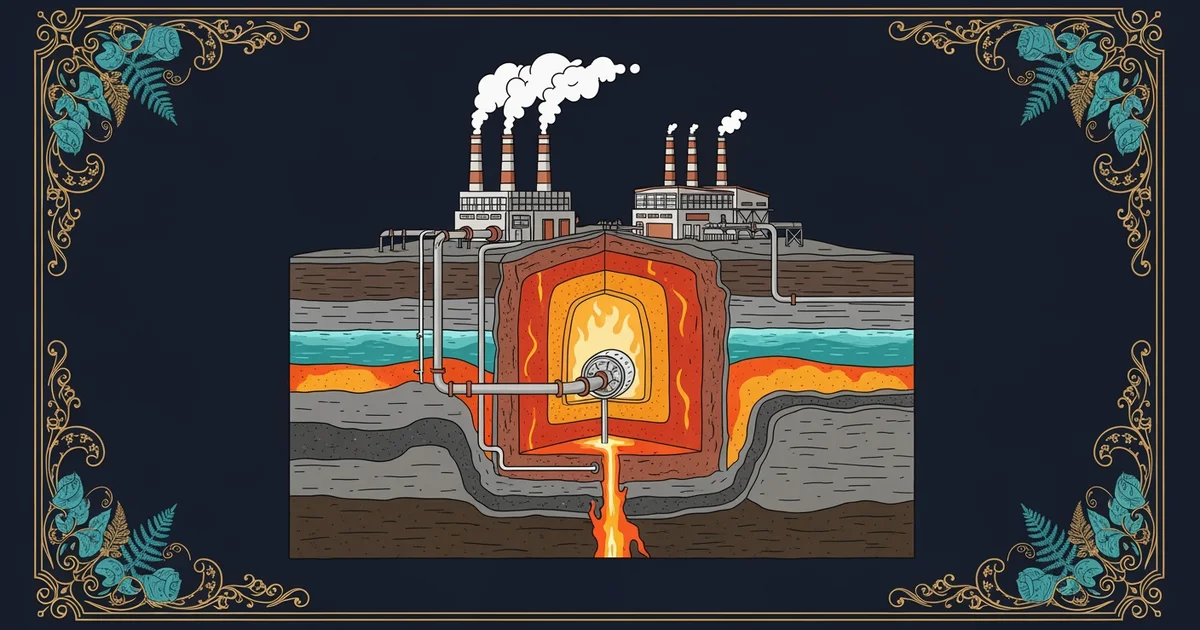
Engineering the Earth for Heat
To access this trapped energy, engineers utilize Enhanced Geothermal Systems to create artificial pathways within the deep crust. This process begins by drilling deep wells into hot, impermeable rock that lacks the natural water flow found in volcanic areas. Once the depth is reached, engineers pump high-pressure fluids into the rock to fracture it and create a network of cracks. This engineered reservoir acts like a giant underground radiator, allowing cold water to circulate through the hot rock and return to the surface as heated fluid. Think of this process like a home heating system where you install pipes through a furnace to distribute warmth throughout your living space. Without this artificial fracturing, the heat remains locked in the rock where it cannot be used to generate electricity for our modern world.
Key term: Enhanced Geothermal Systems — a collection of techniques used to create artificial geothermal reservoirs in hot rock that lacks natural water or permeability.
Scaling Energy Through Artificial Reservoirs
Once the reservoir is established, the system must maintain a constant flow of fluid to generate reliable power for the grid. This requires careful management of the pressure within the rock, as the cracks must stay open to allow for efficient heat transfer. If the pressure drops, the flow of water slows down, which reduces the amount of energy the plant can produce. Engineers monitor the rock conditions constantly to ensure that the underground radiator functions at peak performance levels over many decades. This technology is vital because it allows us to place geothermal plants almost anywhere, rather than limiting them to rare volcanic regions.
| Feature | Traditional Geothermal | Enhanced Geothermal |
|---|---|---|
| Heat Source | Natural steam vents | Hot, dry rock layers |
| Site Location | Only volcanic areas | Almost any geography |
| Reservoir | Naturally occurring | Artificially created |
The ability to place these plants near population centers reduces the need for long-distance power lines, which makes the entire electrical grid more efficient. By integrating these systems with the Future Energy Integration strategies discussed in previous stations, we can balance the variable output of solar and wind power. This creates a stable, constant "baseload" power source that supports our society when the sun is not shining or the wind is not blowing.
- Fracturing: High-pressure fluids crack the deep rock to increase surface area for heat exchange.
- Circulation: Water travels through these new cracks, absorbing intense heat from the surrounding rock mass.
- Extraction: The heated fluid returns to the surface, where its thermal energy drives turbines for power.
These three steps ensure that we can harness the constant heat trapped beneath our feet regardless of local surface conditions. By transforming hot, dry rock into a functional heat exchanger, we move closer to a sustainable energy future that relies on the earth itself. This technology provides a bridge between our current fossil fuel dependence and a future powered by clean, reliable, and constant geothermal energy sources. We are no longer limited by geography, as the heat beneath our feet is accessible through modern engineering innovation and careful geological management.
Harnessing geothermal energy requires engineering artificial reservoirs that turn deep, hot rock into a reliable and sustainable source of power for the global grid.
We have now explored how deep earth heat can provide a stable, constant energy supply that integrates seamlessly with other renewable technologies to power our modern world.