
The Earth as a Heat Engine
Imagine standing on a frozen lake where the ice beneath your feet feels cold, yet deep down, a massive furnace burns with endless intensity. This hidden fire keeps our planet alive and provides the power we need to survive in space. Most people assume the ground is just a solid, dead rock that simply holds us up as we walk around. In reality, the Earth functions like a giant machine that constantly processes heat from its deep, molten center. By understanding this massive heat engine, we can learn how to tap into a resource that never runs out or fades away.
The Internal Structure of Our Planet
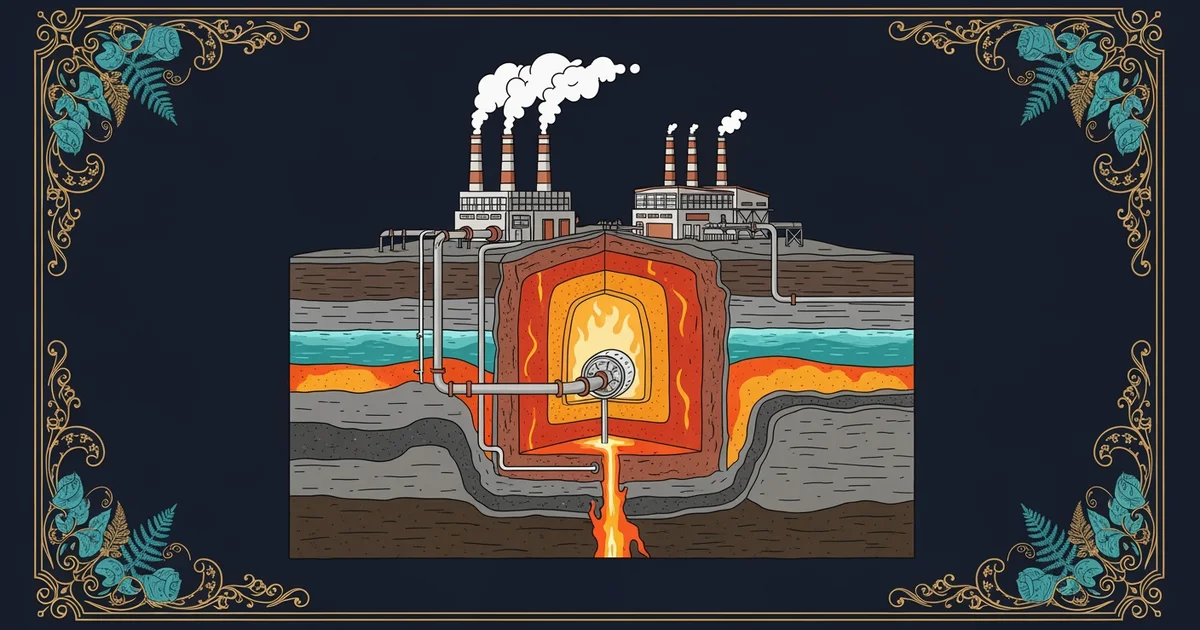
To see how this engine works, we must look at the layers that make up our home. The Earth consists of a thin outer crust where we live, followed by a thick mantle, and finally a dense core. The core acts as the furnace of this system, holding temperatures that rival the surface of the sun. This heat moves outward through the mantle, much like how heat moves from a stove burner into a pot of thick soup. As the hot material rises, it slowly cools and sinks back down in a steady, circular motion. This movement is the secret behind the power trapped beneath our feet.
Key term: Geothermal energy — the natural heat generated and stored inside the Earth that can be used to provide power.
This process is similar to how a radiator warms a house during the cold winter months. Just as the furnace creates heat that moves through pipes to reach every room, the core pushes energy toward the crust. If we can reach these hot zones, we gain access to a constant supply of energy that does not rely on the sun or wind. This system is always running, which makes it a very reliable source of fuel for our modern electrical grid.
Why the Earth Stays Hot
Many people wonder why the planet has not cooled down after billions of years of existence. The answer lies in the radioactive decay of elements found deep within the rocky layers of the mantle. These elements act like a slow-burning fuel source that keeps the internal engine running at high temperatures. Think of it like a battery that slowly releases its charge over a very long time, ensuring the planet stays warm from within. Without this internal fuel, the Earth would have cooled off long ago, and our world would be a dead, frozen rock floating in space.
We can track the different sources of this heat through the following list:
- Primordial heat remains from the original formation of the planet when massive collisions created intense energy that was trapped deep inside during the cooling process.
- Radioactive decay involves unstable atoms breaking down over time, which releases steady bursts of heat that keep the mantle and core at high temperatures.
- Frictional heating occurs as dense materials sink toward the center of the planet, creating heat through the constant movement and rubbing of heavy layers against each other.
| Layer | State of Matter | Relative Temperature | Role in System |
|---|---|---|---|
| Crust | Solid Rock | Coolest | Insulation |
| Mantle | Plastic Solid | Hot | Heat Transfer |
| Core | Liquid/Solid | Hottest | Energy Source |
By comparing these layers, we see that the Earth is not just one solid piece of stone. Each layer plays a specific part in moving heat from the center to the surface where we can use it. This constant flow of energy is the reason we can dream of a future powered entirely by the ground beneath our feet. By the end of this learning path, you will understand how to build systems that capture this heat to provide sustainable electricity for everyone.
The Earth functions as a massive, self-sustaining heat engine that uses internal radioactive decay to maintain a constant supply of thermal energy for the surface.
This path will guide you through the history of heat use before showing you the modern technology needed to harvest geothermal power for our homes.