
Hydrothermal Reservoirs
Imagine you are boiling water in a heavy metal kettle placed directly over a roaring campfire. The water traps the intense heat from the flames and transforms into high-pressure steam that rattles the lid. Deep beneath the surface of the Earth, a similar process occurs within massive geological structures known as hydrothermal reservoirs. These natural systems act as giant, underground pressure cookers that capture heat from the molten rock below. The heat then warms trapped water to extreme temperatures, creating a powerful source of energy that we can tap into for power.
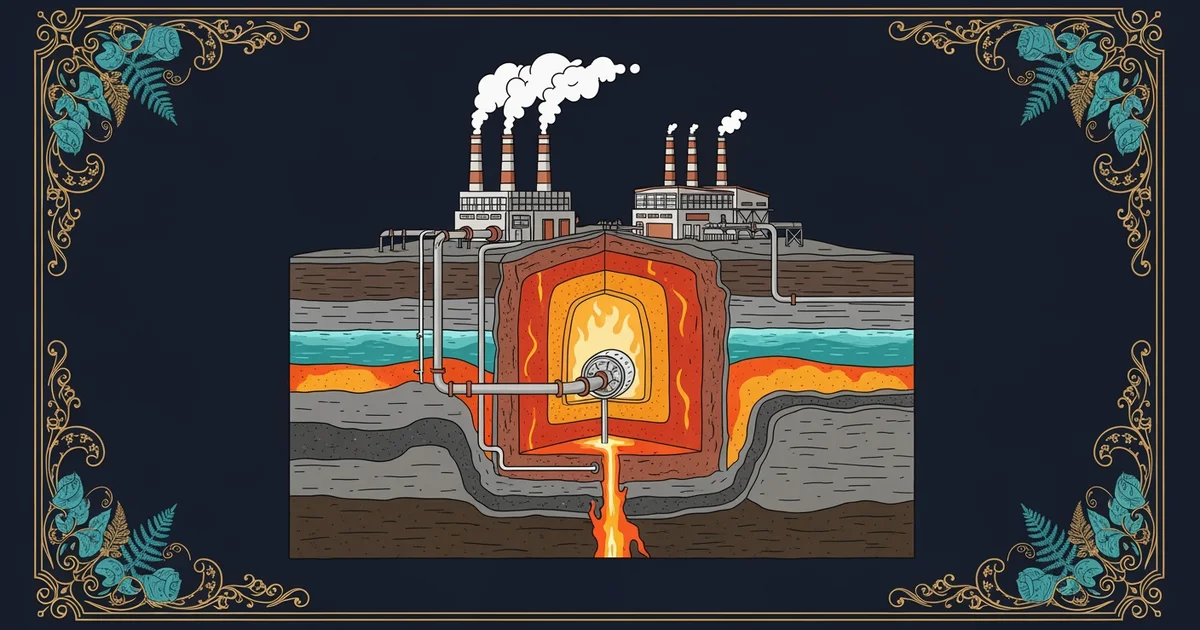
The Anatomy of Underground Steam Pockets
To understand how these reservoirs function, we must first look at the layers of rock beneath our feet. Permeable rock layers allow water to seep deep into the crust through cracks and porous gaps. This water travels downward until it hits a layer of hot, solid rock heated by the mantle. Because the water remains trapped beneath a layer of impermeable rock, it cannot escape to the surface. The pressure from the surrounding earth keeps the liquid in a superheated state even at temperatures that would normally turn it to gas. This pressurized water slowly absorbs thermal energy from the hot rock over long periods of time.
Key term: Hydrothermal reservoir — a subsurface zone of permeable rock containing hot water or steam that is trapped by overlying impermeable layers.
When we drill into these zones, the sudden release of pressure allows the superheated water to flash into steam instantly. This steam rises rapidly through the borehole with enough force to spin heavy turbines for electricity. Think of the reservoir like a massive, natural rechargeable battery that stores heat energy inside water molecules. Just as a battery holds chemical energy for later use, these reservoirs store the Earth's internal heat within the fluid. If we extract the steam too fast, the system needs time to replenish its heat and water levels.
Transporting Heat Through Geological Media
Water serves as the primary transport mechanism for moving deep thermal energy toward the surface layers. Without the presence of circulating water, the heat would remain locked inside solid stone where it is difficult to extract. The water acts as a fluid conveyor belt that picks up energy from the hot rock and carries it into the reservoir. This continuous movement ensures that the heat remains concentrated in one specific, accessible location for human use. The efficiency of this process depends on three main geological factors that determine if a site is suitable for energy production.
| Geological Factor | Role in Reservoir Function | Impact on Heat Storage |
|---|---|---|
| Permeability | Allows water to move freely | High flow increases yield |
| Heat Source | Provides the thermal energy | Determines total capacity |
| Cap Rock | Seals the steam and water | Prevents heat from escaping |
These three factors work together to keep the system stable and productive over many years of operation. The cap rock is especially vital because it prevents the steam from leaking away into the upper soil layers. If the cap rock is too thin or fractured, the heat escapes before it can be harvested effectively. Engineers look for these specific conditions when they search for new locations to build geothermal power plants. By identifying these natural traps, we can reliably harness the immense, constant heat trapped beneath our feet to power our modern world sustainably.
Hydrothermal reservoirs function as natural thermal batteries where water traps and stores deep earth heat beneath impermeable rock layers for human extraction.
The next Station introduces thermal conductivity, which determines how efficiently heat moves through the solid rock surrounding these reservoirs.