
Predicting Future Geological Records
Imagine you are digging a hole in your backyard to plant a tree. As your shovel bites deep into the soil, you find layers of dark earth, sand, and perhaps a buried piece of plastic from a discarded bottle. This simple act of digging reveals a timeline of your local environment. Geologists look at the entire planet in the same way to understand our past. They study layers of rock to see how life and climate changed over millions of years. Now, we must ask how our modern lifestyle will appear to future scientists who dig through the crust. Will they see a layer of concrete, plastic, or something else entirely?
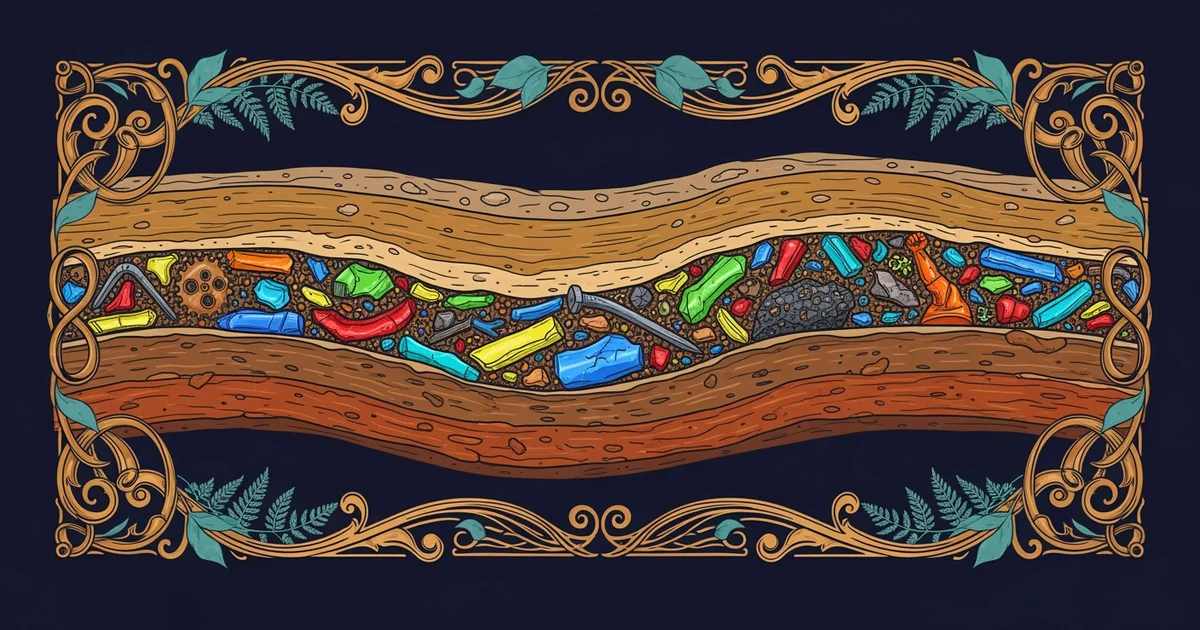
The Formation of Synthetic Strata
When we consider the future geological record, we must look at the materials that persist for ages. Human activity creates new types of technofossils that will sit within the Earth for thousands of years. These objects include everything from microplastics in the ocean to massive deposits of landfill waste. Much like a layer of volcanic ash marks a specific moment in time, our discarded items will form a distinct marker in the rock record. This layer will be easy for future researchers to identify because these materials do not occur in nature. The sheer volume of these synthetic items guarantees that they will become a permanent part of the geological column.
Key term: Technofossils — human-made objects or materials that become preserved in the geological record as indicators of our era.
Think of this process like a company keeping a detailed ledger of every transaction made during a fiscal year. If the company only records its sales but forgets to note its massive debts, the ledger provides a false view of its health. Our current geological record is the ledger of the Earth. By depositing plastic and concrete into the environment, we are writing our own entries into the planet's history. Future geologists will read these entries to understand the scale of our impact. They will see that we changed the chemistry and the physical structure of the Earth in a very short time.
Predicting Future Geological Signatures
Beyond individual objects, the way we change the landscape will also leave a lasting mark. We move more sediment through construction and mining than all natural rivers combined. This massive redistribution of earth creates new patterns in how layers form over time. When we build cities, we create artificial landforms that will eventually be buried. These structures act as a signature of our presence that future scientists will interpret as a major event. We are essentially building a new layer of the Earth that is composed of our own materials.
Predicting what this record will look like requires us to consider several factors:
- Sedimentation rates change significantly because human construction projects trap loose soil and stone, which prevents natural erosion from spreading materials across the landscape in the usual way.
- Chemical signatures in the soil will reflect high levels of heavy metals and synthetic compounds that do not exist in the natural cycle of the planet's geochemical evolution.
- Fossilization patterns for modern species will be skewed because we have reduced biodiversity, leaving behind a record that shows a massive loss of life during our time.
These factors combine to create a unique geological signal that is unlike anything that came before us. By analyzing these markers, future researchers will identify the exact point where human influence became the dominant force on Earth. They will recognize that our activities changed the very foundation of the planet's surface. This realization forces us to see our daily actions as long-term geological events. We are not just living on the Earth, but we are actively shaping its future crust.
The geological record of the future will be defined by the widespread accumulation of human-made materials and the permanent alteration of natural landscape patterns.
Next, we will explore the complex ethical questions regarding how we name this unique period in our planet's history.