
Technofossils as Markers
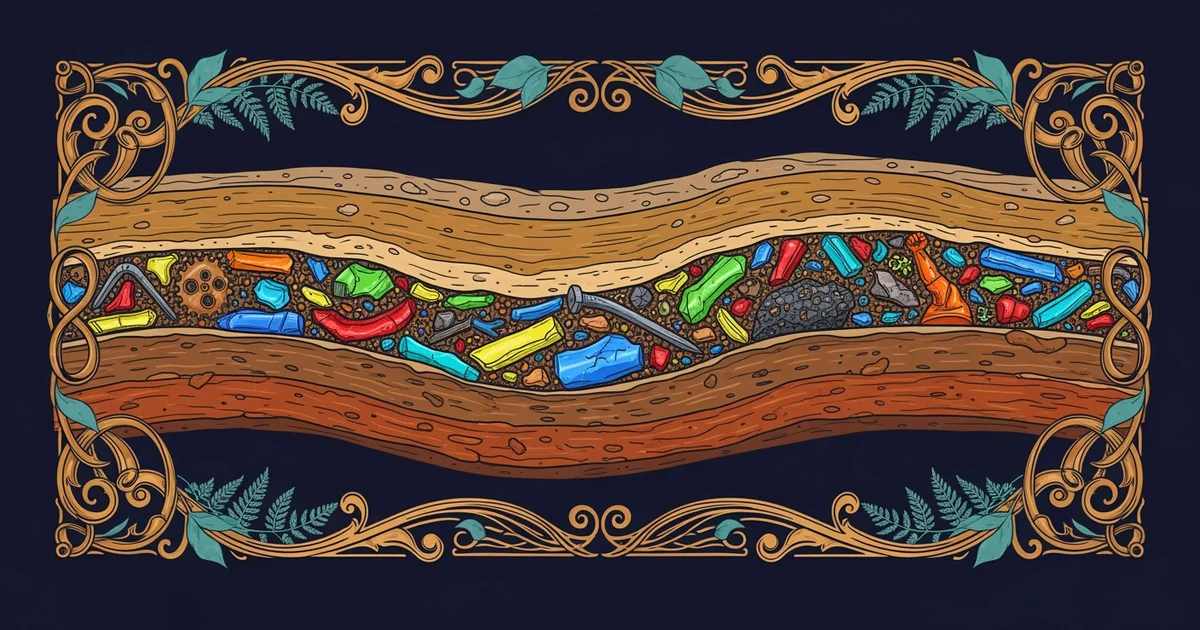
Imagine digging into your backyard and finding a plastic bottle buried deep beneath layers of soil and ancient rock. This strange object serves as a permanent signal of our modern lifestyle, much like the stone tools left behind by early humans thousands of years ago. We call these man-made items technofossils, which act as markers for the current geologic epoch. These items do not decay like organic matter, meaning they stay trapped in the earth for millions of years to come. By studying these discarded materials, scientists can track exactly when human influence became a dominant force on our planet.
The Nature of Modern Technofossils
Technofossils represent any physical object or material created by human industry that eventually enters the geologic record. Think of these items like a personal budget report for the planet, where every purchase or piece of trash is an entry that cannot be erased. While natural fossils show how biological life changed over vast eras, these new markers show how our manufacturing habits altered the physical landscape. Just as a bank tracks every dollar spent to understand a financial trend, geologists look at these materials to understand our impact on the Earth. Because they are often made of synthetic elements, they resist the natural process of weathering and decay that usually breaks down organic materials.
Key term: Technofossils — durable, human-made objects or materials that become permanently embedded within the geological layers of the Earth.
These materials vary widely, but they share a common trait of being highly resistant to natural erosion. Common examples include synthetic plastics, refined metals, and specialized concrete structures that persist long after the buildings themselves crumble away. Because these items are distributed globally, they provide a clear, chronological boundary that marks the start of the human-dominated era. Unlike a footprint in the sand that washes away with the tide, these items are buried in sediment and eventually turn into solid rock layers. This transition creates a permanent record of our technological reach, documenting our global consumption patterns for future researchers to examine.
Categorizing Human-Made Geological Markers
To understand the scale of this impact, we can look at how different materials persist within the earth's crust. The following table highlights three major categories of these markers and their specific roles in the fossil record:
| Material Category | Primary Composition | Persistence Level | Geological Impact |
|---|---|---|---|
| Synthetic Polymers | Industrial plastics | Extremely high | Global distribution |
| Refined Alloys | Steel and aluminum | Very high | Concentrated deposits |
| Engineered Stone | Concrete and glass | High | Structural layering |
These materials are not just random trash but are structural pieces of our modern world that leave a lasting mark. When we build roads or manufacture billions of plastic items, we are effectively adding a new layer to the crust of the Earth. This process is similar to a person saving receipts in a shoebox to track their spending habits over many decades. Eventually, the box becomes so full that it defines the history of the owner, just as our waste defines the history of our species. By examining these layers, we can see the exact moment that human industry shifted from small-scale tools to massive, global manufacturing.
Understanding these markers helps us realize that our current actions are literally becoming part of the planet. Every time we create a new material, we are contributing to a future layer of rock that will tell the story of our time. This record is not just about waste, but about the massive scale of human production that now touches every corner of the globe. As we continue to refine our materials, we create even more durable markers that will persist for millions of years into the deep future. This shift in the geological record marks a turning point in the history of our planet, signaling that human activity is now a major force of change.
Technofossils serve as the permanent geological signature of human industrial activity by preserving synthetic materials within the Earth's crust for future observation.
The next Station introduces atmospheric composition changes, which determines how our industrial output alters the very air we breathe.