
Atmospheric Composition Changes
Imagine you are filling a giant room with invisible gas that traps heat from the sun. Every breath you take adds a tiny amount of carbon dioxide to the vast global atmosphere. This gas acts like a thick blanket that wraps around our entire planet today. Because humans burn fossil fuels to power our lives, we are thickening this blanket rapidly. This change creates a unique chemical signature that will remain in the Earth's layers forever. Scientists study these layers to see how our modern era differs from the past.
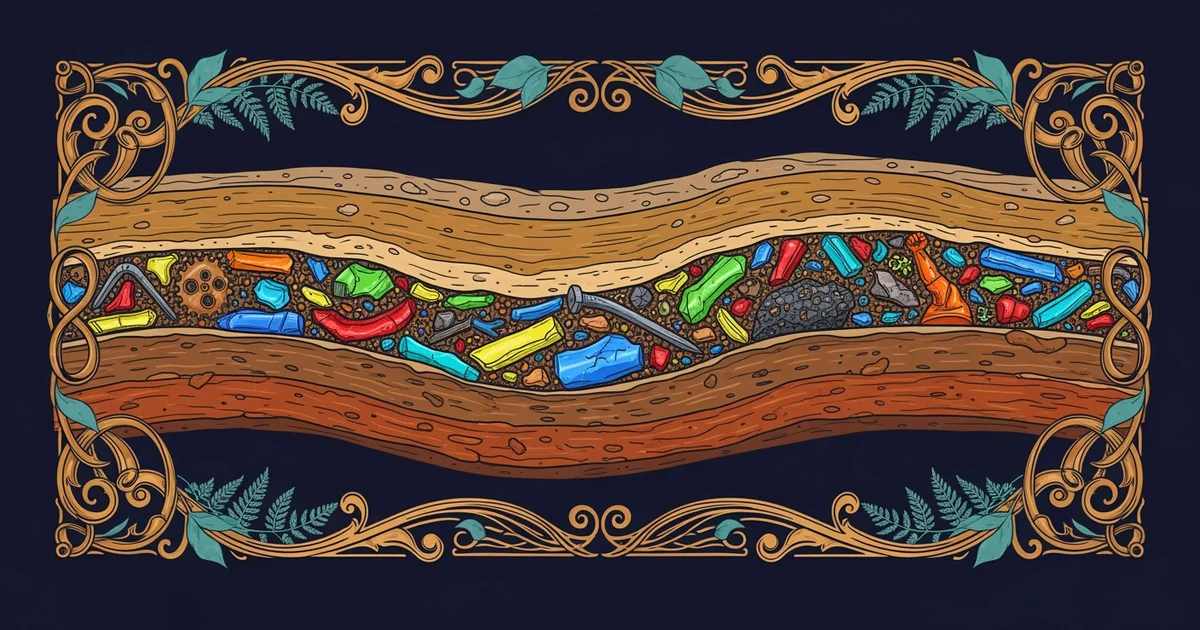
The Mechanism of Atmospheric Trapping
When we burn coal or oil, we release carbon stored underground for millions of years. This process is much like a household budget where you suddenly spend all your savings. You might feel rich for a moment, but your long-term stability disappears very quickly. The atmosphere acts like a bank account that tracks every single carbon deposit we make. As these gases accumulate, they alter the chemical balance of the air we breathe daily. This shift is not just a temporary weather pattern but a fundamental change in geology. We are essentially writing our history into the very rocks of the future planet.
Key term: Anthropocene — the current geological age where human activity is the dominant influence on climate and the environment.
Carbon dioxide levels are now higher than at any point in the last million years. This spike creates a clear boundary in the layers of sediment forming across the globe. Just as a heavy rain leaves a layer of silt in a lake, carbon creates a chemical mark. This mark tells future geologists exactly when humans began changing the planet's atmosphere. We can compare these modern layers to ancient ones to see the stark difference. The speed of this change is what makes it a permanent geological marker.
Tracking Carbon Through Geological Time
To understand how these changes persist, we must look at how sediment traps atmospheric data. When carbon dioxide dissolves into the ocean, it changes the chemistry of the water. Tiny organisms living in the sea absorb this carbon to build their hard shells. When these creatures die, they sink to the bottom and become part of the rock. This process preserves a record of the atmosphere from the time they were alive. We can analyze these fossils to reconstruct the air quality of the distant past.
We categorize the primary ways that carbon signals are stored in the Earth's crust today:
- Marine Sedimentary Deposits: Tiny shells sink to the ocean floor and form layers that lock in carbon isotopes from the water.
- Glacial Ice Core Layers: Snow falls and traps tiny bubbles of ancient air that provide a direct sample of the past atmosphere.
- Terrestrial Peat Accumulations: Decaying plant matter in wetlands captures carbon from the air and compresses it into dense, dark soil layers.
These three methods provide a complete picture of how our atmosphere has shifted over time. By looking at these records, we can see the exact moment human industry began impacting the globe. The data shows a sharp increase in carbon levels that matches our industrial growth. This evidence is undeniable when viewed through the lens of deep geological time. We are leaving a fingerprint that will be visible to anyone studying Earth millions of years from now.
Human activities create a distinct chemical signature in the Earth's crust by rapidly releasing ancient carbon into the atmosphere.
The next Station introduces biological shifts and extinction, which explains how these atmospheric changes impact the survival of living species.