
Interpreting Core Samples
When drillers extracted the 2004 ice core from the Antarctic plateau, they pulled up a vertical history of our planet. This icy cylinder contained trapped air bubbles that acted like tiny time capsules from the past. Just as a bank statement reveals your spending habits over time, these deep earth samples reveal the chemical history of the atmosphere. By looking at specific layers, scientists identify exactly when human industry began changing the global climate. This process of reading the earth is known as stratigraphic analysis, which serves as the primary method for dating physical shifts in the environment. We rely on these physical records to understand how human activity leaves a permanent, identifiable fingerprint in the geological record.
Reading the Layers of Time
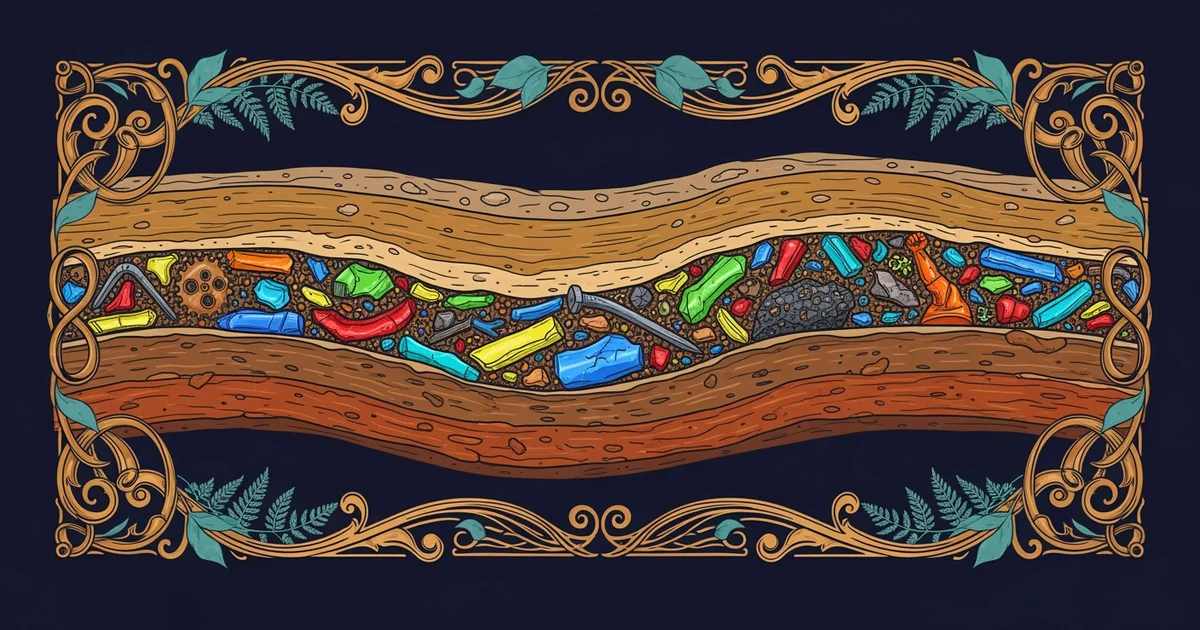
Scientists treat the earth like a massive, ancient book where every layer of soil or ice represents a single page. To interpret these pages, researchers look for distinct markers that indicate major changes in global conditions. These markers often include shifts in chemical composition or the presence of synthetic materials that do not occur naturally. When we examine a core sample, we look for physical evidence that humans have altered the natural balance of the planet. Just as a forensic investigator uses fingerprints to place a person at a crime scene, geologists use these markers to place humanity at the center of recent environmental changes. The clarity of these markers depends on the undisturbed nature of the sediment or ice.
Key term: Lithostratigraphy — the study of rock layers and their physical properties to determine the chronological order of geological events.
When identifying these markers, researchers often categorize them based on their material origin and their chemical stability over long periods. This systematic approach ensures that the data remains reliable even when the samples come from different parts of the world. The following table highlights common indicators found within these deep core samples:
| Indicator Type | Physical Evidence | Geological Implication |
|---|---|---|
| Synthetic Polymers | Microplastic particles | Widespread human waste impact |
| Radioactive Isotopes | Fallout from weapons testing | Global atmospheric contamination |
| Carbon Variations | Fossil fuel combustion signs | Rapid shift in greenhouse gases |
Translating Data into History
Once the physical markers are identified, the data must be translated into a timeline that reflects human development. This translation requires careful calibration against known historical events to ensure accuracy. If a core sample shows a spike in lead levels, we compare that depth to the timeline of industrial leaded gasoline usage. This correlation allows us to confirm that the physical change in the earth corresponds to a specific human activity. The process is similar to checking a receipt against a bank statement to verify that a specific purchase caused a drop in your account balance. By aligning these two datasets, we create a verified record of human impact on the planet.
Understanding these patterns requires recognizing that human influence is not always uniform across the entire globe. Some areas show immediate signs of industrial activity, while others show a delayed response due to natural environmental barriers. We must account for these variations to build a complete picture of the earth's recent history. This complexity is why scientists often use multiple core samples from different locations to cross-reference their findings. By comparing samples from both poles and deep ocean beds, researchers can distinguish between local incidents and global trends. This collaborative data collection ensures that our conclusions about the human footprint remain robust and scientifically sound.
Interpreting deep earth core samples allows us to map human industrial activity onto the geological timeline by identifying distinct chemical and material markers.
But this model breaks down when natural erosion or geological shifting destroys the fragile layers required for accurate dating.