
Ethics of Geological Naming
Imagine you are painting a portrait that will last for a million years. Every stroke you add changes how future generations will see the person you are depicting today. Defining a new geological epoch works in the same way because it labels the entire human impact on the planet. This decision carries heavy weight because it turns our daily actions into a permanent, formal marker in the Earth's history. Scientists often argue about whether we have truly started a new time period. This debate is not just about rocks or dirt samples. It is about how we define our own legacy on this planet.
The Weight of Geological Labels
Geologists use specific names to divide time into chunks that help us understand Earth's long past. These names serve as a shared language for researchers around the world to track changes. When we discuss the Anthropocene, we are proposing a name for the time when humans became the main force of change. This creates a tension between science and society. Some people worry that naming an epoch after humans gives us too much power. Others argue that it is the only way to recognize the deep scars we leave behind. The process of naming requires proof that our impact is unique compared to the past.
Key term: Anthropocene — a proposed geological epoch marking the time when human activity became the dominant influence on Earth's climate and ecosystems.
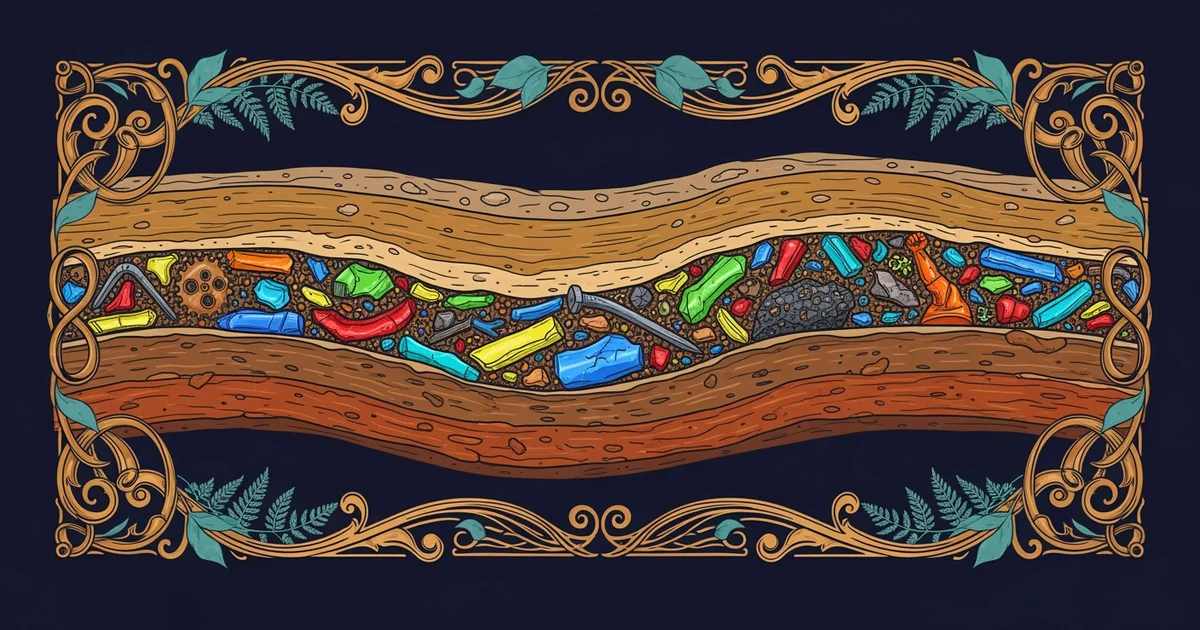
Defining this epoch is like deciding who gets to write the official history book of the world. If we officially name this time, we admit that our actions have reached a point of no return. We must prove that our footprint is distinct from the natural cycles of the past. This involves finding clear evidence in the soil, the ice, and the atmosphere. Scientists look for things like radioactive isotopes or plastic pollution that will stay in the ground forever. This search for proof connects back to our earlier study of predicting future records. We are essentially trying to see our present from the eyes of a future observer.
Ethical Debates and Social Responsibility
The debate over this name also touches on how we view our relationship with nature. Some argue that calling this the age of humans ignores the role of the natural world. They fear that human-centered labels make us think we are separate from the planet. Others believe that the name serves as a warning about the damage we cause. This conflict shows that geology is not just about rocks. It is about how we value the planet and our place within it. We must consider if a label helps us solve problems or just describes them.
| Perspective | Core Argument | Goal of Labeling |
|---|---|---|
| Scientific | Evidence based | Defining time units |
| Ecological | Nature focused | Protecting systems |
| Political | Policy driven | Managing resources |
We can summarize the different viewpoints on this naming process through three main lenses:
- The scientific lens focuses on finding physical markers that show a clear break from past geological eras.
- The environmental lens emphasizes the need to acknowledge how our actions threaten the stability of global life.
- The social lens considers how naming the epoch changes public awareness and our shared sense of responsibility.
These perspectives show that naming a geological epoch is a complex task. It requires balancing the need for scientific accuracy with the reality of our social impact. We have learned that human activity leaves a permanent fingerprint that future observers will surely find. This final station serves as a reminder that our choices today become the history of tomorrow. We are the authors of the geological record, and we must choose our labels with care and wisdom.
Defining a new geological epoch acts as a permanent historical record that forces us to reconcile our current environmental impact with our long-term legacy as a species.
Understanding our role as geological agents allows us to make more conscious decisions about the planet we will leave behind for future generations.