
Biomolecule Composition
When a baker mixes flour and water to form bread dough, they are witnessing complex molecular chains forming structural networks. These long, flexible protein strands allow the dough to trap gas bubbles during the baking process. This physical transformation represents a macro-scale view of how specific molecular shapes dictate the unique chemical behavior of every substance in our world. By understanding these building blocks, we can see how tiny functional groups determine the biological function of every living cell.
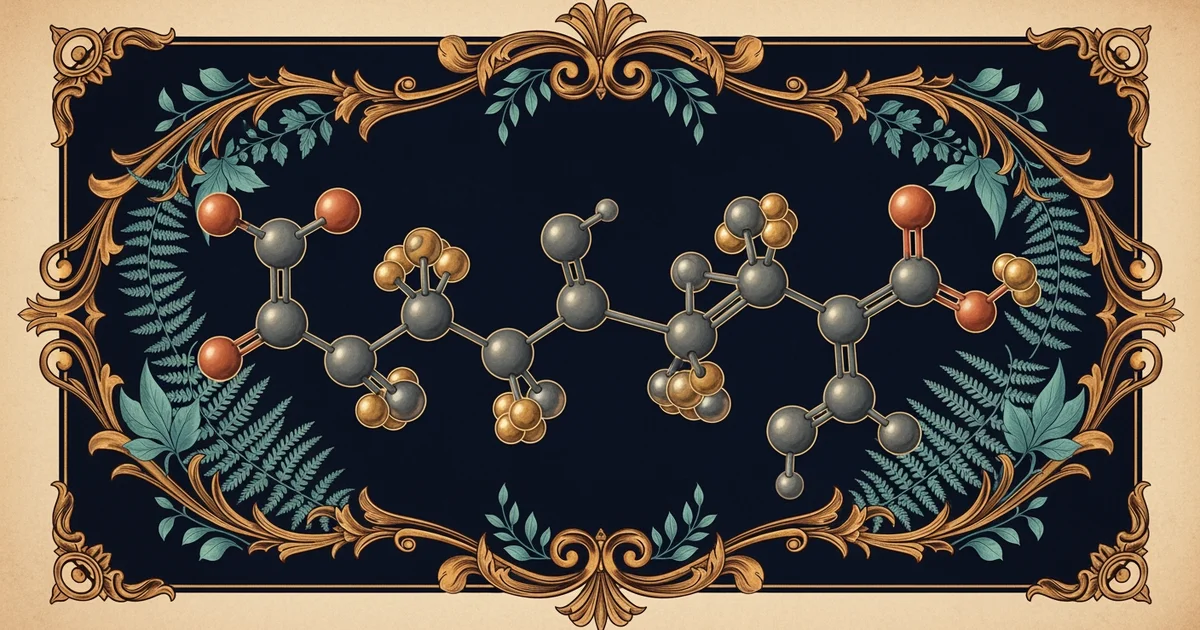
The Architecture of Amino Acids
Proteins serve as the primary machinery of life, acting as catalysts, structural supports, and signaling molecules within our bodies. Every protein consists of a long chain of smaller units known as amino acids, which link together to form complex shapes. Each amino acid contains a central carbon atom bonded to four distinct chemical groups that provide unique properties. These groups include a hydrogen atom, an amino group, a carboxyl group, and a variable side chain called an R-group. The R-group acts like a unique identification tag, determining how each specific unit interacts with its neighbors in the chain.
Key term: Amino acid — the fundamental building block of proteins that contains an amino group, a carboxyl group, and a unique side chain.
Think of these amino acids as individual LEGO bricks in a massive construction set for building biological machines. Just as a specific brick shape allows for a certain connection type, the functional groups on an amino acid dictate its bonding potential. If an R-group is hydrophobic, it will tuck itself inside the protein to avoid contact with water. If it is hydrophilic, it will remain on the outer surface to interact with the watery environment of the cell. This internal sorting process forces the entire protein chain to fold into a very specific, functional three-dimensional shape.
Functional Groups and Molecular Behavior
Chemical interactions rely heavily on the specific arrangement of atoms within these functional groups. The amino group, which typically consists of one nitrogen atom bonded to two hydrogen atoms, behaves as a base by accepting protons. Conversely, the carboxyl group acts as an acid by donating protons to the surrounding environment during chemical reactions. These two groups perform the essential task of linking amino acids together through a peptide bond. This process involves removing a water molecule to create a stable covalent connection between the carbon and nitrogen atoms.
| Functional Group | Chemical Formula | Primary Function |
|---|---|---|
| Amino | Accepts protons; acts as a chemical base | |
| Carboxyl | Donates protons; acts as a chemical acid | |
| R-Group | Variable | Determines specific identity and folding |
We can summarize the chemical properties of these essential components by examining how they interact with their environment:
- The amino group provides a positive charge potential that helps stabilize the structure of the protein backbone.
- The carboxyl group offers a negative charge potential that facilitates the formation of strong peptide bonds.
- The R-group provides the chemical diversity required to create thousands of different proteins with unique jobs.
These groups ensure that proteins do not simply exist as random strings of atoms but as highly ordered structures. If the sequence of amino acids changes, the folding pattern shifts, which often renders the protein completely useless. This delicate balance demonstrates why even minor alterations in molecular composition can lead to significant changes in biological health. By studying these groups, we gain a clear window into the structural logic that governs all organic chemistry. We move from seeing simple molecules to understanding the machinery that sustains life on our planet.
The specific chemical behavior of a protein emerges from the unique arrangement of its amino acid functional groups during the folding process.
But this structural model becomes much more complicated when environmental factors like temperature or acidity begin to disrupt these delicate molecular bonds.