
Defining Functional Groups
Imagine you are holding a plain white key that fits every single door in a massive office building. You would soon realize that having one universal key makes every room identical and boring because there is no way to distinguish the kitchen from the storage closet. Molecules operate in a similar way because the basic carbon skeleton acts like a blank hallway that needs specific markers to define its actual purpose. These markers are known as functional groups, and they act like specialized labels that tell a molecule exactly how to behave when it meets other substances. Without these distinct clusters of atoms, every carbon chain would just be a static line of fuel rather than the complex building blocks of life.
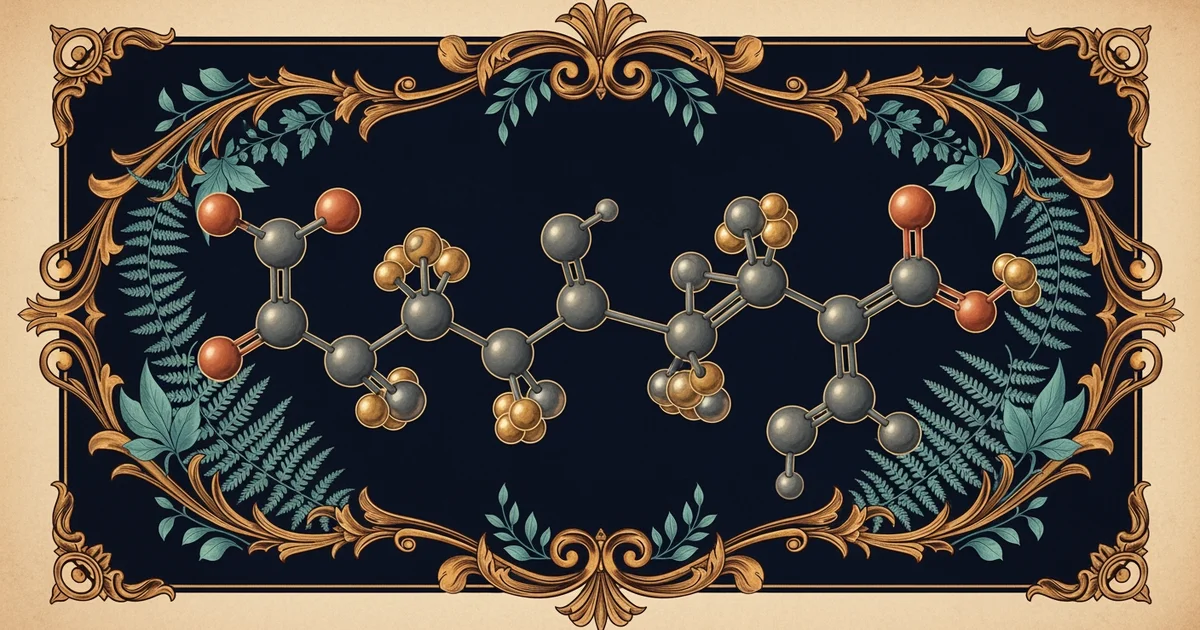
The Role of Atom Clusters
When we look at the structure of organic compounds, we see that most of the molecule remains stable while a small section dictates the chemical reaction. A functional group is a specific arrangement of atoms within a molecule that is responsible for its characteristic chemical reactions. Think of these groups like the unique buttons on a control panel for a complex piece of machinery. While the entire machine is made of wires and metal, you only need to press one specific button to trigger a specific action like heating or cooling. By identifying these groups, scientists can predict how a substance will interact with water, acids, or other chemicals before they even perform a laboratory experiment. This predictive power is why chemistry feels like a logical puzzle rather than a random collection of reactions.
Key term: Functional group — a specific cluster of atoms attached to a carbon backbone that determines how a molecule interacts with other chemical substances.
These groups are essentially the personality traits of a molecule because they force the rest of the structure to react in predictable ways. If you attach a group that loves water to a long carbon chain, the entire molecule will suddenly become soluble in liquids. If you attach a group that is highly reactive, the molecule might explode or bond instantly with anything it touches. This is the reason why a simple change in one small corner of a massive molecule can turn a harmless substance into a potent medicine or a dangerous poison. Understanding these clusters allows chemists to design new materials by swapping out one group for another, much like changing the lens on a camera to capture a different type of image.
Identifying Molecular Personality
To see how these groups function, we must look at how they change the basic properties of the carbon chain. We can classify these groups based on how they influence the behavior of the parent molecule in different environments.
- Hydroxyl groups consist of an oxygen atom bonded to a hydrogen atom, which adds polarity and makes the molecule more likely to dissolve in water.
- Carboxyl groups contain a carbon double-bonded to an oxygen and single-bonded to a hydroxyl group, which allows the molecule to act as an acid.
- Amino groups contain a nitrogen atom bonded to two hydrogen atoms, which gives the molecule the ability to act as a base in various reactions.
These groups provide the diversity we see in nature because they allow carbon chains to perform tasks ranging from storing energy to building structural tissues. The following table shows how these groups change the identity of the base carbon chain.
| Functional Group | Atoms Involved | Primary Influence | Example Property |
|---|---|---|---|
| Hydroxyl | Oxygen, Hydrogen | Increases polarity | Soluble in water |
| Carboxyl | Carbon, Oxygen | Provides acidity | Donates protons |
| Amino | Nitrogen, Hydrogen | Provides basicity | Accepts protons |
By comparing these groups, we see that the chemical behavior of a substance is not just about the carbon count, but about the specific functional attachments. Just as a chef uses spices to change the flavor of a base dish, nature uses functional groups to change the chemical output of a carbon backbone. If you removed these groups, the molecule would lose its reactivity and drift into a state of chemical indifference. The next time you look at a complex chemical structure, remember that the carbon chain is just the canvas, while the functional groups are the paint that defines the final image. This foundation helps us understand why some molecules are stable enough to build bones while others are active enough to power cellular respiration. A lingering question remains: if we can swap these groups at will, what limits exist for the types of synthetic materials we can create for our future?
The chemical identity of any substance is defined by its functional groups, which act as reactive hotspots that dictate how a molecule interacts with its surrounding environment.
Because these groups dictate reactivity, we must now explore how the distribution of electrical charge within these groups influences the overall polarity of a molecule.