
Molecular Polarity Fundamentals
Imagine two people pulling on a rope in a game of tug-of-war. If both people have equal strength, the rope stays perfectly centered between them. If one person is stronger, they pull the rope toward their side, creating an uneven balance. Molecules behave exactly like this rope when atoms share electrons during chemical bonding. This simple tug-of-war determines if a substance will mix with water or repel it entirely.
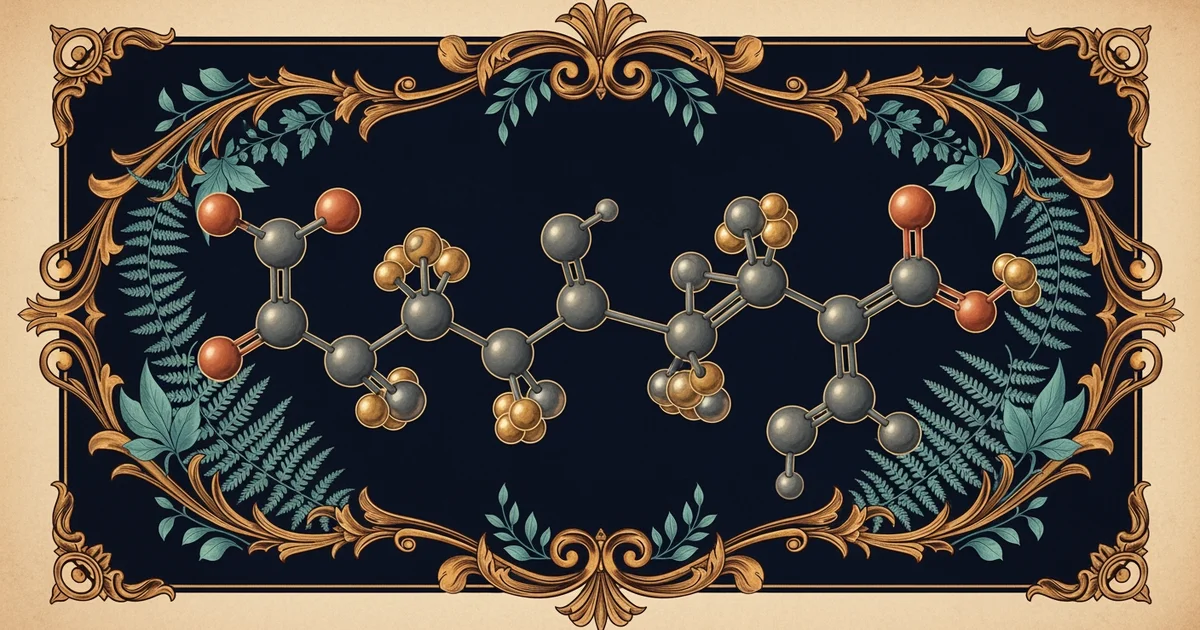
The Tug-of-War for Electrons
When atoms bond, they share electrons to reach a stable state. Some atoms are greedier than others, pulling shared electrons closer to their own centers. This specific ability to attract shared electrons is known as electronegativity. If two identical atoms bond, they pull with equal force, and the electrons stay right in the middle. This creates a balanced, non-polar bond where no side has more charge. However, most molecules contain different elements with varying levels of greed for those electrons. When a highly greedy atom bonds with a less greedy one, the electrons spend more time near the greedy atom. This shift creates a partial negative charge on one side and a partial positive charge on the other. This uneven distribution of electrical charge is called molecular polarity. Think of it like a shared bank account where one partner spends all the money while the other only gets to watch. The partner who holds the money creates an imbalance in the household budget, much like an electronegative atom creates an imbalance in the molecule.
Key term: Electronegativity — the inherent tendency of an atom to attract shared electrons toward itself within a chemical bond.
Visualizing Molecular Shapes
Polarity depends on both the bond type and the total shape of the molecule. Even if a molecule has polar bonds, it might still be non-polar overall if the bonds cancel each other out. Imagine a central atom with identical atoms pulling in opposite directions. If the pulls are equal and symmetrical, the net charge remains neutral, just like a balanced scale. If the shape is asymmetrical, the polar charges do not cancel, resulting in a polar molecule. Water is the most famous example of this phenomenon because of its bent shape.
SMILES notation · Educational reference only
Water molecules are bent, meaning the partial charges do not cancel out, making water a polar solvent. Carbon dioxide, however, is a straight line, so its polar bonds pull in opposite directions and cancel out perfectly. To predict if a substance is polar, you must look at the geometry of its atoms. If the structure is lopsided, the molecule will likely be polar. If the structure is perfectly symmetrical, the molecule will likely be non-polar.
Predicting Chemical Behavior
Understanding polarity helps us predict how different substances interact in our daily lives. Polar molecules tend to mix well with other polar substances because their partial charges attract one another. Non-polar molecules prefer to stay with other non-polar substances, avoiding polar ones like oil avoids water. This is why oil and water never mix, regardless of how much you shake the container. The water molecules are too busy clinging to each other to let the non-polar oil enter their group. Chemists use these rules to design new materials, create effective cleaning supplies, and understand how medicine dissolves in the body. If you know the polarity of a substance, you can predict its boiling point and its solubility in various liquids. This knowledge is the foundation for understanding why soap cleans grease or why certain gases stay in the atmosphere. By looking at the periodic table, you can see which atoms are likely to start a tug-of-war. The higher the difference in electronegativity, the stronger the polarity of the bond will be. This simple concept explains the complex behavior of everything from the air we breathe to the food we eat.
Molecular polarity arises when atoms share electrons unevenly due to differences in electronegativity and specific geometric arrangements.
The next step involves exploring how these polar forces influence the formation of complex hydrocarbon families.