
Pharmaceutical Building Blocks
When a pharmacist fills a prescription for aspirin, they are handling a precise arrangement of atoms designed to interact with human biology. This tiny molecule functions like a specialized key, fitting perfectly into the lock of a specific enzyme to stop pain signals. Just as a master locksmith understands the tumblers inside a lock, chemists identify the functional groups that dictate how a drug molecule behaves. These groups act as chemical handles, allowing the medicine to grab onto receptors or dissolve properly in the bloodstream. Understanding these building blocks is the primary way scientists create modern treatments that target diseases without harming healthy tissue.
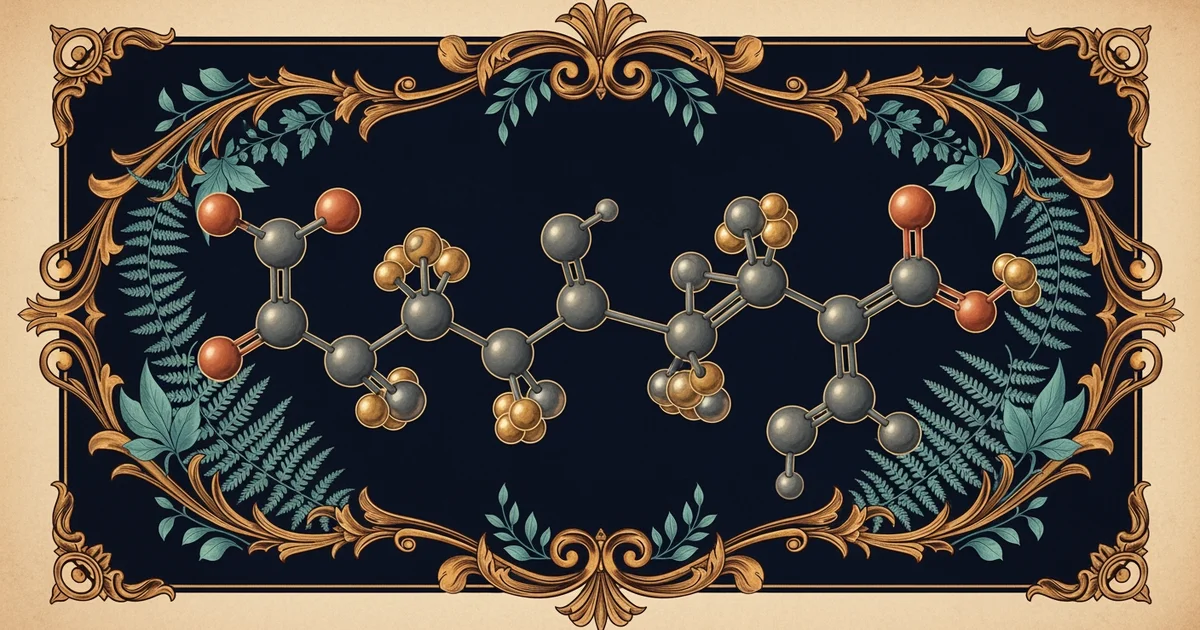
Identifying Active Molecular Components
Every medication relies on specific arrangements of atoms known as functional groups to perform its medicinal work. These groups are clusters of atoms that behave consistently regardless of the larger molecule they are attached to. Think of these groups like the specialized tools in a mechanic's kit, where a wrench always turns a bolt regardless of the car model. In chemistry, a hydroxyl group always adds polarity, while an amino group often helps a molecule bind to proteins. By swapping these functional groups, researchers can tweak how long a drug stays active or how effectively it enters a cell. This modular design strategy allows for the rapid development of new medicines by reusing proven chemical structures.
Key term: Functional group — a specific cluster of atoms within a molecule that determines its characteristic chemical reactions and physical properties.
To see this in action, we can look at how simple changes to a base structure create different effects. A molecule might have a carboxyl group that makes it acidic, or a methoxy group that changes its solubility. These small additions act like the different accessories you might add to a smartphone to change its functionality. Chemists categorize these groups to predict how a new drug might react before they ever test it in a laboratory setting. This predictive power saves years of trial and error in the pharmaceutical development process.
Analyzing Structural Building Blocks
When we analyze the structure of common drugs, we see the same patterns repeating across different types of treatments. These patterns are the molecular architecture that defines the therapeutic potential of the substance. For instance, many pain relievers contain aromatic rings that provide stability, combined with polar groups that allow the drug to dissolve in water. Without this precise balance of structural components, the medication would either fail to reach its target or stay in the body for far too long. The following table highlights how specific groups modify the behavior of standard pharmaceutical compounds.
| Functional Group | Typical Effect | Common Application |
|---|---|---|
| Hydroxyl | Increases solubility | Improving absorption |
| Carboxyl | Increases acidity | Targeted delivery |
| Amine | Improves binding | Receptor interaction |
| Ester | Modifies stability | Controlled release |
By examining this table, you can see how chemists combine these components to build effective drugs. Each row represents a specific functional goal that the chemist must achieve for the medicine to work safely. If a drug needs to reach the brain, the chemist might add a group that helps it pass through fatty membranes. If it needs to stay in the stomach, they might choose a group that resists acid breakdown. This level of control is why modern medicine is so effective at treating complex human conditions.
When you look at a drug molecule, you are essentially seeing a map of its intended function. The arrangement of these groups determines whether the drug is a fast-acting pain killer or a slow-release treatment for chronic conditions. This is the application of the reactivity patterns we discussed in Station 10, now applied to the creation of life-saving chemical tools. Chemists act as architects, building these complex structures from simple, predictable pieces to solve human health problems. By mastering these building blocks, we gain the ability to influence biological pathways with incredible precision and safety.
The unique chemical behavior of a medication is determined by the specific arrangement and interaction of functional groups acting as precise biological keys.
But this structural model becomes much more complex when we begin to examine how these building blocks organize themselves into the larger, intricate structures of life.