
Reactivity Patterns
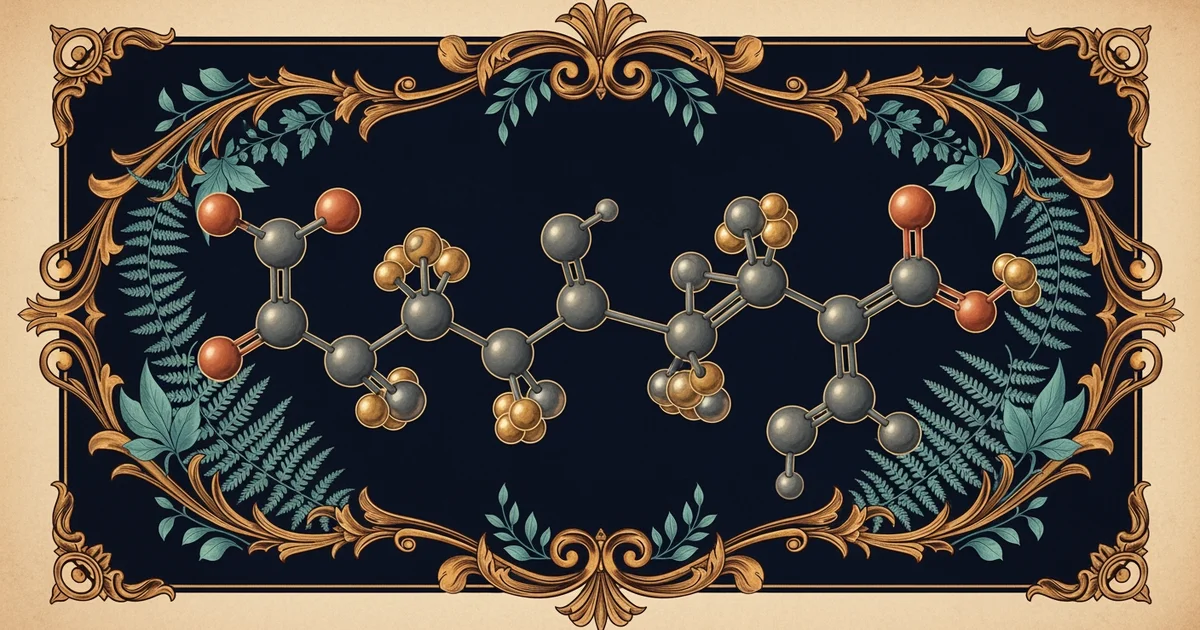
Imagine you are standing at a busy intersection where traffic lights dictate exactly when every car must move or stop. Molecules function in a similar way because specific sites on their structures act like those signals to control chemical reactions. When you look at a complex molecule, you might see a jumble of atoms, but these atoms form distinct patterns that tell chemists exactly where a reaction will occur. Understanding these patterns allows scientists to predict how substances change, much like a traffic engineer predicts the flow of city streets. By identifying these active zones, we can determine which parts of a molecule are ready to react and which parts will remain stable during a chemical process.
Identifying Reactive Sites
Every functional group acts like a specific landmark that flags a potential reaction site for incoming molecules. These groups, such as the hydroxyl group in or the carbonyl group in , possess unique electronic environments that attract or repel other particles. Think of these sites as retail stores in a large shopping mall that attract different types of shoppers based on what they sell. A store selling electronics attracts tech enthusiasts, while a bakery attracts hungry customers, just as an electron-rich site attracts positive charges and an electron-poor site attracts negative ones. By mapping these sites, chemists can anticipate how two different substances will interact before they even mix them together in a laboratory setting.
Key term: Functional group — a specific cluster of atoms within a molecule that is responsible for the characteristic chemical reactions of that substance.
When we analyze these sites, we look for areas of high electron density or regions that lack electrons entirely. Molecules often react to balance their internal charge distributions, moving electrons from crowded areas to empty spaces. If you observe a molecule with a double bond, such as the carbon-carbon bond in ethene, you know that the extra electrons in the pi bond create a prime location for other atoms to attach. This predictability is the foundation of organic chemistry, as it turns a seemingly random collection of atoms into a highly organized map of potential chemical events.
Patterns of Molecular Interaction
Predicting reaction sites requires a systematic approach to observing how functional groups influence the surrounding atoms in a structure. We can categorize these interactions based on the nature of the functional group and its ability to donate or accept electrons during a collision. Consider the following common patterns that dictate how molecules behave when they encounter one another:
- Nucleophilic sites act as electron donors because they possess lone pairs or negative charges that seek out positive centers in other molecules to form new bonds.
- Electrophilic sites function as electron seekers because they have a partial positive charge that draws in electron-rich groups to stabilize their own charge imbalance.
- Leaving groups represent atoms or clusters that can easily detach from the main carbon chain, which facilitates the replacement of one functional group with another during a reaction.
These categories help us organize the complex behavior of organic compounds into manageable rules that apply across many different molecular families. Instead of memorizing every single reaction, you simply learn to spot the functional group and apply the corresponding rule for how it interacts with its environment.
| Functional Group | Typical Behavior | Example Molecule |
|---|---|---|
| Hydroxyl | Acts as donor | |
| Carbonyl | Acts as seeker | |
| Halide | Acts as leaver |
This table provides a shortcut for predicting which part of a molecule will likely participate in a transformation. When you see a halide attached to a carbon chain, for instance, you can predict that it will likely leave the structure during a substitution reaction. This level of foresight is what allows researchers to design new medicines or materials by carefully selecting which parts of a molecule to modify. By mastering these patterns, you gain the ability to look at any organic structure and foresee its chemical future with remarkable accuracy and confidence.
Predicting chemical reactivity relies on identifying specific functional groups that dictate how electrons move between molecules during an interaction.
But what does this look like in practice when we attempt to build complex pharmaceutical structures from simple starting materials?