
Protein Folding Basics
Imagine a long string of colorful beads that must twist into a specific three-dimensional knot to function correctly. If the string tangles in the wrong way, the beads cannot perform their essential job within your cells.
The Language of Amino Acids
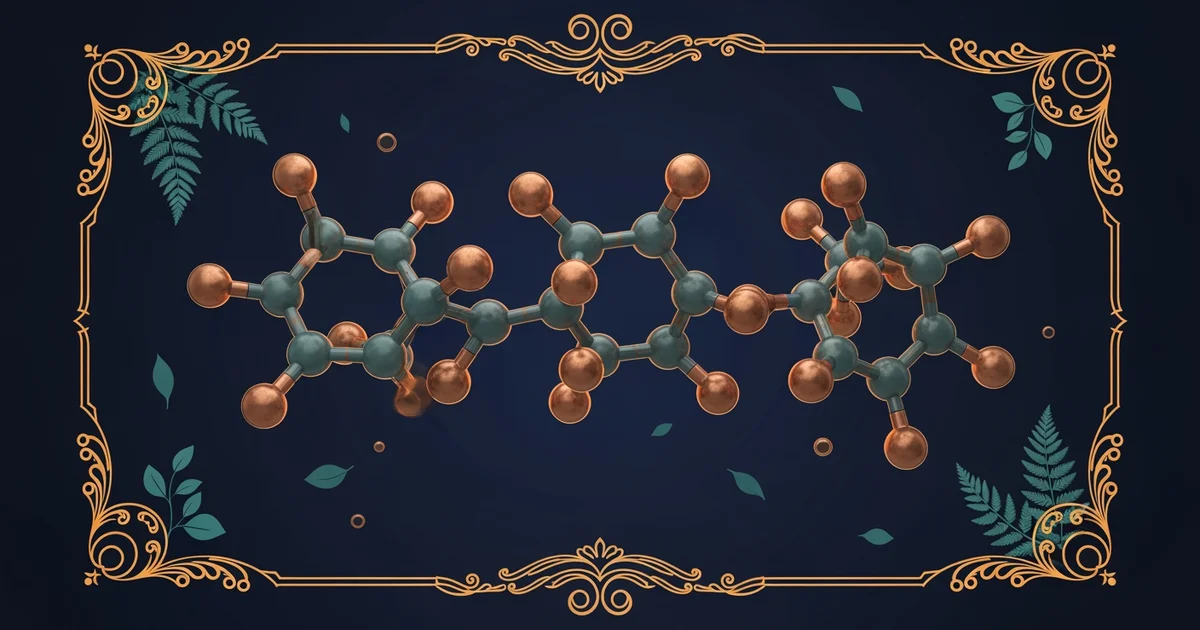
Proteins begin as a linear chain of smaller building blocks that scientists call amino acids. These molecules link together in a precise order, much like letters forming a specific sentence in a book. This sequence defines the identity of the protein and dictates its unique chemical personality. Each amino acid possesses a distinct side chain that interacts with its neighbors in specific ways. Some side chains prefer to hide away from water, while others actively seek it out. This chemical tug-of-war forces the long chain to begin bending and twisting immediately after the cell creates it. If the sequence of amino acids is incorrect, the entire chain will fail to reach its final shape. Think of this process like following a recipe where the ingredients determine the final texture of a cake. If you swap sugar for salt, the chemical outcome changes entirely, leading to a structure that cannot perform its intended biological function.
Key term: Amino acids — the fundamental building blocks that link together in long, specific chains to form the complex structure of proteins.
From Linear Chains to Complex Shapes
Once the chain forms, the process of protein folding begins to transform the flat sequence into a functional unit. This transformation happens because different parts of the chain experience varying forces of attraction or repulsion. Some sections might coil into tight spirals, while others flatten out into sheets that stack neatly against each other. The protein continues to fold until it reaches its lowest energy state, which is the most stable configuration possible. This final shape allows the protein to fit perfectly into its target, acting like a key sliding into a matching lock. If the environment changes, such as through extreme heat or acidity, the protein might lose this shape. This loss of structure, often called denaturation, renders the protein useless because its active site no longer matches its target.
To better understand how these shapes emerge, consider the way a complex piece of origami starts as a single flat sheet. You must fold the paper in a specific sequence of steps to create the final bird or crane. If you miss a single fold or change the order, the paper remains a flat sheet rather than becoming a three-dimensional figure. Similarly, the amino acid sequence acts as the set of instructions that tells the protein exactly how to fold. The following table summarizes the different levels of structure that proteins undergo during this transition.
| Structure Level | Description | Primary Force |
|---|---|---|
| Primary | The sequence of individual amino acids | Covalent bonds |
| Secondary | Local folding into spirals or sheets | Hydrogen bonding |
| Tertiary | The overall three-dimensional shape | Various interactions |
The Importance of Structural Integrity
Because the shape of a protein determines its utility, the cell invests significant energy into ensuring that each fold occurs correctly. Specialized molecules often act as chaperones to guide the folding process and prevent the protein from getting stuck in a useless, tangled mess. These chaperones provide a safe environment where the chain can experiment with different shapes without interference from other cellular components. Without this guidance, many proteins would clump together into large, dysfunctional aggregates that could harm the cell. This delicate balance between speed and accuracy is vital for life. The cell must produce thousands of different proteins every hour while maintaining the structural integrity of every single one. When folding goes wrong, the consequences range from minor inefficiencies to severe cellular diseases that disrupt normal body functions. Understanding the rules of this folding process helps us see how tiny molecular parts create the complex machinery that powers every living organism.
The specific sequence of amino acids acts as a blueprint that forces the protein into a unique three-dimensional shape required for biological activity.
The next Station introduces nucleic acid storage, which determines how these amino acid sequences are encoded and preserved within the cell.