
The Anatomy of a Habit
Imagine you are driving home on a familiar route while lost in deep thought. You suddenly arrive in your driveway without remembering the turns or traffic lights you navigated. This happens because your brain has shifted control from conscious decision-making to a specialized internal system. Your brain creates these automated pathways to save precious energy for tasks that actually require your full focus. Understanding this process explains how simple actions eventually become rigid, automatic routines that persist even when you want to stop them.
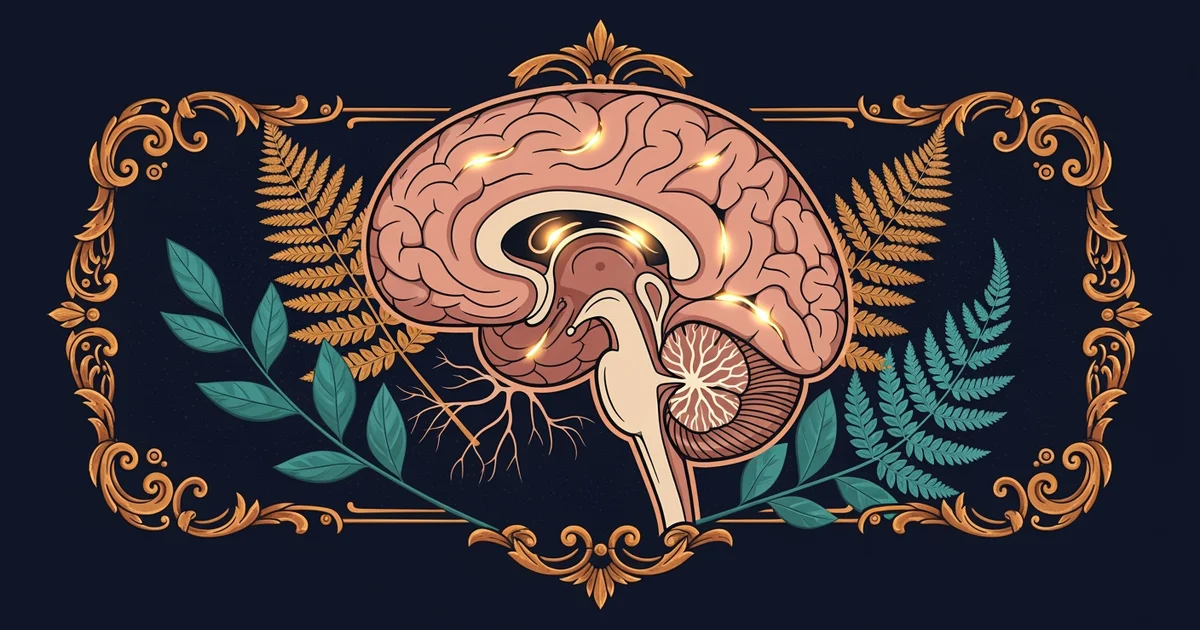
The Role of the Basal Ganglia
At the center of this automation process sits a cluster of structures known as the basal ganglia. This part of the brain acts like a biological manager that oversees movement and habit formation. When you repeat an action, the basal ganglia begins to encode the pattern into a simplified neural loop. It stops analyzing each individual step and instead treats the entire sequence as one single unit. This transition allows you to perform complex tasks like typing or brushing your teeth without thinking about the specific movements involved.
Think of the basal ganglia like a skilled office assistant who automates repetitive data entry tasks. When you first learn a new task, the assistant watches every step closely to ensure you do it correctly. Once the assistant recognizes the pattern, they create a macro that runs the entire process automatically with one click. Your brain does the same thing by moving the heavy lifting of behavior from the outer brain to the inner, more efficient basal ganglia. This system preserves your mental resources for complex problem solving.
Neural Loops and Automation
These automated routines rely on a structure called a neural loop that connects different brain regions. The loop starts with a trigger that signals the brain to begin the established behavior sequence. Once the loop activates, the basal ganglia takes over the execution phase to ensure the routine runs smoothly. This process happens so quickly that your conscious mind often remains unaware until the behavior is already complete. The brain prioritizes this efficiency because it allows you to navigate a busy world with minimal effort.
Key term: Neural loop — a recurring pathway of electrical signals that the brain uses to execute learned behaviors automatically.
To understand how these loops function, consider the common stages that govern most human daily routines:
- The cue acts as an internal or external signal that tells your brain to enter automatic mode.
- The routine serves as the physical or mental action that follows the cue to satisfy the urge.
- The reward provides the positive feedback that tells the brain the loop is worth saving for later.
When these three elements repeat consistently, the basal ganglia strengthens the connection between them to ensure future efficiency. The loop becomes so well-defined that the brain begins to anticipate the reward before the routine even finishes. This anticipation is exactly why you might find yourself reaching for a snack before you even feel hungry. The brain is simply executing the most efficient path it has stored in its memory to secure a known result.
| Stage | Function | Brain Objective |
|---|---|---|
| Cue | Trigger | Identify pattern |
| Routine | Execution | Perform action |
| Reward | Feedback | Reinforce loop |
By documenting these stages, researchers can see how the brain effectively offloads complex work to the basal ganglia. This structural shift is what makes habits so difficult to break once they are firmly established. The brain does not want to waste energy re-learning tasks that it has already successfully automated. Instead, it prefers to run the pre-programmed loop whenever it detects a familiar cue in the environment. This biological preference for efficiency is the primary reason why humans often find themselves trapped in cycles of behavior. The brain is not being lazy, but it is being incredibly efficient at maintaining its own internal status quo.
The basal ganglia automates repetitive behaviors into efficient neural loops to conserve mental energy for complex tasks.
Now that we understand how the brain builds these automated routines, we must explore how chemical signals drive the intensity of these habits.