
The Puppet Master Concept
Imagine a tiny parasite that enters a host and forces it to act against its own survival. You might think your choices are entirely your own, but some microscopic organisms can actually rewire the decision-making circuits of their hosts to suit their own needs. This is not science fiction, but a well-documented process in biological systems where pathogens act as invisible puppet masters. By altering how a host perceives danger or seeks food, these tiny invaders ensure their own life cycles continue at the host's expense.
The Mechanisms of Behavioral Control
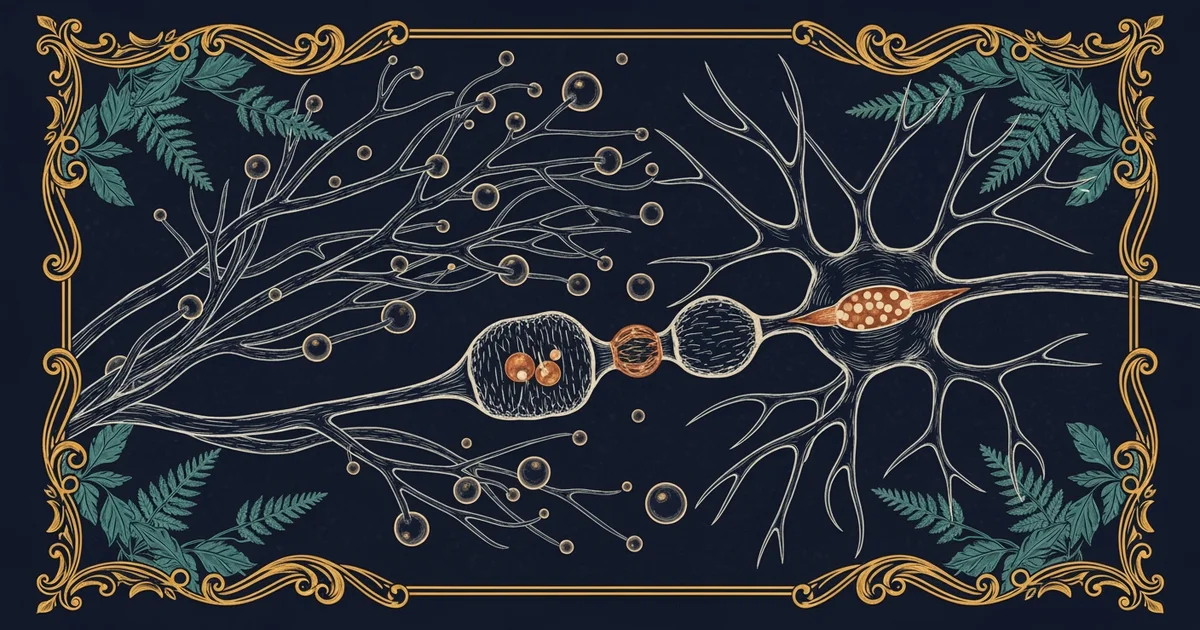
When a parasite enters a new environment, it must find ways to ensure it reaches a new host or completes its own development. Some species achieve this by releasing specific chemical compounds that cross the blood-brain barrier of the host. Once these chemicals arrive in the brain, they influence the production of neurotransmitters that regulate mood, fear, and motivation. Think of this process like an uninvited guest who changes the locks on your front door so they can come and go as they please. The host continues to live its daily life, but its internal guidance system now serves the goals of the parasite rather than its own safety. This biological hijacking allows the invader to trigger behaviors that would otherwise be impossible for the organism to perform on its own.
Key term: Behavioral manipulation — the process by which a parasite alters the actions of its host to increase the parasite's chances of survival or reproduction.
These invaders often target the reward centers of the brain to make risky behaviors seem attractive to the host. By flooding the brain with signals that mimic pleasure or security, the parasite tricks the host into ignoring genuine threats in its environment. This strategy is highly effective because it does not require complex physical control, but rather subtle chemical suggestions. The host believes it is making a free choice, even though that choice is being heavily influenced by the presence of the pathogen. This form of control is an evolutionary adaptation that has been refined over millions of years to maximize the spread of the parasite.
Observing Host Alterations
Researchers identify these changes by comparing the behavior of healthy hosts to those carrying specific infections. They often notice that infected individuals display strange habits that do not align with their typical survival patterns. These patterns suggest that the parasite is not just a passive passenger, but an active architect of the host's life. Consider the following ways that these microscopic invaders exert their influence on the host organisms:
- Chemical signaling pathways are hijacked to suppress the normal fear response, which allows the host to approach predators without feeling the usual urge to flee.
- Metabolic processes are redirected to provide more energy for the parasite, often causing the host to seek out specific nutrients that help the invader grow.
- Sensory perception is filtered or distorted so the host misinterprets environmental cues, making it easier for the parasite to guide the host into a new, suitable habitat.
These observations reveal that the relationship between a host and a parasite is far more dynamic than simple damage or illness. The parasite actively manages the host's nervous system to create a environment where it can thrive. By studying these interactions, scientists learn how the brain can be influenced by external chemical signals. This knowledge provides a deeper understanding of how our own decision-making processes might be vulnerable to microscopic interference. Every action we take is the result of complex signals, and some of those signals can be mimicked by outside forces.
Biological pathogens can effectively hijack the decision-making systems of their hosts by using chemical signals to override natural survival instincts.
By the end of this path, you will understand how these hidden biological drivers shape the behaviors of animals and humans alike.