
Gravitational Wave Detection
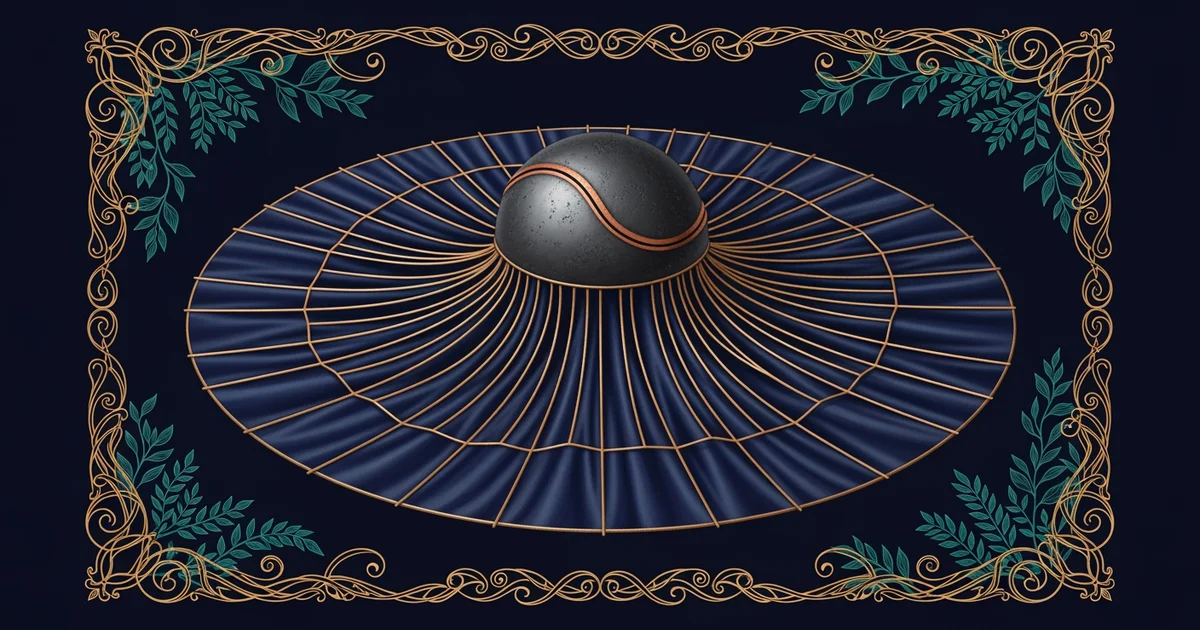
When the LIGO detectors first captured the faint signal of two black holes colliding, scientists confirmed a reality that had remained theoretical for nearly a century. Much like a business owner listening for the subtle shift in market demand before a crash, astronomers now listen for the rhythmic vibrations of spacetime itself. This event, which originated $1.3$ billion light-years away, proved that massive objects moving through the universe create ripples that travel across the cosmos. These waves are not sound or light, but actual distortions in the fabric of space, stretching and squeezing everything in their path as they pass by our planet.
Detecting Invisible Ripples
To measure these tiny distortions, researchers use a complex system known as laser interferometry. This method functions by splitting a single laser beam into two separate paths that travel down long, hollow vacuum tubes. When these beams reflect off mirrors at the ends of the tubes and return to their starting point, they overlap to create an interference pattern. If a gravitational wave passes through the detector, it stretches one arm of the device while simultaneously compressing the other arm by a fraction of a proton's width. By tracking these shifts, scientists can identify the exact moment a distant cosmic event disrupts the local geometry of space.
Key term: Laser interferometry — a precision measurement technique that detects microscopic changes in distance by observing the interference patterns of split light beams.
This process is incredibly delicate because the signals we seek are smaller than the size of an atom. To maintain such high levels of sensitivity, the facility must isolate the equipment from every possible source of environmental noise. Even the vibrations caused by distant ocean waves or passing trucks can mask the subtle signatures of deep space mergers. The following table highlights the primary challenges faced when isolating these signals from background interference.
| Noise Source | Physical Impact | Mitigation Strategy |
|---|---|---|
| Seismic Waves | Ground movement | Active suspension systems |
| Thermal Noise | Atomic vibrations | Cryogenic cooling units |
| Photon Noise | Light fluctuations | High power stabilization |
Interpreting Cosmic Collisions
Once the detector filters out local noise, the data reveals the specific characteristics of the objects that caused the event. We analyze the chirp signal, which represents the increasing frequency and amplitude of the waves as two massive bodies spiral toward each other. The final stage of this process involves a massive release of energy that briefly outshines all the stars in the observable universe. By measuring the duration and strength of this signal, we can calculate the mass of the original objects and the total energy emitted during their final merger. This data acts like a financial audit, allowing us to reconcile the total mass of the objects before and after their collision to see how much matter converted into pure gravitational energy.
| Event Phase | Wave Behavior | Physical Meaning |
|---|---|---|
| Inspiral | Low frequency rise | Objects orbiting closer |
| Merger | Peak amplitude | Maximum energy release |
| Ringdown | Frequency decay | Final stable object form |
Understanding these signals allows us to map the invisible population of black holes that do not emit light. Because these objects remain dark to traditional telescopes, gravitational wave detectors provide our only window into their behavior. We are no longer limited to looking at the sky, but can now listen to the violent history of the universe. This shift in observation changes our entire approach to mapping the dark, unseen corners of our galaxy and beyond.
Detecting spacetime ripples requires measuring microscopic changes in distance to reveal the hidden energy of massive cosmic collisions.
But this detection model faces significant limitations when trying to observe smaller or more distant events that produce signals below our current sensitivity thresholds.