
Orbital Mechanics Dynamics
Imagine you are throwing a ball horizontally from a very high cliff. If you throw it slow, it hits the ground quickly because gravity pulls it down. If you throw it much faster, the ball travels further before it hits the ground. If you throw it fast enough, the curve of the ball matches the curve of the Earth. The ball keeps falling toward the ground but never actually hits it. This creates a state of perpetual motion known as a stable orbit.
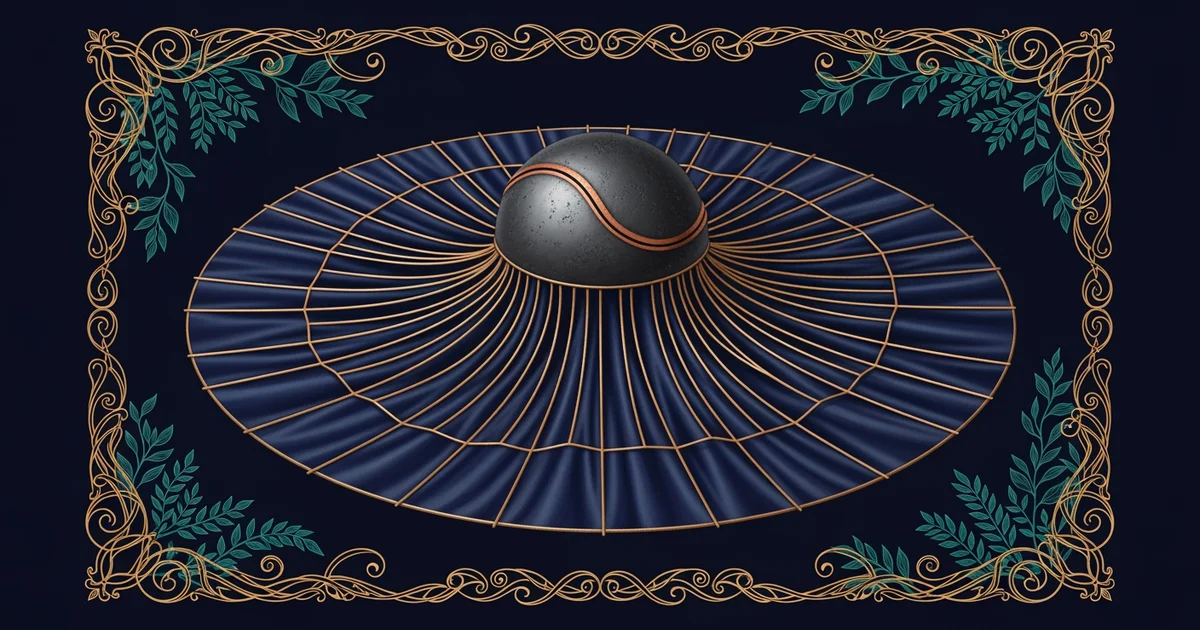
The Physics of Circular Motion
When an object enters orbit, it balances two competing forces to maintain its path. The object possesses tangential velocity, which is the speed directed perpendicular to the gravitational pull. Gravity acts as a centripetal force that constantly pulls the object toward the center of the planet. If the tangential velocity is too low, gravity wins and pulls the object into the atmosphere. If the velocity is too high, the object escapes the gravitational influence of the planet entirely. A stable orbit requires the perfect balance between these two distinct physical vectors.
Think of this balance like a shopper spinning a heavy grocery bag around their waist. The tension in the bag handle acts like gravity, pulling the bag inward toward the hand. If the shopper spins too slowly, the bag drops and hits the floor. If the shopper spins too fast, the handle might snap under the strain. The bag stays in a circular path only when the speed is just right. This maintains the constant distance between the hand and the bag throughout the entire rotation.
Calculating Orbital Requirements
To calculate the speed needed for a stable circular orbit, we use the mass of the planet and the distance from the center. The formula for orbital velocity is expressed as follows:
In this equation, represents the gravitational constant, is the mass of the central body, and is the radius of the orbit. We can see that orbit speed depends entirely on how far the satellite sits from the center. A satellite closer to the planet must move much faster to avoid falling down. A satellite further away can move slower because the gravitational pull is weaker at that distance.
Key term: Orbital Mechanics — the study of the motions of artificial satellites and space vehicles moving under the influence of forces.
We categorize satellite orbits based on their altitude and speed relative to the surface of the planet:
- Low Earth Orbit sits close to the surface and requires very high speeds to stay aloft.
- Medium Earth Orbit exists at a higher altitude and moves slower than low orbit satellites.
- Geostationary Orbit matches the rotation of the planet so the satellite stays above one spot.
These categories ensure that we place satellites in the right spot for their specific mission goals. A weather satellite needs a different altitude than a communications relay to be effective. Engineers must solve the velocity equation precisely before launching any craft into the void of space. Even a small error in the initial speed can cause the mission to fail immediately. Every flight plan relies on these core laws of motion to keep equipment safe. We treat these calculations as the foundation for all modern space travel and satellite technology.
Stable orbits occur when the forward speed of an object perfectly offsets the downward pull of gravity.
But what does it look like when we move beyond simple circular paths and consider the geometry of space itself?
Want this with sources you can check?
Premium Learning Paths for Astronomy & Space Exploration are researched against open-access libraries — PubMed, arXiv, government databases, and more — with their distinctive claims cited to real sources and independently checked.
See what Premium includes