
Gravitational Field Strength
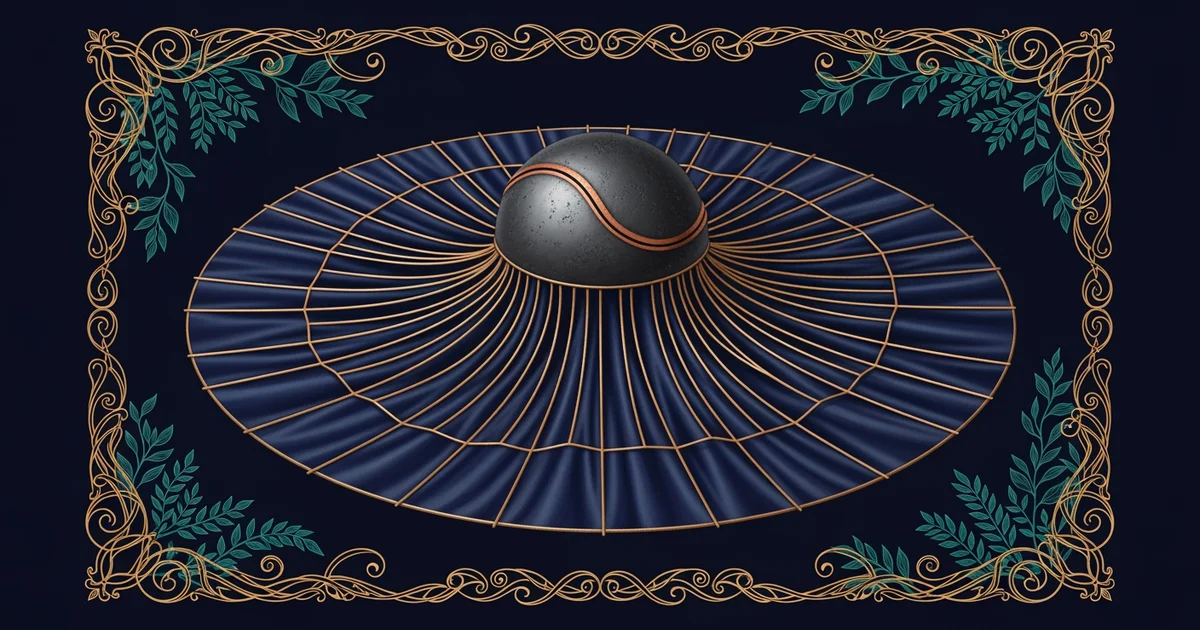
Imagine standing on a massive trampoline while a heavy bowling ball sits in the center. The fabric curves downward around the ball, creating a slope that pulls smaller marbles toward the center. This invisible curvature of space represents a gravitational field, the region of space surrounding any object with mass. Every object in the universe, from tiny pebbles to giant stars, generates this field. The strength of this field dictates how forcefully gravity tugs on other objects nearby. Understanding this concept reveals why planets maintain their paths instead of floating away into the deep dark void.
Measuring the Intensity of Space
To calculate the pull of gravity at a specific point, scientists use the concept of gravitational field strength. This value represents the force exerted per unit of mass on an object placed in the field. When you stand on the surface of a planet, you experience a constant pull toward the center of that mass. If you move further away from that center, the field strength decreases rapidly. The intensity of this field depends entirely on the mass of the object and your distance from its center. Think of it like a heater in a large room, where the air feels warmest near the source but grows much colder as you walk away. The heat intensity drops off because the energy spreads out over a larger area as you move further from the origin point.
Key term: Gravitational field strength — the magnitude of the force of gravity per unit of mass at a specific point in space.
Gravity follows a strict mathematical rule known as the inverse-square law for distance. If you double your distance from the center of a planet, the gravitational pull does not just cut in half. Instead, the force drops to one-fourth of its original value because the influence spreads across the sphere of space. This relationship helps astronomers predict how objects move across vast distances without needing to measure every single movement directly. The following table illustrates how the field strength changes as you move away from a massive body like the Earth.
| Distance from Center | Relative Field Strength | Gravity Intensity |
|---|---|---|
| 1 Earth Radius | 100% | Full Strength |
| 2 Earth Radii | 25% | Weakened Pull |
| 3 Earth Radii | 11% | Significant Drop |
| 4 Earth Radii | 6% | Minimal Influence |
Mapping Forces in the Universe
Mapping these fields requires looking at how mass influences the surrounding environment. Large objects like stars create deep wells in the fabric of space, pulling everything toward them. Smaller objects create shallower wells, meaning their ability to attract nearby matter remains limited. By observing how satellites orbit a planet, we can determine the exact mass of that world. The speed of the satellite provides a clear hint about the strength of the field it occupies. If the field were stronger, the satellite would need more speed to avoid falling inward toward the surface. This balance explains why the moon stays locked in its path around our home planet.
Consider the analogy of a city’s gravitational pull on its workers during the morning rush. The center of the city acts like a massive star, drawing people inward from the surrounding suburbs. Those living close to the center feel a strong pressure to arrive quickly, while those living further away feel less direct influence. The density of the crowd increases as you approach the downtown core, just as the gravitational field intensity increases near a massive body. By modeling these invisible zones, we can predict the behavior of everything from falling apples to massive galaxies spinning in the dark. This framework allows us to navigate the solar system with incredible precision, ensuring that our probes reach their intended targets without getting lost in the shifting currents of space.
Gravitational field strength describes how the intensity of an attractive force diminishes as an object moves further away from a central mass.
The next Station introduces Orbital Mechanics Dynamics, which determines how objects maintain stable paths within these invisible fields.