
Defining the Invisible Pull
Imagine you drop a heavy metal ball and a light feather at the same exact time. You might expect the heavier object to hit the ground first, but they actually land together. This strange reality happens because of a constant, invisible pull that acts on every object in our universe. This force governs how planets orbit stars and how you stay firmly planted on the ground while walking outside. Without this persistent tug, everything in existence would simply float away into the endless void of deep space.
Understanding the Invisible Force
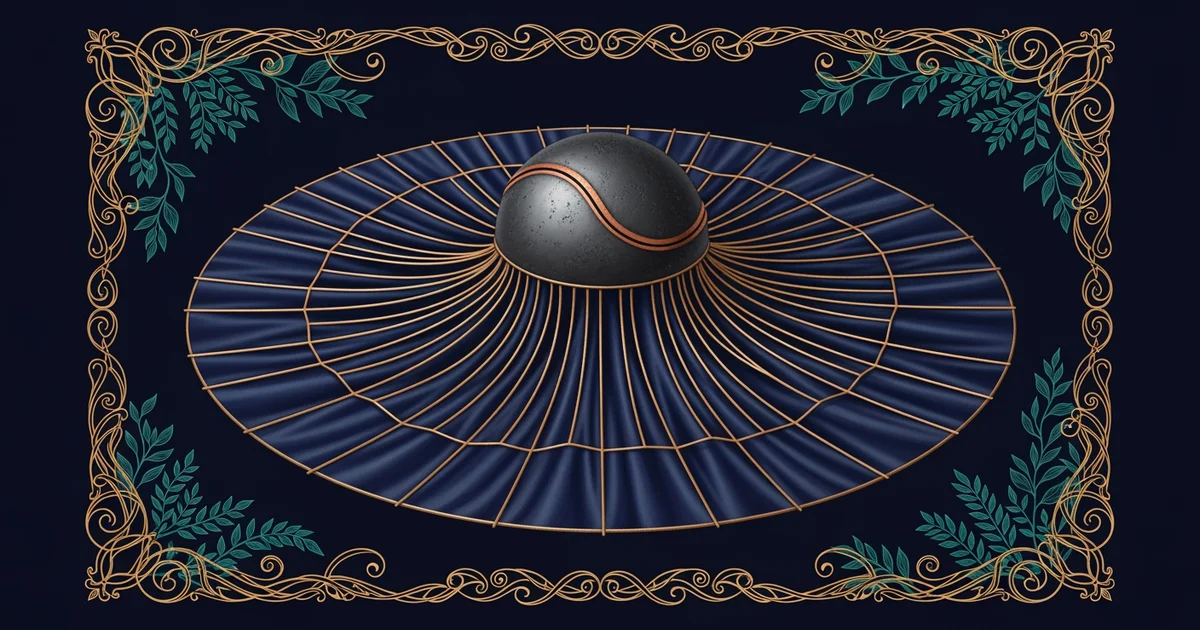
Gravity acts as the silent architect of the entire cosmos by pulling objects toward one another. Every single piece of matter, from the tiniest grain of sand to the largest star, possesses this pull. The strength of this attraction depends entirely on the mass of the objects involved in the interaction. Larger objects exert a much stronger influence than smaller ones because they contain more total material. Think of this force like a giant, invisible bungee cord that stretches across the vast darkness of space. This cord connects every planet and star, ensuring that nothing drifts off into total isolation.
Key term: Gravity — the fundamental force that attracts two bodies toward each other based on their mass.
When you stand on the surface of our planet, you feel the Earth pulling you downward. The Earth is a massive object, so its gravitational grip is strong enough to keep you grounded. This pull is directed toward the center of the planet, which is why things fall in a straight line. If you jump into the air, you always return to the ground instead of floating upward. This happens because the Earth has much more mass than you do, creating a dominant gravitational field.
Why Objects Fall Toward the Center
Objects fall toward the center of the planet because the Earth is a sphere. Every part of the planet contributes to the total gravitational force pulling on your body. Because the mass is distributed equally in all directions, the net effect pulls you toward the core. You can visualize this by looking at how different objects interact with the ground through a simple comparison table.
| Object | Relative Mass | Gravitational Effect | Result of Drop |
|---|---|---|---|
| Small Pebble | Very Low | Negligible | Falls to ground |
| Human Being | Medium | Noticeable | Stays on ground |
| Planet Earth | Extremely High | Massive | Holds everything |
This table shows that while everything has gravity, only massive objects have a noticeable effect. The Earth pulls on you, and you pull on the Earth, but your effect is too small to measure. Because the planet is so large, its pull overwhelms your own, dictating your movement.
- Massive bodies create a strong gravitational field that dominates the local space around them.
- Distance matters because the strength of the pull decreases significantly as you move further away.
- Center-seeking motion occurs because the total mass of a sphere concentrates its pull at the core.
These three rules explain why you stay on the ground instead of drifting into the atmosphere. The mass of the planet is so great that it creates a constant, reliable anchor for everything on the surface. Understanding this helps you see that gravity is not just a local phenomenon, but a universal constant. By mastering this foundation, you will eventually understand how entire galaxies stay held together across billions of years of cosmic history. This path will guide you through the mechanics of space, showing you how gravity shapes the life cycle of stars and the formation of planetary systems.