
Mass and Matter Basics
Imagine you are pushing a heavy shopping cart across a parking lot toward your car. If the cart is empty, you can easily push it with a gentle touch of your hand. When you fill that same cart with heavy bags of groceries, you must use much more force to move it. This simple experience highlights how physical objects behave when they possess different amounts of material inside them. In the study of space, we call this amount of material mass. Mass is a fundamental property that defines how much stuff an object contains regardless of where it resides in the universe. Gravity relies on this mass to pull objects toward one another in a consistent way. Understanding mass is the first step toward seeing why planets and stars move through space as they do. Without mass, gravity would have nothing to hold onto or influence across the dark, empty void of space.
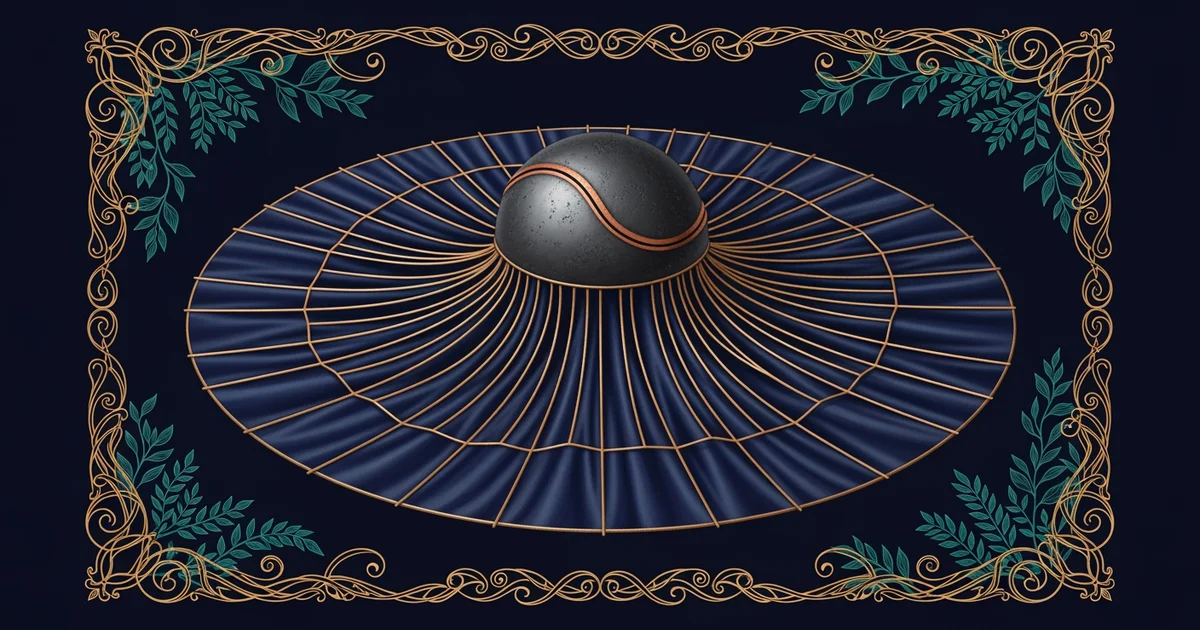
The Relationship Between Matter and Gravity
Because every object with mass exerts a gravitational pull, we must view matter as the source of this force. Think of mass like a magnetic personality in a social setting that draws other people toward it. The more mass an object contains, the stronger its gravitational pull becomes on everything else nearby. This connection explains why the Earth keeps us firmly on the ground while the moon orbits our planet. The Earth has a massive amount of matter, so its gravitational reach is quite strong compared to smaller objects. If you were to double the mass of an object, you would effectively double its ability to attract nearby matter. This relationship is linear, meaning that gravity scales up as the amount of physical material within an object increases.
Key term: Matter — anything that occupies space and possesses mass, serving as the building block for all physical objects in our universe.
To visualize how different masses interact, consider the following comparison of objects found within our own solar system:
- The Sun contains the vast majority of all mass in our solar system, which allows it to hold all planets in stable orbits.
- Jupiter acts as a massive gas giant that exerts a significant pull on smaller asteroids, often acting like a gravitational shield for Earth.
- Earth provides a steady gravitational pull that keeps our atmosphere in place, preventing essential gases from drifting away into the vacuum of space.
These examples show that mass determines the scale of influence an object has on its surroundings. A larger object dominates the local space, while smaller objects like moons or asteroids must follow the paths set by larger bodies. This hierarchy exists because gravity depends entirely on the total amount of matter present in the system.
Measuring and Comparing Physical Mass
Since mass determines gravitational strength, we use specific units to compare how much matter different celestial bodies contain. In scientific terms, we often use the mass of the Sun, denoted as , as a standard unit for measuring large objects. This makes it easier to understand the scale of stars or galaxies without using impossibly large numbers. By comparing everything to a known standard, we can calculate how much gravity a specific object will exert on its neighbors. This calculation is essential for predicting the orbits of planets or the movement of stars in a cluster. If we know the mass of two objects and the distance between them, we can predict their future paths with great precision. The following table illustrates how mass differences affect gravitational influence in a simplified way:
| Object Type | Relative Mass | Gravitational Effect | Influence Range |
|---|---|---|---|
| Asteroid | Very Low | Negligible | Extremely Local |
| Planet | Moderate | Significant | Planetary Orbit |
| Star | Very High | Dominant | Entire System |
This table demonstrates that as mass increases, the gravitational effect shifts from local attraction to system-wide control. Understanding this progression helps astronomers map the structure of the universe by observing how mass dictates movement. Every piece of matter, no matter how small, contributes to the total gravitational field of the cosmos. By studying these basic principles, we can begin to decode the invisible architecture that keeps galaxies spinning and planets orbiting their host stars. This foundation sets the stage for calculating exactly how much force acts on any given object in the vast, deep reaches of space.
Mass acts as the primary driver of gravitational force because it represents the total amount of matter available to create an attractive pull on other objects.
Now that we understand how mass generates gravity, we will explore the specific laws that govern how these objects attract one another across the vast distances of space.