
Tidal Force Interactions
Imagine you are holding a rubber ball that someone is pulling from both sides at once. As the ball stretches, it becomes thinner in the middle while the ends bulge outward. This simple physical distortion explains how gravity from a massive object like the moon affects our planet. When the moon exerts its gravitational pull, it does not act on the entire Earth with the exact same strength. Because the moon is closer to one side of Earth, it pulls on that side harder than the other. This difference in strength is what we call tidal force, and it creates the rhythmic movement of our oceans.
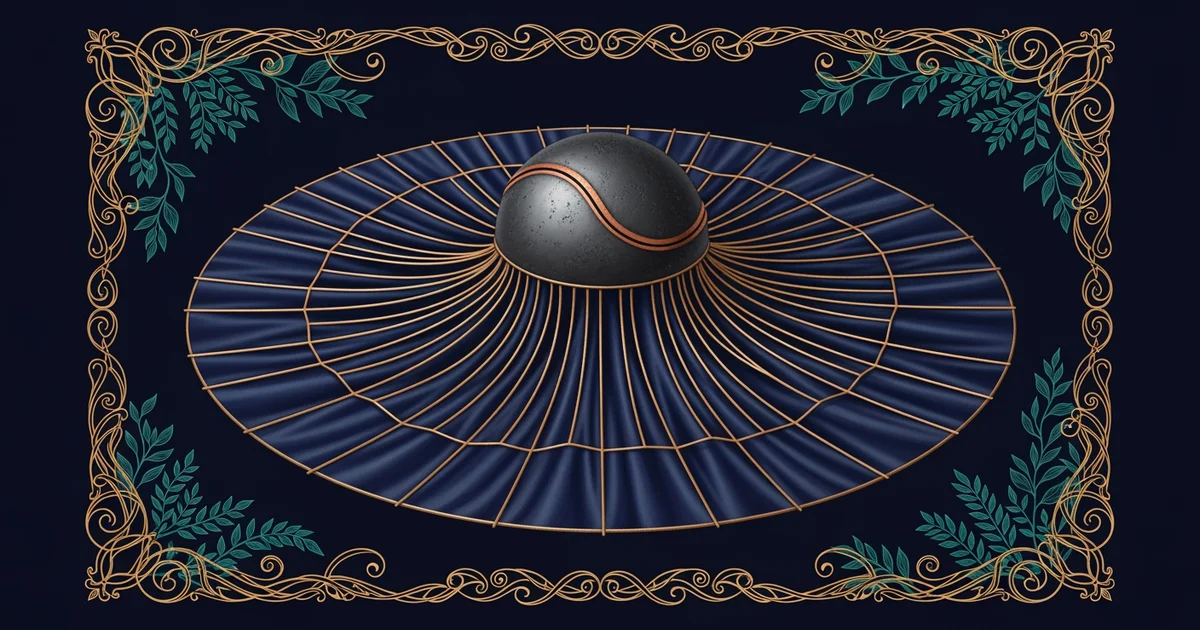
The Mechanics of Gravitational Stretching
Gravity follows an inverse square law, meaning its influence drops quickly as distance between objects increases. Since the moon is relatively close to Earth, this difference in distance creates a measurable gradient across our planet. The water on the side of Earth facing the moon feels a stronger pull than the solid center of the planet. Simultaneously, the water on the far side feels a weaker pull than the center does. This creates a stretching effect that pulls the oceans into a slight oval shape. Think of this like a household budget that must stretch to cover two separate major expenses at once. The budget creates a bulge in spending capacity at two different points while the middle remains under tighter control. This dual bulge is why we experience two high tides each day as the Earth rotates through these stretched regions.
Key term: Tidal force — the secondary effect of gravity that stretches a body along the line connecting it to a second massive body.
These forces are not limited to water, though the fluid nature of our oceans makes the effects very visible. The solid crust of the Earth also experiences these tidal stresses, rising and falling by several centimeters every day. Because rock is rigid, we do not see it bulge like water, but the movement is constant. We can compare the impact of these forces across different celestial bodies to see how mass and distance change the outcome.
| Body | Primary Influence | Tidal Effect Strength |
|---|---|---|
| Earth | Moon | Moderate fluid bulge |
| Sun | Earth | Weak solar tide |
| Io | Jupiter | Intense volcanic heat |
Global Impact of Tidal Interactions
When we look at the interaction between Earth and the moon, we see a complex dance of energy transfer. The Earth rotates much faster than the moon orbits, which drags the tidal bulges slightly ahead of the moon. This creates a friction-like interaction that slowly steals energy from the Earth's rotation. Over millions of years, this process has caused the Earth's rotation to slow down by tiny fractions of a second. The energy lost by the Earth is transferred to the moon, pushing it into a slightly higher orbit. This means the moon is moving away from us at a rate of about four centimeters every year.
- Differential Gravity: The moon pulls harder on the near side of Earth than the far side.
- Oceanic Bulging: Water moves toward the areas of strongest pull, creating two high tide zones.
- Rotational Friction: Earth rotates through these bulges, creating drag that slows our planet down.
- Orbital Migration: The energy transferred from the rotation pushes the moon further into space.
This cycle of energy exchange is a fundamental part of the mechanics that govern our solar system. The tides are not just about water moving on a beach, but about the constant transfer of momentum between orbiting bodies. Without these tidal forces, the Earth would rotate much faster, and our days would be significantly shorter than they are today. We live on a planet that is constantly being reshaped by the invisible tug of its closest neighbor.
The tidal force creates a stretching effect on planetary bodies because gravity pulls with different strengths across the diameter of a planet.
But what does it look like when a body gets too close to a massive object and the tidal forces become extreme?