
The Future of Exploration
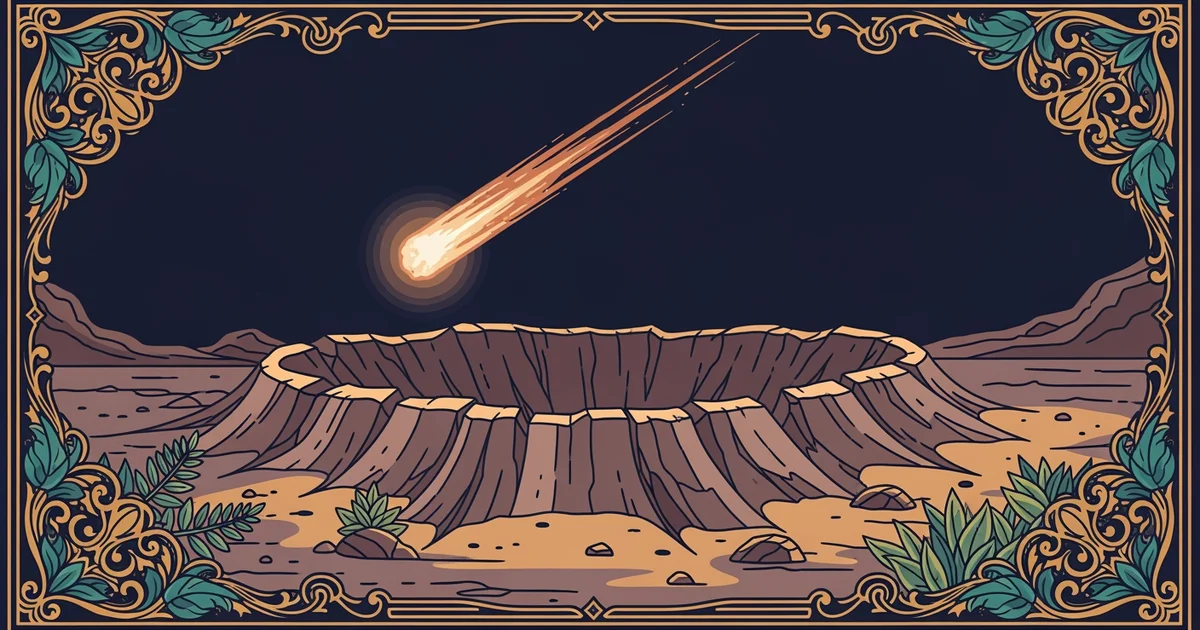
Imagine standing on a distant moon while watching a massive rock streak toward the horizon. This violent collision is not just a destructive event but a creative force for planets. Future space exploration depends on our ability to predict these impacts before they occur. We must treat these rocks as both historical records and potential future hazards for humanity. By studying past craters, we gain the foresight to protect our home world from future harm.
Understanding Planetary Evolution Through Impacts
Impacts act like a cosmic clock that keeps time for our entire solar system. When a large body strikes a planet, it leaves behind a permanent scar called an impact crater. These features allow scientists to date surfaces by counting how many craters exist in one area. A surface with many craters is usually much older than a smooth, volcanic plain. This method helps us map the geological history of worlds like Mars or our own Moon. We look at these scars to understand how long a world has remained geologically active. If a planet has few craters, it likely buried its history through lava flows or tectonic shifts. This process is much like a busy street where fresh pavement hides old tire tracks over time.
Key term: Impact crater — a bowl-shaped depression on a planetary surface caused by the high-speed collision of a smaller object.
We must link these observations to the broader history of our neighborhood in space. Early in the solar system, debris was far more common than it is today. This era of heavy bombardment shaped the composition of planets by delivering water and organic molecules. We now know that impacts do more than destroy; they seed planets with the building blocks of life. By synthesizing data from previous missions, we see that impacts are a fundamental part of planetary growth. This realization changes our perspective from viewing space rocks as mere threats to seeing them as essential architects. We must now decide how to monitor these architects to ensure they do not disrupt our future.
Strategies for Future Planetary Defense
Active monitoring of near-Earth objects is the next major step for space agencies worldwide. We use advanced telescopes to track the paths of asteroids that might cross our orbit. If we find a rock on a collision course, we must develop ways to change its path. Scientists are currently testing methods to nudge these objects using kinetic energy or gravity tractors. These missions are expensive, but they represent a necessary investment in the safety of our civilization. Just as an insurance policy protects a home from fire, these projects protect our planet from cosmic accidents.
Below are three key strategies for managing the risk of future asteroid impacts on Earth:
- Kinetic impactors involve crashing a high-speed probe into an asteroid to change its velocity slightly — this small nudge over time can prevent a future collision with our planet.
- Gravity tractors use the gravitational pull of a heavy spacecraft to slowly drag an asteroid off its path — this method requires years of careful, steady maneuvering.
- Nuclear deflection remains a theoretical option for very large objects that pose an immediate threat — this would use energy to vaporize the surface and push the rock.
| Strategy | Mechanism | Time Needed | Primary Goal |
|---|---|---|---|
| Kinetic | Collision | Short-term | Deflection |
| Gravity | Attraction | Long-term | Guidance |
| Nuclear | Explosion | Emergency | Vaporization |
We must integrate these tools into a global network that operates around the clock. The future of exploration relies on our ability to turn fear into precise scientific action. We are moving from a phase of observation into a new era of active planetary management. This transition will define the next century of space travel and our role in the solar system. By mastering these techniques, we ensure that humanity remains a multi-planetary species that can survive cosmic challenges. We are no longer passive victims of random impacts but active participants in our own destiny.
Future exploration requires shifting our focus from simply observing impact history to actively managing the risks posed by ongoing solar system evolution.
The next station will synthesize all impact science to provide a comprehensive view of how these events have dictated the survival of life on Earth.