
The Impact Process
Imagine you are standing at the edge of a frozen lake and you throw a heavy stone into the center. The moment the stone hits the surface, it sends out a ripple that pushes the water outward in every direction. When a giant space rock hits a planet, the process works in a similar way but on a much larger and more violent scale. This event creates a massive hole in the ground that we call a crater. Scientists study these events to learn how planets change over time after they first form.
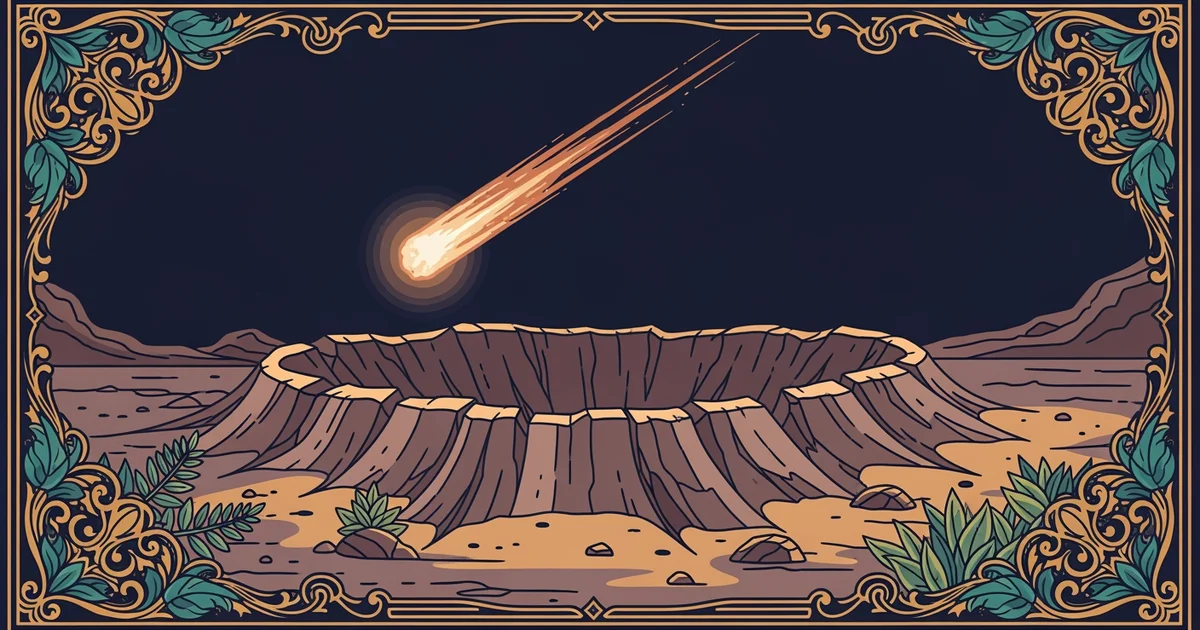
The Three Stages of Cratering
When a meteorite hits a solid surface at high speed, it undergoes a rapid sequence of events. The contact phase happens during the first few seconds of the collision. The energy from the moving rock transfers instantly to the ground. This force creates a shock wave that moves through the target rock. The ground cannot hold its shape under this pressure, so it begins to deform instantly. Think of this like a hammer hitting a piece of soft clay. The clay does not just sit there, but it moves away from the point of impact.
Key term: Impact crater — a large circular depression formed on a planet surface when a high speed object strikes the ground.
After the initial contact, the excavation phase begins to push material away from the center. The shock wave continues to expand, and it starts to lift the ground upward and outward. This action clears a deep path into the surface of the planet. Much of the ground turns into dust or melts because of the intense heat. This stage creates the main bowl shape that we see in satellite photos today. The speed of the rock determines how large and deep this bowl becomes during the process.
| Stage | Primary Action | Resulting Change |
|---|---|---|
| Contact | Energy transfer | Shock wave forms |
| Excavation | Material removal | Bowl shape grows |
| Modification | Surface collapse | Final rim settles |
Finally, the modification phase changes the shape of the hole into its final form. Gravity pulls the steep walls of the crater inward toward the center. This causes the edges to slump and slide down into the bowl. Large craters might even form a central peak because the ground bounces back like a spring. This phase stops when the ground finally finds a balance and stops moving. The crater now looks like a permanent scar on the surface of the planet.
We can summarize these stages by looking at how the energy moves through the ground during the crash:
- Initial contact forces the rock to dump all its kinetic energy into the target surface.
- Rapid excavation throws massive amounts of debris into the air to form a deep hole.
- Final modification adjusts the rim height and floor shape to reach a stable state.
These three steps turn a simple collision into a lasting geological feature. Every crater you see on the moon or other planets tells a story of this violent process. Understanding these steps allows us to calculate how fast the original rock was moving. It also helps us map the history of impacts across the entire solar system. By looking at the size and depth of a crater, we can estimate the size of the object that caused it.
The impact process follows a specific sequence of energy transfer that reshapes a planetary surface into a stable crater.
The next Station introduces mapping Earth craters, which determines how we identify past collisions on our own planet.