
Shock Metamorphism
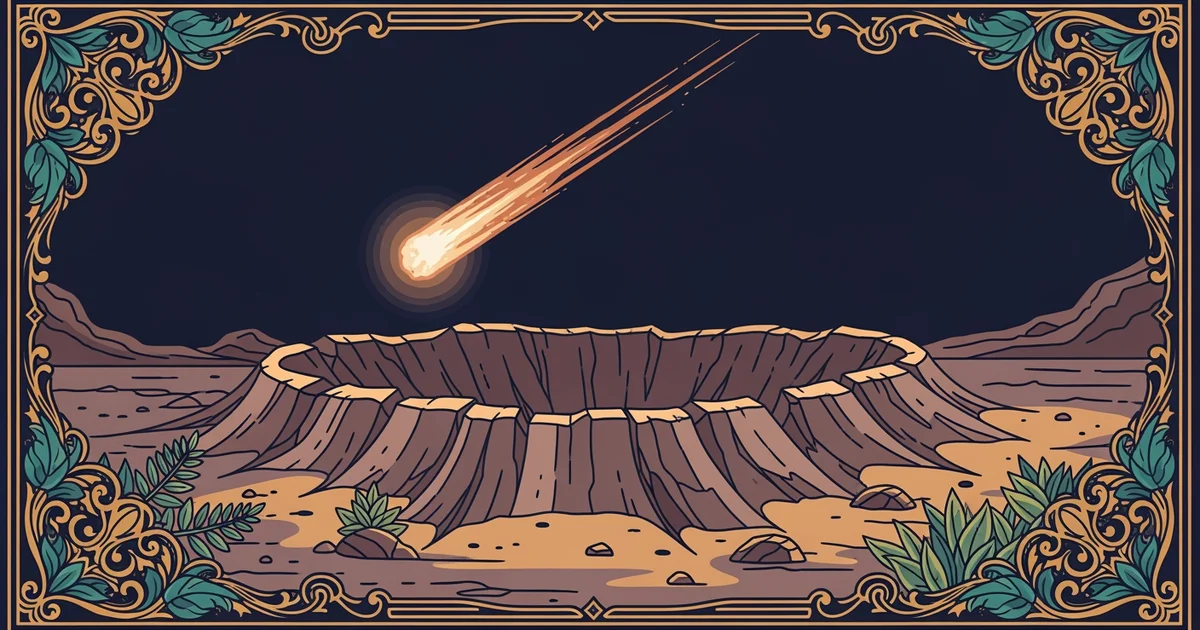
Imagine you are driving a car that suddenly hits a solid concrete wall at high speed. The metal frame of your vehicle would crumple and change shape instantly because of the massive force involved. Space impacts function in a similar way when a large asteroid strikes the surface of a planet or moon. This process forces minerals to undergo rapid physical changes that would never occur under normal geological conditions. Scientists call this phenomenon shock metamorphism because the intense pressure permanently alters the internal structure of rocks.
The Mechanics of High Pressure Impacts
When an asteroid hits the ground, it delivers a massive amount of kinetic energy in a tiny fraction of a second. This energy creates a shock wave that travels through the target rock at speeds exceeding several kilometers per second. As the shock wave passes, it compresses the minerals so tightly that their crystal lattices collapse or rearrange themselves. Think of this process like a crowded elevator where everyone is forced to stand closer together than they would normally choose to be. The atoms are pushed into new positions, creating high-pressure phases that remain trapped within the rock long after the impact event ends. This transformation is not a slow process like typical mountain building, but rather an instantaneous event that leaves a permanent record of the collision.
Key term: Shock metamorphism — the process where extreme pressure from a high-speed impact alters the physical and chemical state of minerals.
Because the pressure is so intense, it can cause minerals to melt or even vaporize even if the ambient temperature is relatively low. This rapid transition is unique to impact events and serves as a diagnostic tool for researchers studying craters on Earth. If you find a rock that shows signs of these sudden changes, you can be certain that an impact event occurred at that location in the past. These rocks act as geological time capsules that preserve the history of violent collisions across our solar system.
Identifying Evidence of Ancient Impacts
One of the most reliable markers for identifying an impact site is the presence of shocked quartz within the local rock layers. Under a microscope, these quartz grains display tiny, parallel lines known as planar deformation features that result from the shock wave. These lines indicate that the crystal structure was shattered and then frozen in place during the brief moment of extreme compression. You will not find these specific patterns in rocks formed by volcanic activity or tectonic plate movement, which makes them a definitive signal of an extraterrestrial impact.
To better understand the intensity of these events, we can compare the effects of different pressure levels on common minerals:
| Pressure Level | Observed Effect on Quartz | Structural Change |
|---|---|---|
| Low Pressure | Microscopic fractures | Minor lattice strain |
| Medium Pressure | Planar deformation | Crystal plane sliding |
| High Pressure | Phase transition | Transformation to stishovite |
These changes provide a clear scale for scientists to measure the energy of an impact. By analyzing the density of these features, researchers can calculate the velocity of the asteroid and the size of the crater it produced. This data helps us map the frequency of impacts throughout history, allowing us to understand how often our planet faces such dramatic events. Every grain of sand holds a story of a violent past that we are only now learning to decode through careful observation.
Shock metamorphism provides a permanent physical record of high-velocity impacts by forcing minerals into structural states that only occur under extreme, instantaneous pressure.
But what does it look like in practice when these shock waves interact with the orbital paths of planets?