
Extinction Events
Imagine you are driving a car down a busy highway when a massive boulder suddenly crashes onto the road. This sudden, violent event forces every driver to stop immediately and changes the flow of traffic forever. Large space rocks hitting our planet act in a similar way by disrupting the natural patterns of life on Earth. These impacts cause drastic environmental shifts that force species to adapt or face total disappearance from the fossil record. Understanding these events helps us see how our planet remains linked to the wider solar system.
The Mechanism of Mass Extinction
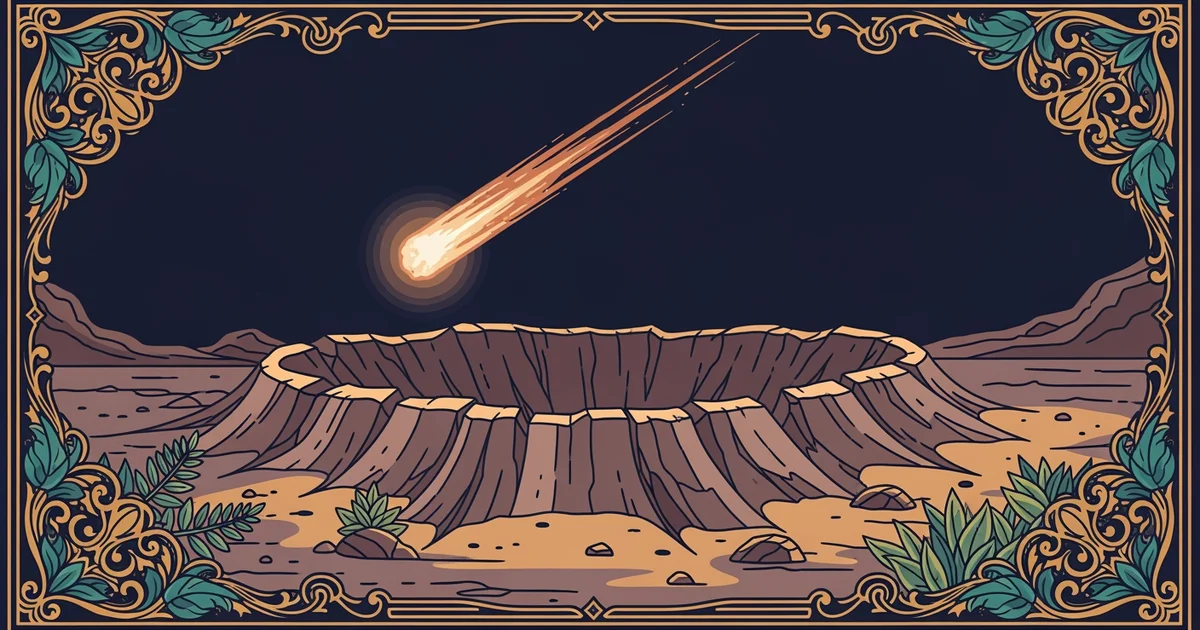
When a massive asteroid strikes our planet, the immediate impact creates a shockwave that travels through the ground and air. This blast releases energy equal to millions of nuclear weapons detonating at the exact same time. The heat from this explosion ignites massive wildfires that spread across entire continents within just a few hours. Following the fire, a thick cloud of dust and debris rises into the upper atmosphere to block out the sun. This global darkness stops plants from performing photosynthesis, which causes the base of the food chain to collapse entirely.
Key term: Extinction event — a period in geological history where a large percentage of all living species die out globally.
Because the food supply vanishes, larger animals that require high amounts of energy struggle to survive the changing climate. This situation is like a household losing its primary income during a recession, forcing everyone to cut back on every single luxury. Small creatures that can hide in burrows or eat decaying plant matter have a better chance of living through the disaster. Over time, the dust settles and the sun returns, but the world is no longer the same. The survivors now occupy ecological niches that were once held by the species that perished in the fire.
The K-Pg Impact Evidence
One of the most famous examples of this phenomenon is the K-Pg extinction event that occurred about 66 million years ago. Scientists found a thin layer of iridium in rocks all around the world that dates back to this specific time. Since iridium is very rare on the surface of our planet but common in space rocks, this layer serves as a fingerprint for a major impact. This event ended the reign of the dinosaurs and allowed mammals to eventually thrive and evolve into the diverse forms we see today.
| Feature | Description | Impact on Life |
|---|---|---|
| Dust Veil | Suspended debris blocking sunlight | Photosynthesis stops globally |
| Heat Pulse | Intense thermal radiation from blast | Massive forest fires ignite |
| Acid Rain | Chemicals reacting in the atmosphere | Ocean chemistry changes rapidly |
We can summarize the primary environmental stressors caused by these massive space impacts through the following list:
- The rapid cooling of the global climate happens when dust prevents solar energy from reaching the surface of the Earth, which leads to freezing temperatures that many tropical species cannot survive.
- The collapse of the food web occurs because plants die without sunlight, meaning herbivores starve, which eventually leaves predators with no prey to sustain their high metabolic needs.
- The chemical changes in the oceans happen when debris causes acid rain to form, which destroys the shells of tiny marine organisms and disrupts the entire aquatic ecosystem for thousands of years.
These events are not just random accidents because they shape the path of evolution by clearing space for new life forms to emerge. By studying these craters and the layers of rock they leave behind, we learn how fragile the balance of nature truly is. Each impact acts as a reset button that forces the planet to begin a new chapter of biological development. We are the direct result of these ancient, violent collisions that changed the course of history for every living thing on this planet.
Massive asteroid impacts cause global environmental collapse by blocking sunlight, which forces a rapid and permanent change in the history of life on Earth.
The next Station introduces kinetic energy calculations, which determines how the size and speed of an object change the severity of an impact.