
PT Symmetry Basics
Imagine a balanced scale where you add weight to one side while simultaneously removing the exact same amount from the other. This dynamic process keeps the system level even though the items on the scale are constantly changing. In the strange world of quantum mechanics, some systems behave in this exact same way to maintain stability. These systems gain and lose energy in a balanced dance that keeps their overall state perfectly steady. This balance is the core of what scientists call parity-time symmetry.
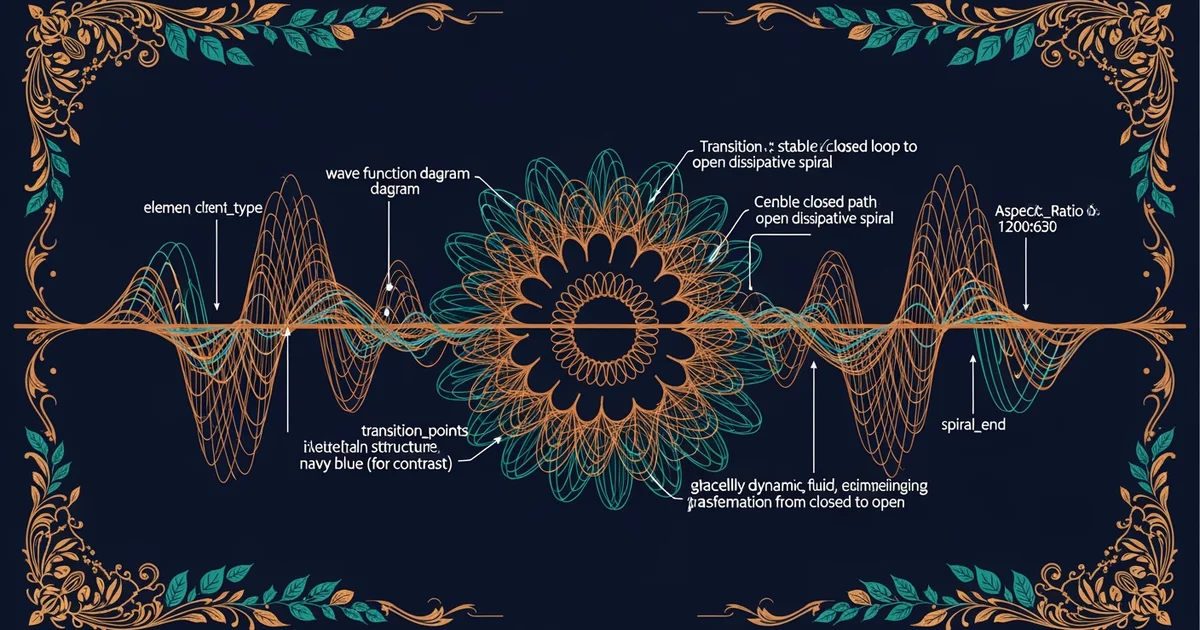
Understanding the Components of Symmetry
To grasp how this works, we must look at the two distinct operations that form this symmetry. The first operation is parity, which acts like a spatial mirror reflection of the system. If you imagine a particle moving in space, parity flips its position across a central point. The second operation is time reversal, which essentially runs the clock backward for the quantum system. When you combine these two actions, you create a unique mathematical environment where gain and loss processes cancel each other out perfectly.
Think of this system like a bank account that earns interest at the same rate you withdraw cash. As long as the interest rate matches your spending, the total balance in the account remains constant over time. If the interest rate falls or your spending increases, the balance shifts and the symmetry breaks down. In quantum mechanics, we represent these processes using mathematical operators that track how the system evolves. When the combined parity and time operator leaves the system unchanged, we say the system exhibits this special symmetry.
Key term: PT symmetry — a property of quantum systems where the combined effects of spatial reflection and time reversal result in a stable, real energy spectrum.
Analyzing the Balance of Energy
When a physical system follows these rules, it behaves as if it were closed, even if it is actually open. This is a profound discovery because it allows us to build devices that manage light or energy in new ways. By carefully tuning the gain and loss in these systems, researchers can create materials that act as one-way streets for waves. These materials allow energy to pass in one direction while blocking it from returning. This control is vital for developing better sensors and advanced communication technology.
| Feature | Parity Operation | Time Reversal Operation | Combined PT Symmetry |
|---|---|---|---|
| Effect | Flips position | Reverses motion | Balances energy flow |
| Result | Spatial mirror | Temporal inversion | Stable quantum state |
| Purpose | Symmetry check | Symmetry check | System equilibrium |
We can summarize the requirements for this symmetry through these three essential conditions:
- The spatial configuration of the system must be symmetric so that the parity flip does not alter the physical landscape.
- The gain and loss components must be perfectly balanced so that energy added to the system is removed elsewhere.
- The mathematical operator for the system must commute with the combined parity and time operator to ensure stability.
These conditions ensure that the system does not spiral out of control as it interacts with its surroundings. By maintaining this balance, the system avoids the chaotic behavior usually expected in open physical environments. This stability allows the system to follow predictable laws despite the constant exchange of energy with the outside world. Mastering this concept helps us understand how complex systems can remain robust under changing conditions.
Parity-time symmetry functions by balancing spatial reflections with temporal reversals to ensure that energy gains and losses cancel out, keeping the quantum system stable.
The next Station introduces Exceptional Points, which determine how the stability of these systems changes when the balance is pushed to its absolute limit.