
Friction and Boundary Layers
Imagine walking through a dense forest where the thick underbrush slows your pace compared to running on a flat, open road. Air molecules encounter a similar struggle when moving across the irregular surface of the Earth, transforming kinetic energy into heat through constant collisions with obstacles.
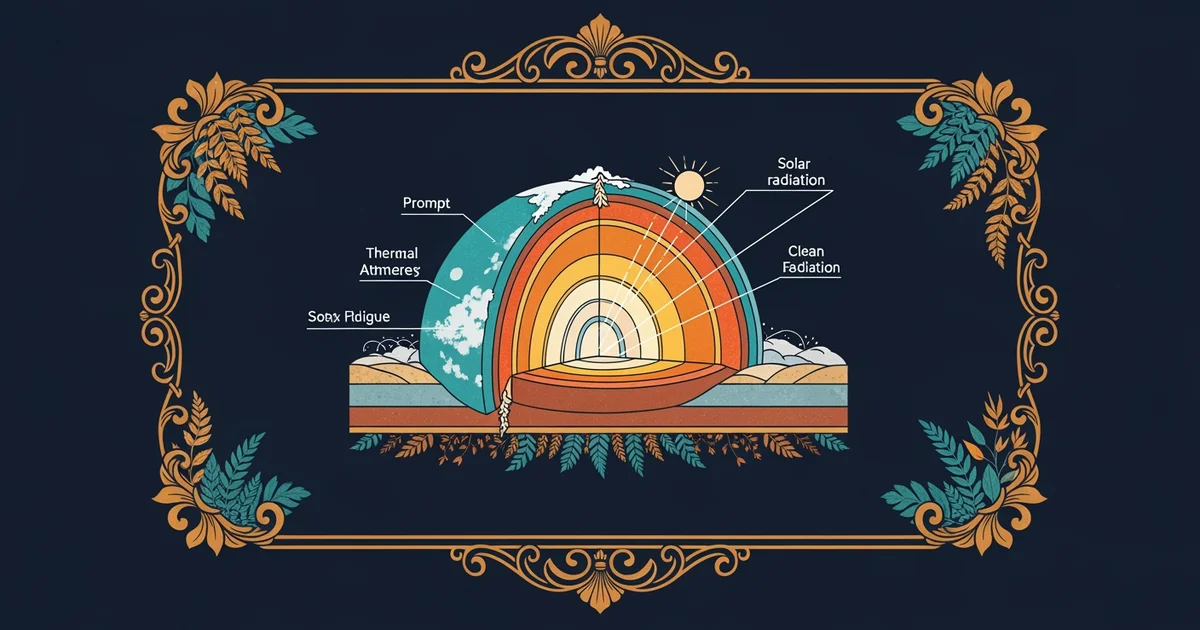
The Mechanics of Surface Drag
When air flows over the ground, it experiences a phenomenon known as friction, which acts as a resistive force against the motion of the wind. This interaction occurs because the ground is never perfectly smooth, forcing air particles to navigate around trees, buildings, and hills. As these air molecules strike surface features, they lose momentum and transfer some of their kinetic energy into the ground itself. This energy transfer effectively slows down the wind speed near the surface compared to the faster winds found higher up in the atmosphere. You can think of this process like a person dragging their hand along a wall while running, where the surface contact creates a drag force that limits overall speed. The rougher the terrain, the more significant this energy loss becomes, leading to a noticeable decrease in wind velocity within the lowest layers of the air. This relationship explains why winds are consistently calmer near the ground than they are at higher altitudes where surface obstacles are absent.
Key term: Friction — the resistive force generated when air molecules collide with surface obstacles, converting kinetic energy into thermal energy and slowing wind speed.
Defining the Boundary Layer
Because of this constant interaction with the ground, a specific region of the atmosphere forms that behaves differently from the air above it. This region is called the boundary layer, and it serves as the transition zone between the surface and the free atmosphere. Within this layer, the influence of the ground is dominant, causing the wind speed to increase steadily as you move upward away from the surface. The thickness of this layer is not constant, as it changes based on the roughness of the terrain and the stability of the air. Over a flat ocean surface, the boundary layer might be quite thin because there are few obstacles to create drag. Conversely, over a dense city or a rugged mountain range, the layer can extend much higher into the sky because the obstacles are taller and more numerous. This layer acts as a buffer, regulating how heat and moisture move from the surface into the upper levels of the atmosphere.
To better understand how different environments influence wind flow, we can categorize surfaces by their drag impact:
- Smooth surfaces like open water allow air to glide with minimal resistance, keeping the boundary layer thin and the wind speed higher near the surface.
- Moderate surfaces like flat grasslands create enough friction to reduce wind speed, causing a gradual increase in velocity as altitude increases.
- Rough surfaces like dense urban environments force the wind to swirl around buildings, which creates significant turbulence and thickens the boundary layer substantially.
This variation in surface roughness plays a critical role in how weather patterns develop across different regions. When air is forced to rise over these rough areas, the friction-induced turbulence can trigger mechanical lifting, which often leads to the development of localized cloud formations. This process demonstrates that the ground is not just a passive container for the atmosphere, but an active participant in shaping weather behavior. By understanding how the boundary layer functions, we gain insight into why wind speeds change drastically over short distances.
The boundary layer acts as a physical filter that slows surface winds through constant interaction with the varied texture of the Earth.
Now that we understand how surface friction shapes wind flow, how do these mechanical forces actually trigger the development of clouds?