
Common Cycle Variations
When a small business owner manages inventory during a busy holiday season, they expect a steady flow of goods to arrive and depart at predictable intervals. If the delivery truck arrives two days late or the warehouse receives double the expected stock, the business owner must adjust their entire operational strategy to compensate for these unexpected variations. This situation mirrors the physiological reality of the human reproductive system, where hormonal signals act as the supply chain governing the monthly cycle. Just as a business owner relies on consistent data from Station 11 to predict future demand, the body relies on precise hormonal feedback loops to maintain a standard cycle length. When these signals fluctuate, the resulting shift in timing represents a common variation rather than a failure of the biological system itself.
Identifying Patterns in Cycle Length
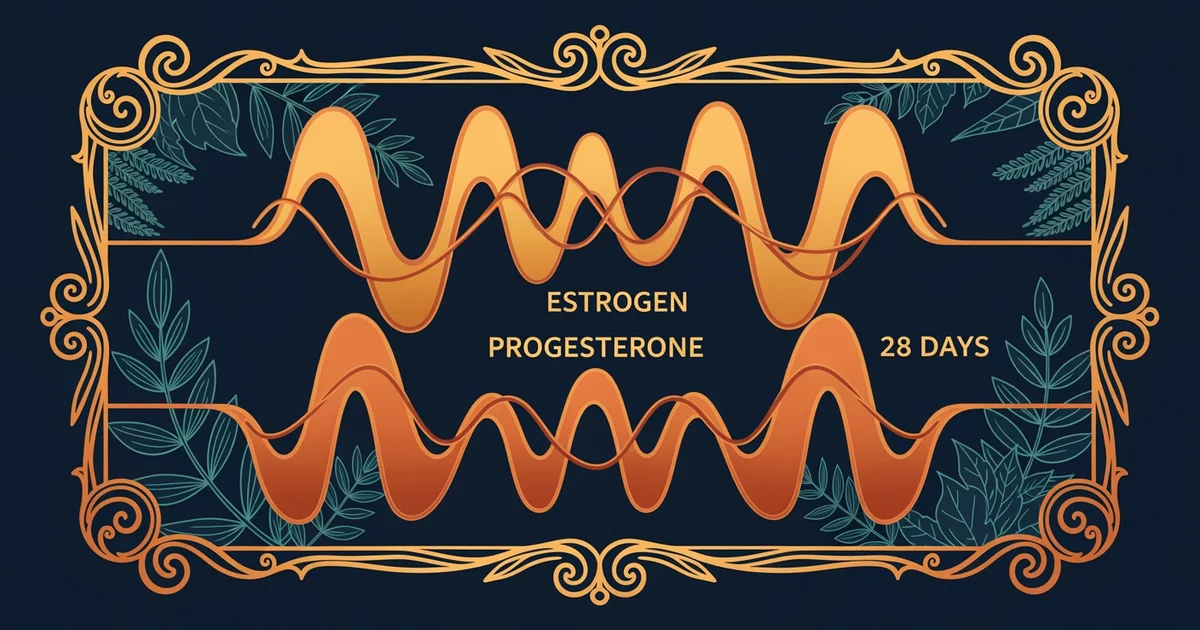
Biological systems often operate within a range of acceptable performance rather than a single fixed point. While the average cycle length is frequently cited as twenty-eight days, clinical evidence shows that healthy cycles often fall anywhere between twenty-one and thirty-five days. These variations occur because the follicular phase, which precedes ovulation, can fluctuate significantly in duration due to external stressors or metabolic changes. Think of this range like a local train schedule that allows for a five-minute variance; the train is still considered on time as long as it arrives within that established window. When cycles consistently fall outside this window, individuals should observe these patterns over several months to distinguish between a temporary anomaly and a persistent irregularity.
Key term: Menstruation — the periodic shedding of the uterine lining that occurs when hormone levels drop at the end of a cycle.
Consistent tracking allows individuals to identify if a cycle length is truly irregular or simply an outlier within a normal range. If a cycle lasts thirty-six days once, it may result from a minor delay in ovulation caused by travel or illness. However, if cycles are consistently shorter than twenty-one days or longer than thirty-five days, the underlying hormonal rhythm requires closer observation. This pattern of tracking provides the data necessary to differentiate between expected biological diversity and potential health concerns that warrant a professional consultation. Understanding these boundaries empowers individuals to manage their health with greater confidence and clarity.
Factors Influencing Cycle Consistency
Several internal and external factors influence the timing of the hormonal cascade that drives the cycle. The following list outlines common variables that frequently cause shifts in cycle length:
- Psychological stress impacts the hypothalamus, which acts as the control center for hormone production, potentially delaying the release of signals that trigger ovulation.
- Significant changes in physical activity levels can alter metabolic rates, forcing the body to prioritize energy conservation over reproductive processes during high-intensity training phases.
- Nutritional intake fluctuations affect the availability of essential building blocks needed for hormone synthesis, which can slow down the maturation of follicles within the ovaries.
These factors demonstrate that the body is highly responsive to the environment, meaning that cycle variations are often adaptive responses rather than random errors. When the brain detects high levels of stress or low energy availability, it may postpone ovulation to protect the individual's overall physiological stability. This adaptive mechanism is a testament to the sophistication of the endocrine system in balancing competing demands. By recognizing these triggers, individuals gain insight into how their daily lifestyle choices directly communicate with their internal hormonal environment.
Comparing Cycle Characteristics
| Cycle Type | Typical Duration | Primary Feature | Potential Cause |
|---|---|---|---|
| Regular | 21-35 days | Predictable rhythm | Balanced feedback |
| Shortened | Under 21 days | Frequent shedding | Early follicle drop |
| Prolonged | Over 35 days | Infrequent cycles | Delayed ovulation |
This table illustrates that cycle variations exist on a spectrum where duration is the primary indicator of systemic rhythm. A shortened cycle often indicates that the follicular phase has ended prematurely, while a prolonged cycle suggests the body is taking extra time to prepare for ovulation. By viewing these variations as data points rather than problems, individuals can better navigate their health journey. This approach turns the unpredictability of the cycle into a manageable aspect of daily life, ensuring that health decisions remain grounded in observable evidence.
Recognizing that cycle length exists within a broad, healthy range allows individuals to interpret hormonal variations as adaptive responses to their environment rather than immediate indicators of illness.
But this model of predictable variance becomes more complex when lifestyle factors begin to permanently alter the underlying hormonal baseline. This content is educational only and does not constitute medical advice. Always consult a qualified healthcare professional for personal health decisions.