
The Hypothalamic Connection
Imagine a thermostat inside your home that suddenly loses its ability to read the room temperature. Even when the house feels chilly, the system might trigger the air conditioning to blast cold air throughout the living space. This internal confusion creates a sudden, intense wave of heat that leaves people feeling physically overwhelmed and quite uncomfortable.
The Brain as a Control Center
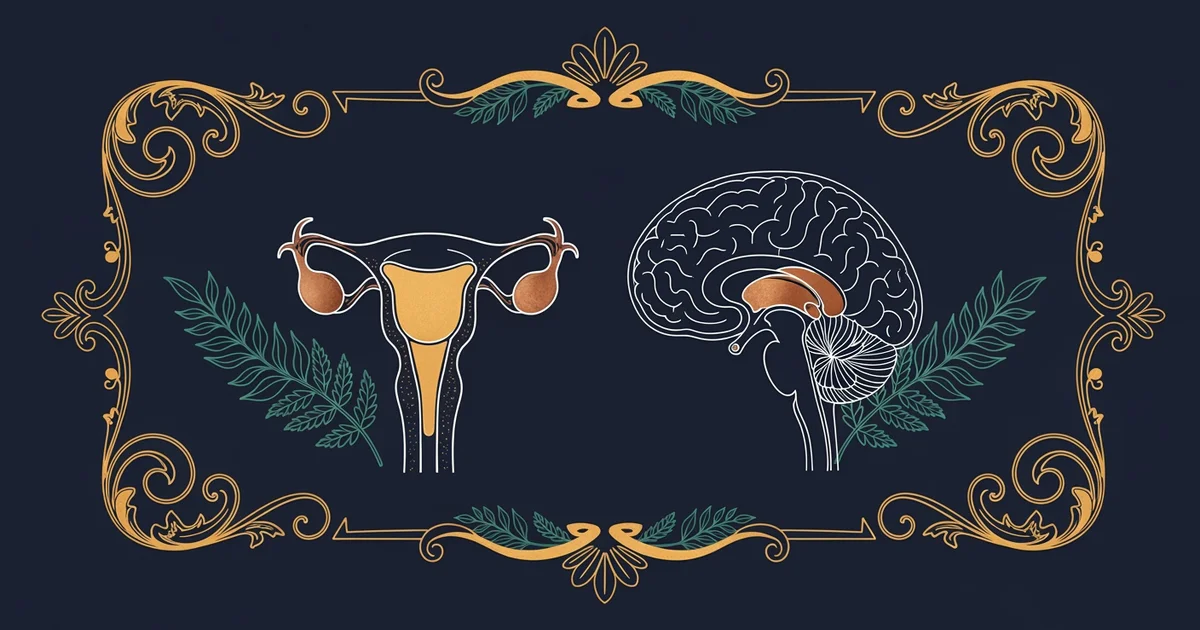
Within the human brain, the hypothalamus serves as the master regulator for internal body temperature and metabolic balance. This small region acts like the control center for a large building, constantly monitoring sensors that report on the body's current heat levels. When hormone levels remain steady, this area keeps the internal environment within a very narrow and comfortable range for daily function. However, during the transition of menopause, the shifting chemical signals from the ovaries create a noisy environment for the brain. The hypothalamus struggles to filter these erratic signals, which leads to a loss of precision in managing heat dissipation. Instead of maintaining a steady state, the brain misinterprets these signals and triggers cooling mechanisms as if the body were overheating. This reaction happens even when the actual core temperature remains perfectly normal.
Key term: Hypothalamus — the portion of the brain that acts as the primary control center for regulating body temperature and other autonomic functions.
This process functions much like a faulty cruise control system in a vehicle that is climbing a steep mountain road. As the car encounters uneven terrain, the computer becomes confused by the changing resistance and suddenly hits the brakes while the engine is trying to accelerate. In the human body, the brain perceives a threat to thermal stability that does not exist in reality. It sends rapid signals to the skin, causing blood vessels to widen and sweat glands to activate. This physiological response is an attempt to dump excess heat that the body has not actually generated. Because the regulatory system is not receiving clean data, it overcorrects, leading to the physical sensation of a sudden, intense flash of heat that travels across the body.
Connecting Signals to Physical Symptoms
Research suggests that these temperature fluctuations stem from a breakdown in communication between the hormonal system and the neural pathways. The brain relies on a steady flow of estrogen to help process signals related to the body's set point for heat. As estrogen levels drop during the transition, the threshold for what the brain considers "too hot" becomes significantly lower. This narrowed comfort zone means that even tiny shifts in ambient temperature or internal activity can trigger a full-scale cooling response. The following table summarizes how different systems interact during this process to create the physical experience of heat regulation issues.
| System Component | Role in Regulation | Impact of Hormonal Shift |
|---|---|---|
| Hypothalamus | Temperature Monitor | Becomes hypersensitive |
| Blood Vessels | Heat Distribution | Dilate to release heat |
| Sweat Glands | Evaporative Cooling | Activate prematurely |
Individuals experiencing these shifts often report that their internal climate control feels completely unpredictable during the day and night. The brain is essentially working with a damaged map, trying to navigate a path that has changed due to the hormonal decline. Understanding that this is a neurological signaling issue rather than a failure of the body to cool itself provides a clearer picture of the biological transition. It highlights the fact that the brain is doing exactly what it was designed to do, but it is doing so based on incorrect information. By framing these symptoms as a communication error, we can better appreciate the complexity of the body’s attempt to maintain equilibrium during this significant shift.
The hypothalamus regulates body temperature by interpreting hormonal signals, and its sensitivity increases when those signals become erratic during the menopause transition.
The next Station introduces bone density science, which determines how hormonal changes affect the structural integrity of the human skeleton.
This content is educational only and does not constitute medical advice. Always consult a qualified healthcare professional for personal health decisions.