
Clinical Phonetic Assessment
When a speech therapist evaluates a patient in a busy school clinic, they must listen for tiny errors that often hide behind normal speech patterns. This specific scenario requires the clinician to isolate individual sounds from the rapid flow of continuous conversation. This is the clinical assessment process where professionals identify how a person organizes and produces language sounds. By listening to the way a student forms vowels and consonants, the therapist can determine if a speech production disorder exists. This process builds on the acoustic principles explored in Station 12, as it moves from the physics of sound to the practical observation of human vocal output.
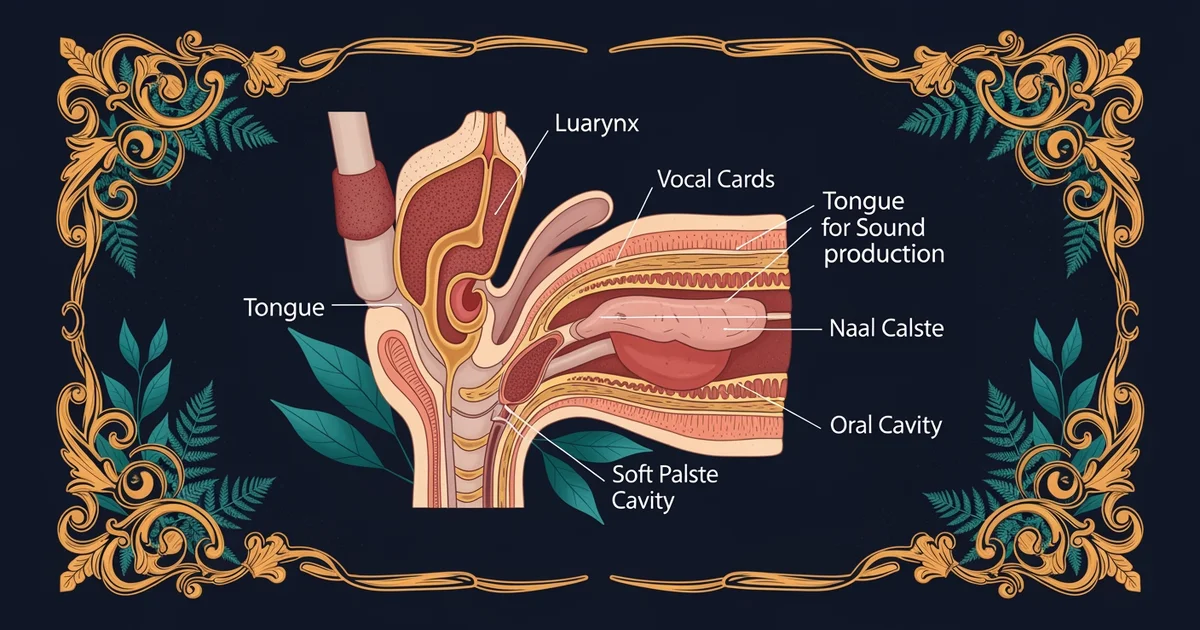
Identifying Speech Production Patterns
To diagnose a disorder, the clinician must first establish a baseline of typical speech production for the patient. They look for consistent patterns where certain sounds are substituted, omitted, or distorted during standard speech tasks. Think of this process like a mechanic listening to an engine to find a rattle; the mechanic knows how a healthy engine should sound before they can point to the specific loose part. The therapist listens for these deviations across different contexts, such as isolated words, short phrases, and longer conversational sentences. This helps distinguish between a temporary slip of the tongue and a persistent pattern that requires intervention.
Key term: Phonemic awareness — the ability to identify and manipulate the individual sounds that make up spoken words.
Clinicians often use structured tasks to force the patient to produce sounds in various positions within a word. For example, they might ask the patient to say words that start, end, or contain a target sound in the middle. This systematic approach ensures that they test the full range of the patient's vocal capabilities. If the patient struggles only with sounds at the end of words, the clinician knows exactly where the production issue resides. This methodical testing prevents the therapist from missing subtle errors that might otherwise blend into common speech.
Categorizing Diagnostic Observations
Once the clinician collects enough data, they organize the errors into specific categories to better understand the underlying cause. Some errors are merely developmental, meaning the patient will likely outgrow them as their vocal muscles mature. Other errors indicate a deeper issue with how the brain maps these sounds to physical movements. Professionals classify these findings to create an effective plan for improvement. The following table illustrates how clinicians categorize common production errors during a typical assessment session.
| Error Type | Description | Clinical Example |
|---|---|---|
| Substitution | Replacing one sound with another | Saying 'tup' instead of 'cup' |
| Omission | Leaving out a sound entirely | Saying 'at' instead of 'cat' |
| Distortion | Changing the sound quality | Making a 's' sound too sharp |
These categories help the therapist decide which techniques will help the student gain better control over their vocal apparatus. If a student consistently omits sounds, the therapy focuses on building the strength to reach those final positions. If the student substitutes sounds, the focus shifts to training the brain to recognize the difference between the two similar phonemes. This structured approach turns vague observations into a clear path for success. It ensures that every minute spent in therapy targets the specific weakness identified during the initial assessment.
Effective assessment requires patience and a keen ear for the nuances of human language. The clinician must remain neutral while observing, as any bias can influence how they interpret the patient's vocal efforts. By applying these diagnostic standards, the therapist transforms complex audio data into actionable insights for the patient. This methodical process provides the foundation for all future speech improvement efforts. It is the bridge between identifying a problem and finding a lasting solution for the speaker.
Clinical phonetic assessment uses structured observation to identify specific sound production errors that impede clear communication.
But this diagnostic model becomes much more difficult to apply when the patient is simultaneously learning the rules of a new phonological system.