
Vowel Quality and Tongue Height
When you open your mouth to speak, your tongue performs a precise dance that shapes every single sound you produce. Have you ever considered how subtle movements of your tongue muscles change the shape of your vocal tract to create distinct vowel sounds?
The Mechanics of Tongue Position
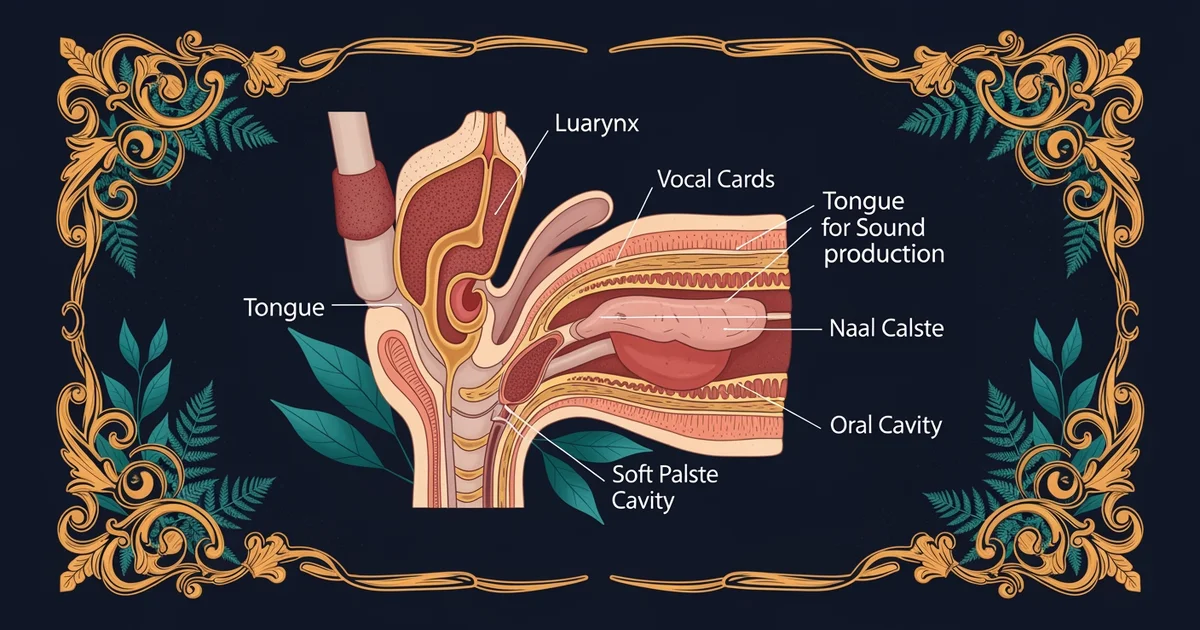
Because the human vocal tract acts like a flexible tube, the position of your tongue is the primary factor that determines the quality of a vowel. When you lift your tongue toward the roof of your mouth, you create a narrow space that restricts airflow and changes the resonance of the sound. This specific vertical movement is known as tongue height, which serves as the most important variable in classifying vowel sounds across all human languages. If you move your tongue high, you produce a close vowel, whereas lowering the tongue results in an open vowel sound. Think of your mouth like a musical instrument where the tongue acts as a sliding valve that alters the pitch and tone of the air vibrating through the chamber. By shifting this valve, you effectively change the shape of the resonating cavity, which allows your brain to distinguish between different words even when the surrounding consonants remain the same. This process happens in milliseconds, yet it relies on extremely precise muscle control to ensure that the listener perceives the correct vowel quality every time you speak.
Key term: Vowel quality — the distinct auditory character of a vowel sound determined by the specific shape and size of the resonating vocal tract.
To better understand how these sounds are organized, linguists use a geometric framework to map the relationship between tongue height and horizontal placement. This mapping system helps us visualize why certain vowels feel similar while others sound completely different to the human ear.
| Vowel Category | Tongue Verticality | Airway Space | Example Sound |
|---|---|---|---|
| Close Vowel | High position | Small space | ee as in see |
| Mid Vowel | Neutral position | Medium space | eh as in bet |
| Open Vowel | Low position | Large space | ah as in father |
Analyzing Vowel Geometry
When we look at the geometry of speech, we see that tongue placement creates a predictable grid for sound production. The vertical axis represents the height of the tongue, while the horizontal axis tracks whether the tongue moves toward the front or the back of the oral cavity. Consider the tongue as a cursor on a computer screen that must land on a specific coordinate to trigger a specific sound file. If your tongue lands slightly off-target, the vowel quality shifts, which can sometimes change the meaning of your words entirely. This grid allows us to categorize every vowel based on its physical location, ensuring that we can study the mechanics of speech with scientific accuracy. Language relies on this consistent geometry to turn physical vibrations into meaningful patterns that humans share across different cultures and regions. Without this underlying structure, our speech would sound like a chaotic mess of noise rather than the organized system of communication we use daily. By studying these coordinates, you gain a deeper understanding of how the body converts intent into audible, structured sound waves.
Every time you articulate a vowel, your brain coordinates these complex muscular adjustments with incredible speed and accuracy. This biological feat is essential for maintaining the clarity of spoken language in diverse environments. Because your tongue is a muscular hydrostat, it can change shape without losing volume, which provides the flexibility needed to produce a wide range of vowel qualities. This mechanical efficiency explains why humans can produce such a vast array of phonetic variations while maintaining consistent communication patterns. As you continue to explore these concepts, you will see how these small physical shifts provide the foundation for larger systems of grammar and phonology. Understanding the physical constraints of your own mouth reveals the hidden architecture behind every word you have ever spoken in your life.
Vowel quality is fundamentally determined by the precise geometric positioning of the tongue within the vocal tract to manipulate resonance.
The next Station introduces phonological rule systems, which determine how these vowel sounds interact to form complex language patterns.