
Engine Performance Metrics
When a driver presses the accelerator pedal to merge onto a busy highway, they rely on the engine to provide immediate speed. This sudden burst of forward motion is not magic, but rather the result of two distinct forces working in tandem. Engineers define these forces as torque and horsepower, which represent the physical capacity of a motor to do work. Understanding these values helps drivers know why some vehicles pull heavy loads with ease while others achieve high top speeds. This is the application of mechanical physics that we began exploring in Station 1.
Measuring Force and Output
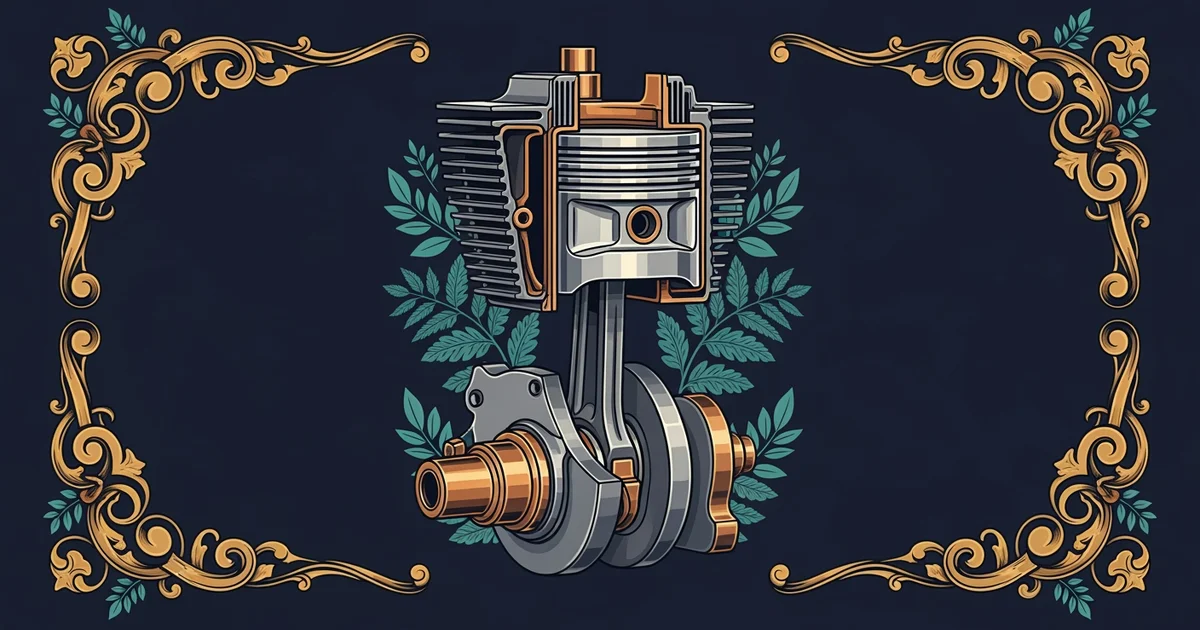
Torque acts as the rotational force that gets a heavy object moving from a complete stop. Think of this like using a long wrench to loosen a very tight, rusted bolt. Because the wrench is long, it gives you more leverage to apply force to the bolt head. In a car engine, torque is the twisting power generated by the crankshaft as the pistons push downward. Engines with high torque feel strong at low speeds, which is why trucks need it to haul heavy trailers. Without sufficient torque, a vehicle would struggle to even begin rolling forward when the light turns green.
Key term: Torque — the rotational force produced by an engine that gives a vehicle the ability to accelerate from a standstill.
Horsepower, by contrast, measures how quickly the engine can apply that torque over a period of time. If torque is the strength of your arm, horsepower is how fast you can swing that arm repeatedly. A vehicle might have enough torque to move a heavy load, but it needs horsepower to maintain a high speed once it is moving. High horsepower allows a car to keep accelerating even when air resistance pushes back hard. This metric tells you the total work capacity of the system during a set duration.
Comparing Engine Performance Metrics
Performance metrics provide a clear way to evaluate different engine designs for specific driving tasks. Engineers use these numbers to tune engines for either raw pulling power or high-speed performance. Most consumer vehicles aim for a balance between these two extremes to ensure they are useful for daily driving. The table below illustrates the primary differences between these two essential engine measurements for a typical driver.
| Metric | Primary Function | Best Use Case | Driver Experience |
|---|---|---|---|
| Torque | Rotational force | Towing and starting | Feeling of "punchy" power |
| Horsepower | Work rate | High-speed travel | Ability to maintain speed |
| RPM | Cycle speed | Engine monitoring | Knowing when to shift gears |
Every internal combustion engine must manage these metrics by controlling how fuel burns inside the cylinder. When the engine spins faster, it completes more power cycles every single minute. This increase in cycle frequency is what leads to higher horsepower output at higher speeds. However, the engine must also remain efficient to avoid wasting fuel during these high-output moments. Balancing the timing of the spark and the volume of the fuel ensures that the engine stays within its safe operating range.
The Relationship Between Power and Speed
Because torque and horsepower are mathematically linked, you cannot change one without affecting the other. Horsepower is simply torque multiplied by the engine speed, divided by a constant factor. This means an engine that produces high torque at low speeds will often reach its peak horsepower much sooner. If you want more speed, you must increase the rate at which the engine completes its combustion cycles. This explains why sports cars often sound very loud, as they must spin at high speeds to unlock their maximum power potential.
Engine performance metrics quantify the balance between the raw twisting force required to start movement and the rapid work rate needed to sustain high speeds.
But this mathematical model becomes much more complex when the system must integrate electronic sensors to adjust power delivery in real time.