
Global Soil Future
Imagine a bank account that loses value every time you withdraw cash without ever making a deposit. This is exactly how our current global food system treats the thin layer of topsoil that sustains all human life. If we continue to treat soil as an infinite resource, we will eventually face a total depletion of the nutrients required to grow our food. Our survival depends on shifting from a model of extraction to one of active restoration and long-term stewardship.
The Economic Logic of Soil Preservation
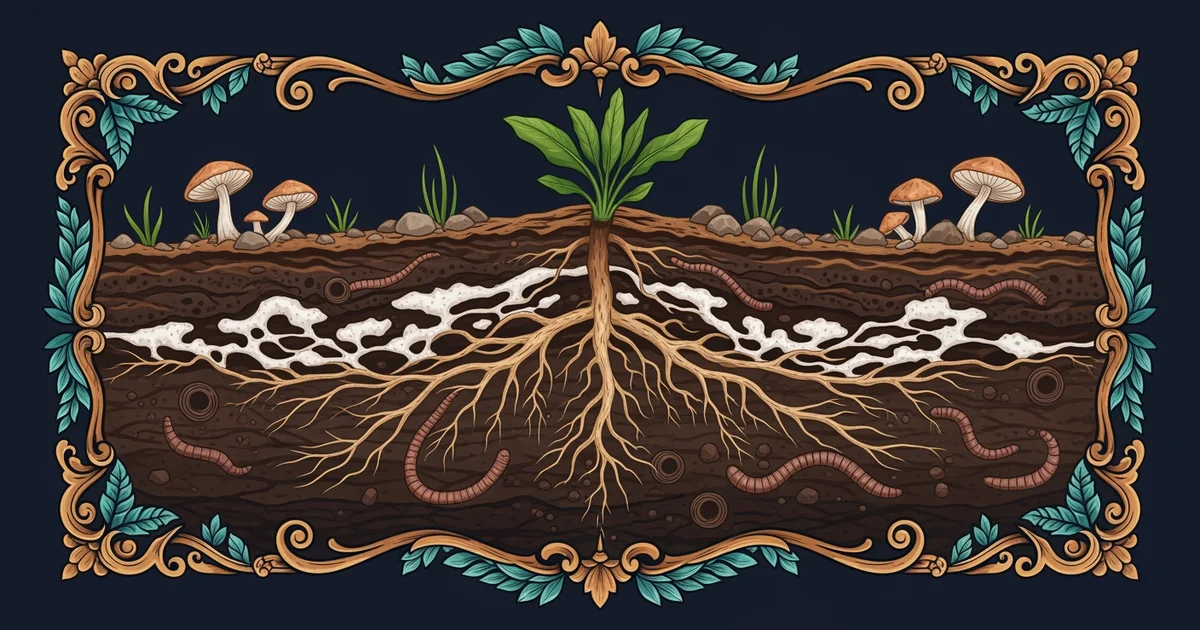
Soil functions much like a high-yield savings account where nature deposits organic matter over thousands of years. When we harvest crops, we effectively withdraw from this account, but modern industrial farming often fails to make the necessary deposits of nutrients back into the soil. This creates an ecological deficit that weakens the foundation of our food supply. Just as a business owner must reinvest profits to keep a store running, farmers must prioritize regenerative agriculture to maintain the biological capital of their land. By integrating diverse crop rotations and cover cropping, we can ensure the soil remains a productive asset rather than a declining liability.
Key term: Regenerative agriculture — a system of farming principles that seeks to rehabilitate and enhance the entire ecosystem of the soil by placing a premium on soil health.
We must view soil health as a shared global infrastructure project rather than a private concern for individual farmers. The health of the soil in one region directly impacts the food security of nations thousands of miles away. If we allow massive erosion or chemical degradation to continue unchecked, we risk a global collapse of agricultural productivity. Policy makers must incentivize practices that prioritize long-term soil resilience over short-term yield increases. This transition requires a fundamental shift in how we value land, moving away from purely financial metrics toward a broader understanding of ecological health.
Strategies for Global Soil Restoration
To secure the future of our food supply, we must combine the lessons learned from earlier stages of this path. We previously explored how carbon sequestration helps stabilize the climate, but this process also serves as a primary driver of soil fertility. By trapping carbon underground, we improve the physical structure of the soil, allowing it to hold more water and support a wider array of beneficial organisms. This synergy between climate policy and soil management provides a dual benefit for humanity. We should implement the following core strategies to protect our global soil future:
- Reducing heavy mechanical tillage to prevent the physical disruption of soil structure and the release of trapped carbon into the atmosphere.
- Expanding the use of organic fertilizers to restore the microbial life that was previously damaged by synthetic chemical applications.
- Implementing global land-use policies that protect prime agricultural zones from urban sprawl and industrial development to preserve high-quality growing spaces.
| Strategy | Primary Benefit | Implementation Level | Timeframe |
|---|---|---|---|
| Cover Cropping | Erosion Control | Farm Level | Seasonal |
| Carbon Farming | Climate Stability | Regional Level | Decadal |
| Policy Reform | Land Protection | National Level | Long-term |
These strategies work together to create a robust, self-sustaining system that can withstand the pressures of a changing climate. When we compare these methods, we see that local actions like cover cropping provide immediate protection, while national policies ensure that land remains available for future generations. The integration of these levels is essential for success. We are currently facing an unresolved tension between the need for immediate, high-volume food production and the requirement for long-term ecological sustainability. Research continues to explore how we can balance these competing demands without sacrificing the nutritional quality of our global food supply.
True sustainability requires managing soil as a living investment that gains value through restorative practices rather than a static resource to be depleted.
Protecting our soil ensures that future generations inherit a planet capable of feeding a growing population.