
Soil Structure Formation
Imagine you are building a tall brick wall without any mortar to hold the blocks together. If you push against the wall, it will crumble immediately because the individual pieces have no connection. Soil acts in a very similar way when it lacks the internal architecture required to hold its weight against wind or rain. When soil particles clump together, they create a stable environment that supports life and keeps the land from washing away. This process of forming clumps is the foundation of healthy ground.
The Mechanics of Soil Aggregation
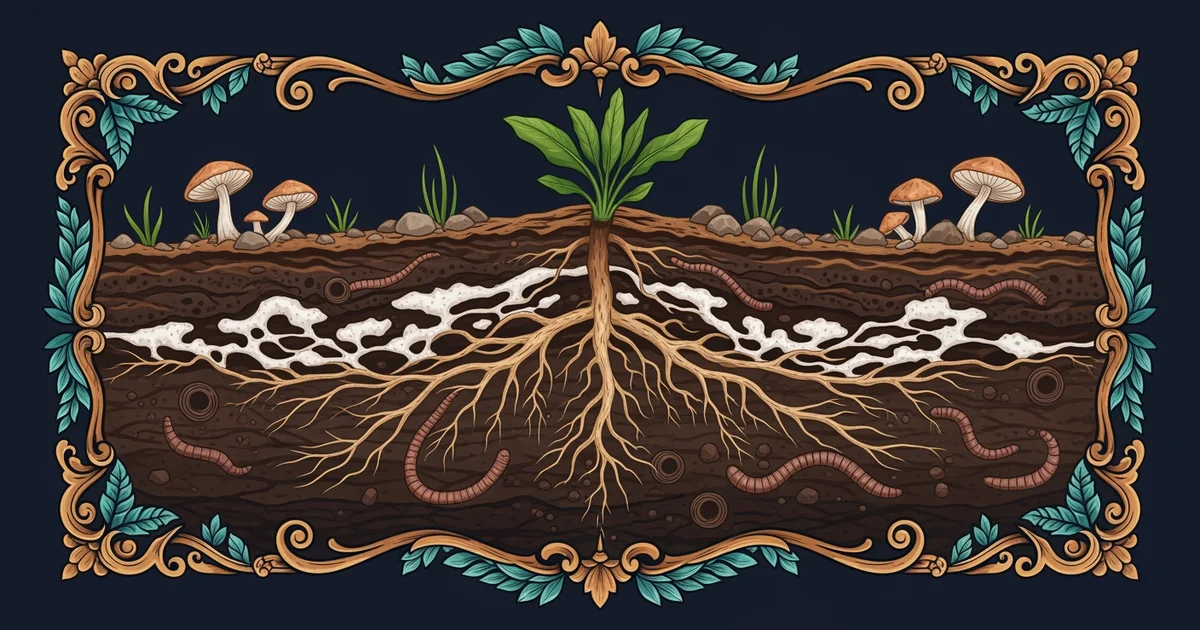
Nature builds soil structure through the formation of soil aggregates, which are clusters of sand, silt, and clay particles. These clusters act like the mortar in our brick wall analogy, binding loose grains into larger, stronger units. Organic matter and microscopic roots act as the primary glue, holding these tiny particles together in a tight embrace. When these aggregates form, they create open spaces between the clumps that allow air and water to move freely. Without this organized structure, soil becomes a dense, packed mass that suffocates plant roots and prevents necessary water absorption.
Key term: Soil aggregates — the stable clumps of mineral particles and organic matter that form the basic physical structure of soil.
These aggregates also serve as a protective shield for the delicate life living within the earth. By creating internal nooks and crannies, they provide a safe harbor for bacteria and fungi to thrive away from harsh surface conditions. This microscopic architecture is constantly changing as plants grow and decay, adding fresh organic material to the mix. The strength of these bonds determines how well the soil can withstand the pressure of heavy rain or animal traffic. If the bonds are weak, the entire structure collapses, leading to a loss of the precious topsoil that feeds our world.
Preventing Erosion Through Structure
When we look at how soil holds its ground, we see that structural integrity is the main defense against erosion. Aggregates prevent soil erosion by increasing the weight and size of particles, making them much harder for wind or water to move. Think of it like a heavy stone that stays put during a storm, while loose sand grains are easily swept away by the same force. This stability ensures that nutrients remain in place for plant roots rather than washing into nearby streams.
To understand the different components that build this strength, consider the following elements that work together in the soil:
- Fungal threads act like long, sticky ropes that wrap around soil particles to pull them into dense, stable bundles that resist water.
- Root exudates provide a sugary fuel source for microbes, which then release chemical glues that permanently cement particles into larger, more durable shapes.
- Organic residues from dead plants function as the raw material for building these structures, ensuring that the soil remains porous and capable of holding moisture.
| Feature | Role in Soil | Impact on Stability |
|---|---|---|
| Fungi | Binding agents | High resistance |
| Roots | Anchoring | Medium resistance |
| Clay | Particle base | Low resistance |
This table illustrates that while clay provides the base material, the active life in the soil provides the necessary strength. Without the biological activity of fungi and roots, even the finest clay would eventually turn into a hard, dusty crust. By maintaining these aggregates, we ensure that the land remains productive and resistant to the damaging effects of weather. This balance is what keeps our global food supply secure, as it protects the very medium that allows crops to grow and flourish.
Healthy soil structure relies on biological glues to bind particles into stable aggregates that resist erosion and support life.
But what does it look like in practice when these microscopic structures begin to fall apart under human pressure?