
Soil Organic Matter
Imagine you are holding a handful of dark, rich soil that crumbles perfectly between your fingers. This living substance acts as the primary bank account for every plant that grows on our planet. Without the hidden components within this earth, our global food supply would face a total collapse. We must understand the value of this resource to ensure we can feed the world in the future.
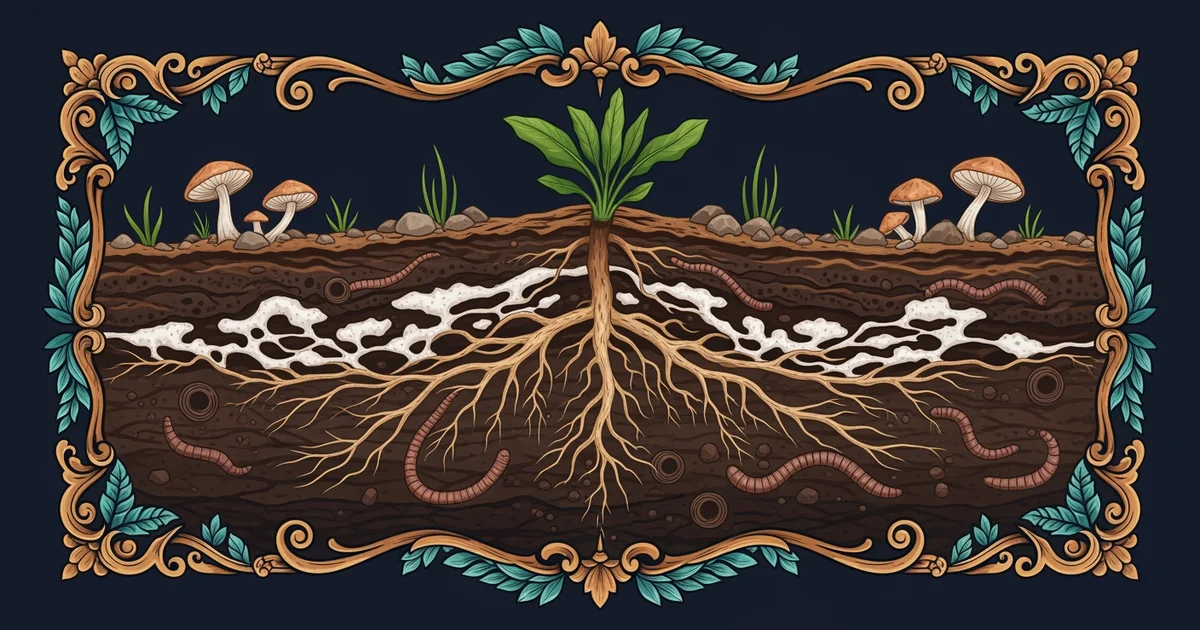
The Foundation of Soil Fertility
When we look at the ground, we often ignore the complex processes happening right beneath our feet. Soil organic matter represents the total amount of plant and animal remains in various stages of decay. This material serves as the primary energy source for the tiny organisms that keep our soil healthy. Much like a savings account, this matter stores nutrients that plants need to thrive during their growth cycles. If we deplete this account, the soil loses its ability to support life and becomes essentially bankrupt.
Key term: Humus — a dark, organic material that forms in soil when plant and animal matter decays.
This stable substance acts like a sponge, holding onto water and essential minerals for long periods. Without this sponge, rain would simply wash away the nutrients that plants require for survival. The presence of this matter helps the soil structure remain loose and airy, which allows roots to grow deep. When roots can stretch freely, they access more water and nutrients from the surrounding environment. This process ensures that crops remain strong even during periods of limited rainfall or harsh weather.
The Role of Organic Decomposition
The process of decay transforms dead leaves and roots into a form that plants can easily consume. This transformation is not instant, but it relies on a steady flow of materials into the ground. We can compare this cycle to a kitchen compost bin where waste becomes fuel for a garden. If we stop adding waste, the cycle slows down until it eventually stops working for the plants. Maintaining this balance requires us to return organic materials to the earth after every harvest cycle.
Consider the following benefits that organic matter provides to our agricultural systems:
- It improves soil texture by binding small particles together into larger, more stable clusters called aggregates.
- It provides a slow release of nitrogen and phosphorus that plants need to build their structural tissues.
- It acts as a buffer against acidic or alkaline conditions that might otherwise harm sensitive root systems.
Each of these functions ensures that the soil remains productive for many years of farming and gardening. By keeping these levels high, we protect the land from erosion and keep the nutrients within reach.
Healthy soil is not just dirt, but a living system that requires constant care and replenishment. When we manage this system well, the land rewards us with abundant food and stable ecosystems. We must treat the soil as a precious asset rather than a simple base for our crops. If we understand how this matter functions, we can change the way we approach global farming. This knowledge is the first step toward building a sustainable future where no one goes hungry.
Soil organic matter functions as a vital reservoir that sustains plant growth by storing nutrients and managing water within the earth.
We will now explore how the tiny creatures living in this organic matter turn it into usable plant food.