
Microbial Communities
Imagine a bustling city that never sleeps, where every citizen works to keep the infrastructure running for the benefit of the entire population. Beneath your feet, the soil acts as this exact type of metropolis, teeming with microscopic inhabitants that manage the essential life support systems for our planet.
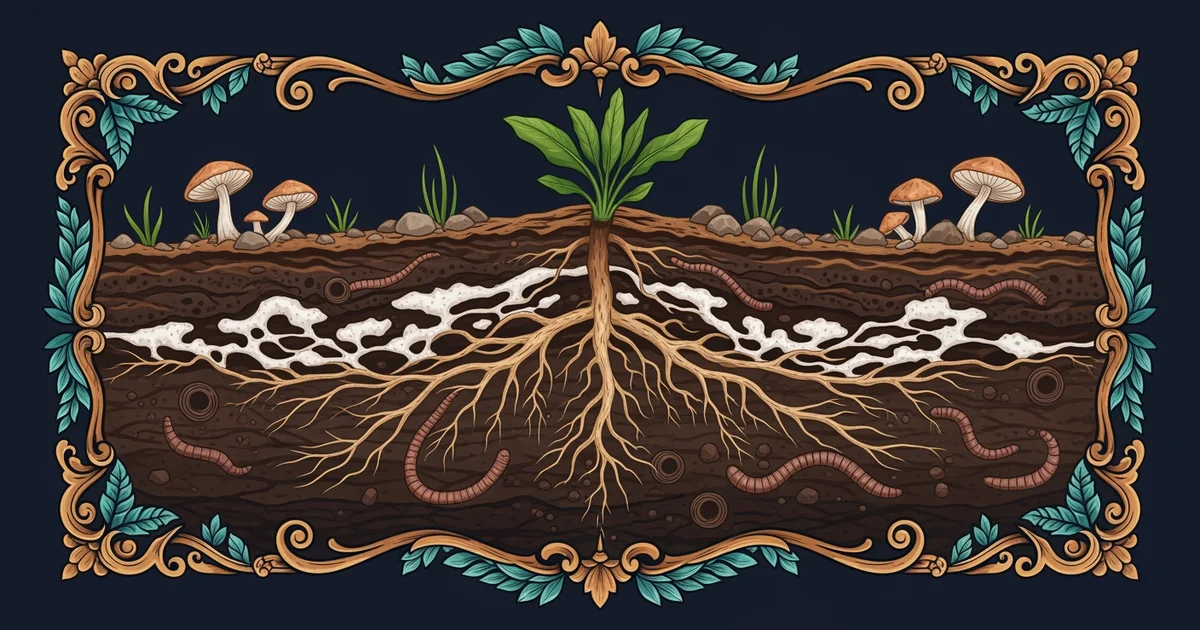
The Invisible Workforce of the Soil
These tiny workers are known as soil bacteria, which represent the most diverse and abundant form of life found within the earth. While they are far too small to see without a powerful lens, their collective impact on the environment is immense and impossible to ignore. Think of these bacteria as the essential employees in a massive, global logistics company that manages the delivery of nutrients to hungry plants. Just as a warehouse worker organizes inventory for a store, these microbes break down organic matter into simple forms that plants can absorb to grow. Without this constant processing, the nutrients locked inside dead leaves or old roots would remain trapped and useless for future generations of life. The survival of our global food supply depends entirely on this hidden, busy workforce performing their daily tasks without interruption.
Key term: Soil bacteria — the microscopic, single-celled organisms that decompose organic matter and transform nutrients into forms that plants can easily absorb for their growth.
These tiny organisms do not just sit in one place, as they actively move through the narrow spaces between soil particles to find the best spots for their work. They thrive in areas where they can access food and moisture, often clustering near the roots of plants to create a mutually beneficial relationship. This interaction is vital because the plants provide the bacteria with sugary snacks in exchange for the essential minerals they need to survive. This exchange is like a local market where farmers trade their fresh produce for the tools they need to keep farming. Because this partnership is so efficient, plants often grow much faster when they have a healthy community of bacteria living right at their doorstep.
Mapping the Root and Microbial Connection
When we look closer at this relationship, we see that the area immediately surrounding the roots, known as the rhizosphere, is the most active zone in the entire soil ecosystem. This specific environment is packed with chemical signals that act like a digital network, allowing plants to talk to the bacteria nearby. The plant secretes substances that attract specific types of helpful microbes, effectively inviting them to come closer and provide protection or nutrition. This process ensures that the plant has a dedicated team of experts working to keep it healthy and strong against various environmental stresses. The following table highlights how different types of bacteria contribute to this complex and highly organized underground system.
| Bacterial Function | Primary Activity | Result for the Plant |
|---|---|---|
| Nutrient Cycling | Breaking down waste | Increased food supply |
| Disease Defense | Blocking bad germs | Healthier root systems |
| Growth Promotion | Making hormones | Faster overall growth |
These processes allow the soil to remain fertile year after year, even when we harvest crops and remove them from the field. By maintaining a diverse population of these tiny helpers, we ensure that the soil can recover from the demands of farming. It is a delicate balance that relies on the health of the bacterial community to keep the entire system functioning at full capacity. We must recognize that the health of our food supply starts with these invisible partners working hard in the dark.
The survival of the global food supply relies on the hidden work of bacterial communities that transform nutrients and support plant growth through constant, vital exchanges.
The next Station introduces fungal networks, which determine how these bacterial communities connect across the wider soil environment.