
The Mineral Matrix
Imagine you are building a vast city where every single brick determines how much water the buildings can hold. Soil operates exactly like this urban landscape, where the tiny pieces of rock act as the foundation for all life above. If you look closely at a handful of dirt, you might see nothing but brown dust, but you are actually holding a complex mineral matrix. This hidden framework dictates how well plants grow, how fast water drains, and how long nutrients stay available for hungry roots. Understanding these tiny particles allows us to manage the land better and ensure our future food security remains stable.
The Three Pillars of Soil Texture
Soil particles vary greatly in size, and we categorize them into three main groups based on these dimensions. The smallest particles are known as clay, which pack together so tightly that they act like a dense, sticky glue. Because these particles are so small, they create tiny spaces that hold onto water for a very long time. In contrast, silt particles are medium in size and feel like soft, smooth flour when you rub them between your fingers. These particles provide a balance between holding moisture and allowing air to move through the soil structure.
Finally, we have sand, which consists of the largest particles that you can easily see with your eyes. These large pieces create big gaps, which allows water to drain away very quickly, often leaving the soil dry. If you imagine soil as a storage warehouse, sand acts like a building with massive doors that let everything pass through easily. Clay acts like a vault with tiny, locked drawers that keep every single drop of water trapped inside. Silt acts like the shelves in the middle, providing just enough space to store items while still allowing for easy access when needed.
Classifying Soil Through Particle Balance
Most healthy soils contain a mixture of these three types, which we call loam. Farmers and scientists use a specific classification system to identify their soil type by testing the proportions of each particle. By feeling the soil or using a simple settling test in water, you can determine if your land is sandy, silty, or clay-heavy. This knowledge is vital because the mineral matrix directly influences how much fertilizer or water you must add to help your crops thrive.
| Particle Type | Relative Size | Water Retention | Nutrient Holding |
|---|---|---|---|
| Sand | Large | Very Low | Very Low |
| Silt | Medium | Moderate | Moderate |
| Clay | Tiny | Very High | Very High |
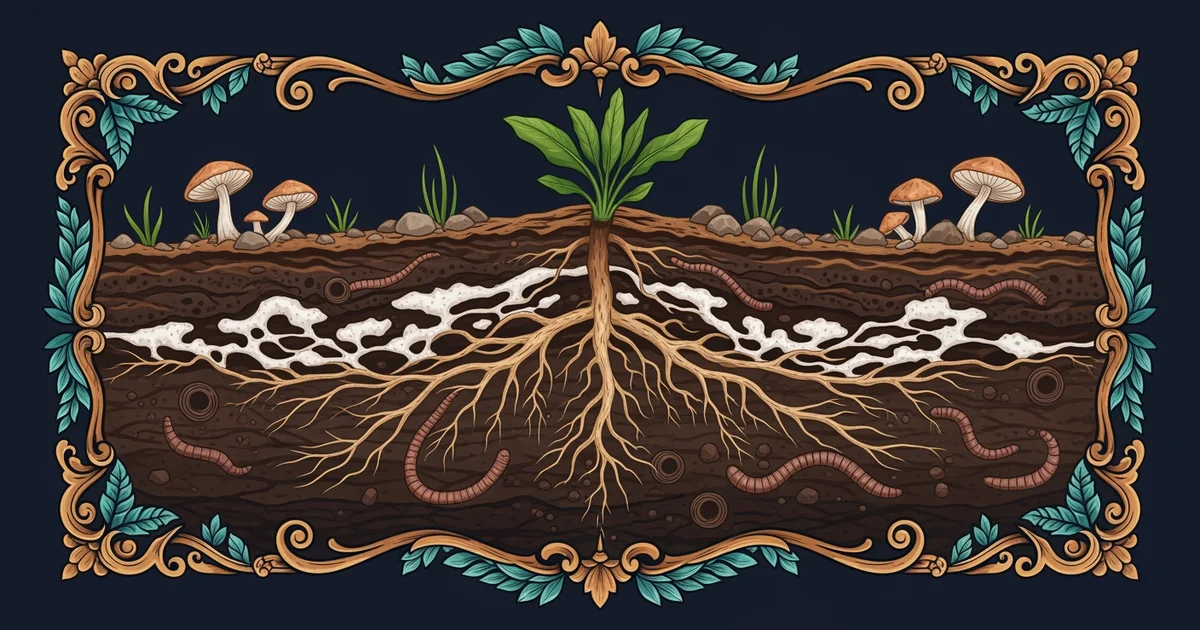
Soil health depends on this delicate balance, as the mineral matrix provides the base for all biological activity. Without the right mix of these particles, the soil cannot support the diverse life forms that break down organic matter. The physical structure of the mineral matrix serves as the home for beneficial microbes, fungi, and worms that enrich the earth. If the particles are too compacted, air cannot reach these organisms, which eventually stunts plant growth and limits our food supply.
Understanding how these minerals interact with water and air is the first step toward master-level gardening or farming. We must respect the physical limits of our land while working to improve the quality of the soil environment. By knowing your soil type, you can make smarter decisions about what to plant and how to care for the ground beneath your feet. This mineral foundation is the silent partner in every meal we eat, providing the structure that makes life possible across the entire planet.
The mineral matrix acts as a physical storage system that regulates how much water and nutrition plants can access.
Next, we will explore how organic matter transforms this mineral base into a thriving, living ecosystem.