
Fungal Networks
Imagine you are digging into a garden and find thin white threads tangled within the dark soil. You might assume these threads are just old plant roots, but they are actually the hidden highways of the forest floor. These fine structures are living, breathing systems that connect plants in ways we are only starting to understand. By forming these links, nature ensures that life survives even when conditions become harsh or resources grow scarce.
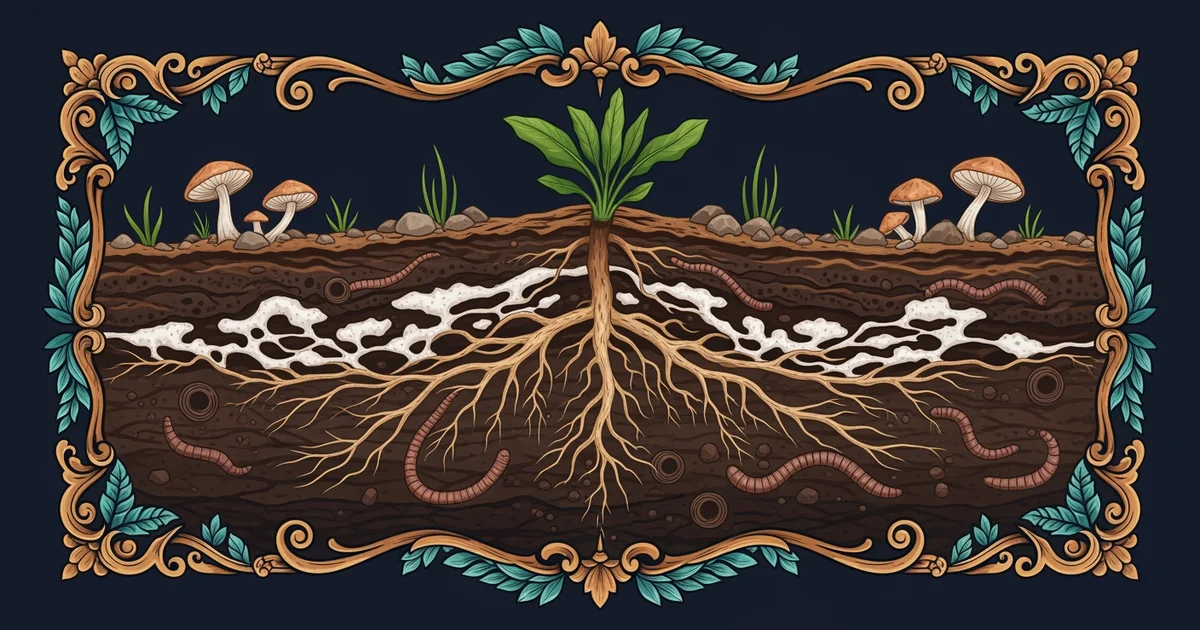
The Function of Mycorrhizal Networks
These connections are formed by mycorrhizal fungi, which act as a bridge between the soil and plant roots. The fungi attach to the roots and extend tiny threads called hyphae deep into the surrounding earth. These threads act like a massive, high-speed fiber optic network that expands the reach of the plant. While a plant root can only absorb water from its immediate area, the fungal network reaches far beyond that. This allows the plant to access nutrients that would otherwise be out of reach. Think of it like a local grocery store that suddenly gains access to a global shipping warehouse. The store can now offer goods from miles away, just as the plant gains access to minerals from distant soil pockets. This partnership is a classic example of a trade where both sides gain value. The plant provides the fungi with sugars it creates through sunlight, while the fungi deliver water and vital minerals directly to the root system. Without this constant exchange, many plants would struggle to gather enough resources to grow in competitive environments.
Communication and Resource Sharing
Beyond simple resource gathering, these networks function as a complex communication system for the entire plant community. When one plant faces a threat, such as an insect attack or a drought, it can send chemical signals through the fungal threads. Nearby plants receive these alerts and begin to prepare their own defenses before the problem reaches them. This creates a collective resilience that protects the entire ecosystem from sudden changes or localized dangers. The network also facilitates the sharing of excess sugar between trees in a forest, especially from large, established trees to younger saplings. This social structure ensures that the next generation has the energy needed to establish itself in the shade of the canopy. The following table highlights the primary benefits of this underground connection:
| Benefit Type | Primary Function | Impact on Ecosystem |
|---|---|---|
| Nutrient Exchange | Moving phosphorus | Boosts plant growth |
| Water Transfer | Extending reach | Prevents plant wilt |
| Signal Alert | Warning neighbors | Increases survival |
Key term: Hyphae — the branching, thread-like filaments that make up the main body of a fungus and form the network connections.
Because these networks are so vital, we must consider how human activity impacts the soil. Tilling the land or using heavy chemicals can tear these delicate threads apart, breaking the communication lines that plants rely on for survival. Maintaining healthy soil means protecting these fungal systems as much as the plants themselves. When we nurture the microscopic life beneath our feet, we support the health of the entire food chain from the ground up.
The survival of plants depends on fungal networks that act as both resource pipelines and alert systems for the entire local ecosystem.
The next Station introduces soil chemistry basics, which determines how nutrients are held within the soil and made available for fungal transport.