
Carbon Sequestration
Imagine a vast bank account buried beneath your feet that holds the key to our climate. This hidden vault stores massive amounts of carbon, acting as a natural buffer against rising global temperatures. While we often view soil as simple dirt, it functions as a complex financial system for the planet. The survival of our food supply depends on the hidden life within our soil, which regulates how much carbon stays locked away. When we manage land poorly, we essentially withdraw from this savings account and release carbon into the atmosphere. Learning how to manage these deposits is vital for a healthy future climate and stable food production.
The Mechanisms of Soil Carbon Storage
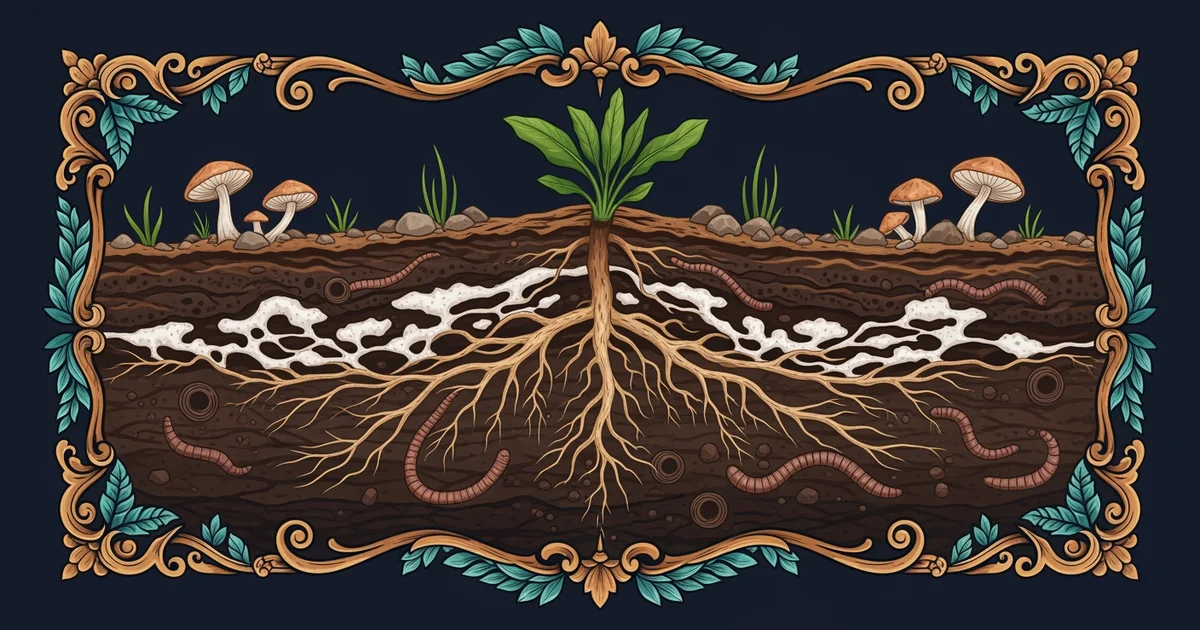
Soil acts as a massive sponge that absorbs carbon dioxide through the process of carbon sequestration. Plants pull carbon from the air to build their structures, and when they die, they decay into the earth. This organic matter becomes part of the soil profile, trapping carbon in a stable form for many years. Think of this process like a long-term savings account where the interest is the slow accumulation of humus. If we disturb the soil through heavy tilling, we break the vault and allow that stored carbon to escape. Keeping the ground covered with living roots helps maintain these deposits by feeding the microbes that stabilize the carbon.
Key term: Carbon sequestration — the natural process of capturing and storing atmospheric carbon dioxide within soil or vegetation reservoirs.
This system interacts directly with the concepts we explored in earlier lessons regarding soil nutrients and management. For instance, the soil organic matter we discussed previously serves as the primary currency for this carbon bank. High levels of organic matter improve the soil structure, which allows it to hold more water and support life. When we combine better management with natural cycles, we create a feedback loop that benefits both farmers and the climate. Without these active biological processes, our soil would lose its ability to act as a buffer against environmental stress.
Quantifying and Managing Our Global Deposits
Measuring the success of our sequestration efforts requires looking at how different land uses affect carbon levels. Some practices deplete the soil vault faster than others, creating a deficit that is hard to replace. The following table compares how different management strategies influence the ability of soil to retain its carbon stores over time.
| Management Practice | Carbon Retention | Biological Activity | Impact on Stability |
|---|---|---|---|
| Intensive Tilling | Very Low | Low | High Loss |
| Cover Cropping | High | Very High | High Gain |
| Managed Grazing | Moderate | Moderate | Stable Balance |
We must consider the trade-offs between immediate production needs and long-term soil health to ensure our global food security. If we continue to treat soil as a disposable resource, we risk exhausting the very foundation of our agricultural system. The tension between short-term yields and long-term sequestration remains a primary challenge for modern land managers. How can we balance the need for immediate harvest with the necessity of building the soil bank for future generations?
- Plants absorb carbon through photosynthesis to create physical mass.
- Organic matter decomposes and integrates into the soil structure.
- Stable carbon compounds remain trapped beneath the surface for decades.
- Microbes help lock carbon into forms that resist rapid oxidation.
By understanding these steps, we can improve our land management to act as a climate solution rather than a problem. The health of our global food supply relies on the stability of these underground carbon reserves. If we protect the hidden life within our soil, we secure the future of our planet.
Building soil carbon reserves acts as a natural investment strategy to stabilize our climate and food supply.
The next station will explore how global soil trends shape the future of human civilization.