
Regenerative Farming
In 2012, when a massive drought hit the Midwestern United States, many industrial farms saw their corn crops wither and fail completely. Farmers who practiced conventional tilling found their soil turned to dry, cracked dust that blew away in the wind like fine powder. These farmers faced a total loss of their yearly income because their land lacked the structure to hold moisture through the heat. This disaster highlights the fragility of modern agriculture when it ignores the natural biology of the earth.
Principles of Restorative Land Management
Regenerative farming operates like a well-managed investment portfolio where the primary goal is protecting the long-term capital of the land. Just as a wise investor avoids withdrawing all funds during a market crash, a regenerative farmer avoids depleting the soil of its vital organic matter. This approach relies on regenerative agriculture, which is a system of farming principles that rehabilitates the entire ecosystem of the farm. Instead of forcing the land to produce through heavy chemical inputs, these farmers focus on feeding the living organisms within the dirt. By prioritizing the health of the soil food web, they create a resilient foundation that can withstand harsh weather patterns without requiring expensive synthetic fertilizers.
Key term: Regenerative agriculture — a holistic land management practice that prioritizes soil health, biodiversity, and ecosystem restoration to improve farm productivity.
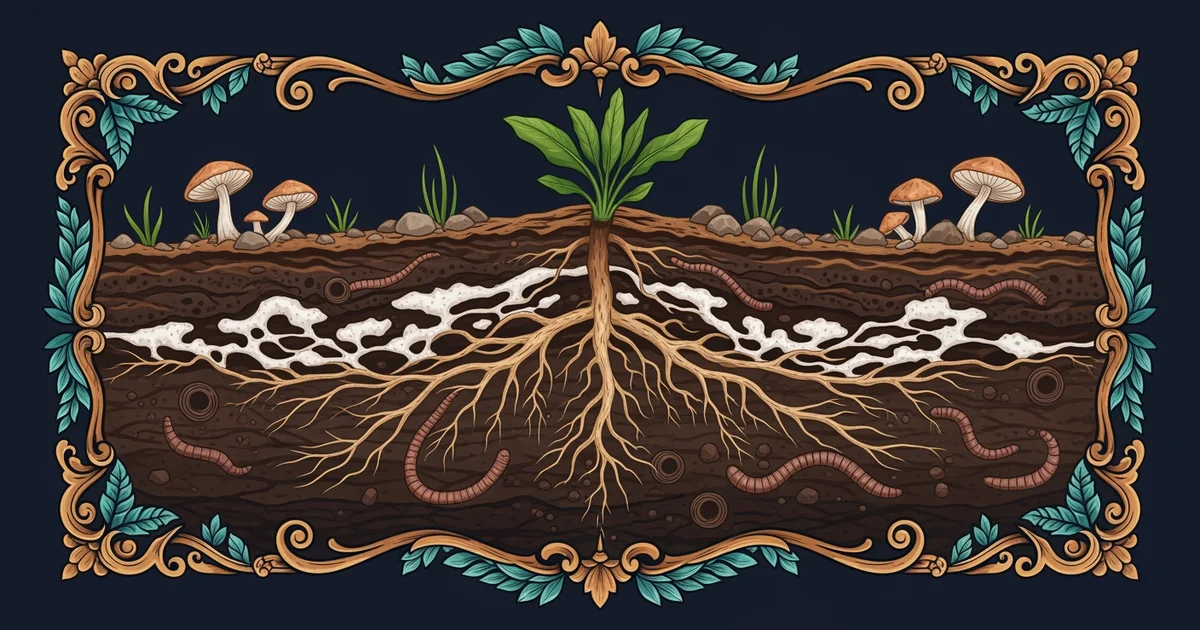
When farmers switch to this model, they often stop the practice of heavy tilling that breaks apart the complex tunnels created by earthworms and fungi. Tilling is much like repeatedly tearing down the walls of a house while you are still trying to live inside of it. It destroys the architecture that allows air, water, and nutrients to move freely through the ground. By keeping the soil structure intact, farmers allow the natural biology to thrive and build fertility naturally. This method mimics the way wild grasslands function, where plants and animals work together to build deep, rich layers of topsoil over many years.
Practical Methods for Soil Restoration
Transitioning to a regenerative model requires specific techniques that actively rebuild the biological wealth of the farm. Farmers must view their fields as living systems rather than sterile factories designed for single crops. The following methods help restore degraded farmland by mimicking natural cycles of growth and decomposition:
- Cover cropping involves planting non-commercial crops during the off-season to protect the soil surface from erosion and add organic carbon back into the earth through root decay.
- Managed grazing rotates livestock across different pasture sections to ensure that grass is grazed evenly while providing natural fertilization through manure that promotes diverse plant regrowth.
- Diverse crop rotation prevents the depletion of specific soil minerals by alternating plant species that have different nutritional needs and root depths throughout the growing seasons.
These strategies create a balanced cycle where the waste of one process becomes the fuel for the next. Managed grazing provides a clear example of this economic balance in action. By moving cattle frequently, the farmer prevents overgrazing and ensures that the grass has time to recover and deepen its roots. This deepening of root systems is essential, as it allows plants to pull water from much further down in the soil profile during dry spells. The cattle act as biological tools that stimulate plant growth and cycle nutrients back into the dirt far more effectively than any machine could ever perform.
| Practice | Primary Benefit | Soil Impact |
|---|---|---|
| Cover Cropping | Erosion Control | Adds Organic Matter |
| Managed Grazing | Nutrient Cycling | Improves Soil Structure |
| Diverse Rotation | Pest Management | Balances Mineral Levels |
This table illustrates how specific actions directly improve the physical quality of the earth. Each practice addresses a different aspect of degradation, from nutrient loss to structural collapse. By combining these methods, a farmer creates a self-sustaining system that reduces the need for external inputs while increasing the overall resilience of the food supply. This is a shift from extractive farming, which takes everything from the land, to a regenerative model that leaves the ground better than it was before the planting season began.
Regenerative farming restores soil health by mimicking natural ecosystem cycles to build long-term biological resilience instead of relying on external inputs.
But this model faces significant challenges when scaling up to meet the demands of a global population that relies on high-volume production.