
Global Action for Preservation
Imagine your local grocery store suddenly running out of every single fresh vegetable for weeks. This scenario reveals the fragile reality of global food security when hidden water supplies vanish. We have spent this path exploring how deep aquifers function as a silent bank account for our societies. Just as a bank account requires deposits to offset constant withdrawals, our underground water reserves need active management to survive. We cannot continue to treat these finite resources as if they will replenish themselves automatically overnight. Protecting these hidden assets requires a shift from passive observation toward deliberate, collective action at every level.
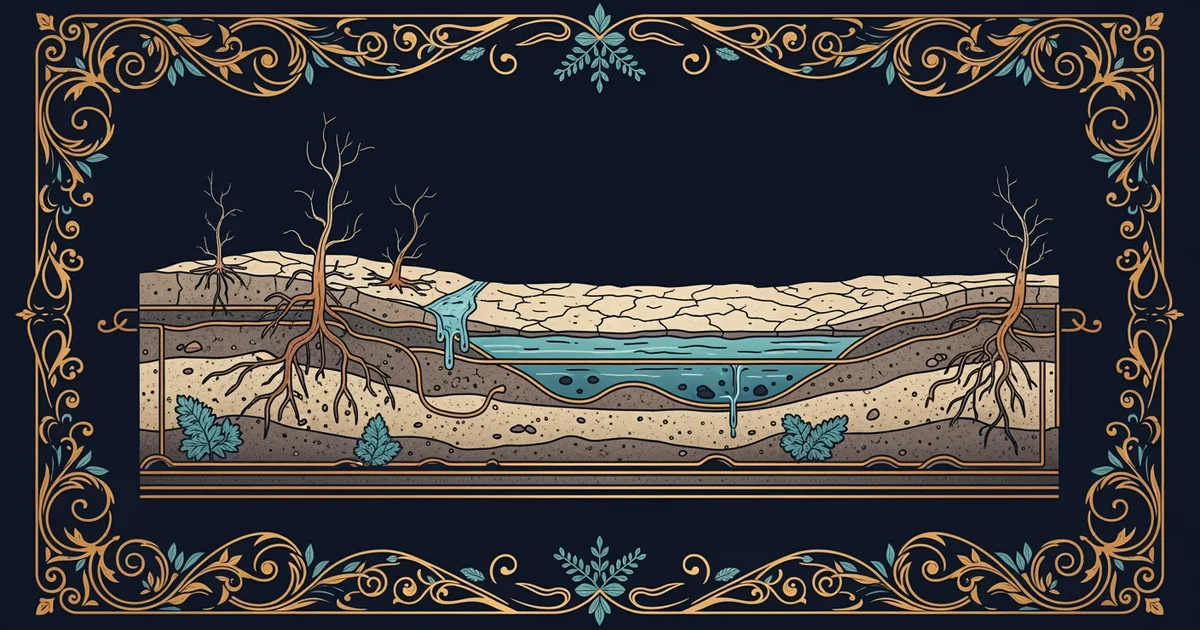
Strategies for Collective Water Stewardship
Preserving our aquifers demands that we view water as a shared investment rather than an infinite commodity. When we look at our previous findings regarding future water security modeling, we see that local choices ripple outward into global markets. If farmers in one region deplete their supply, food prices rise across the entire globe. Think of this process like managing a communal savings account where everyone has an ATM card. If every person withdraws funds without ever checking the balance, the account eventually hits zero. We must now transition toward a model where every user monitors their own usage to ensure the balance stays healthy.
Key term: Aquifer — a massive underground layer of rock or sediment that holds water like a giant natural sponge.
To build a strategy for collective action, we must integrate several core practices into our daily lives and local policies. These actions create a framework for long-term sustainability that prevents total depletion:
- Implementing precision irrigation techniques allows farmers to deliver water directly to plant roots, which minimizes the total amount lost to evaporation or runoff.
- Adopting crop rotation cycles helps maintain soil health, which improves water retention and reduces the need for constant, heavy irrigation during dry seasons.
- Promoting urban water recycling programs ensures that treated wastewater returns to the ground, which helps recharge local reserves instead of dumping them into oceans.
Scaling Personal Action to Global Impact
Individual efforts feel small, but they form the foundation of the larger policy changes we need. When you advocate for better water management in your town, you contribute to the global health of our food systems. Our earlier look at groundwater depletion showed that we are currently overdrawing from our reserves at an alarming rate. By combining personal conservation with public advocacy, we bridge the gap between simple awareness and actual systemic change. We must demand transparency from our leaders regarding how much water our local industries consume every single year.
| Action Level | Primary Strategy | Expected Outcome |
|---|---|---|
| Individual | Reduce waste | Lower demand |
| Community | Policy reform | Better oversight |
| Global | Data sharing | Smarter planning |
This table highlights how different levels of society must work together to protect our water. If we only focus on individual habits, we fail to address the massive industrial consumption patterns. If we only focus on global policy, we lose the connection to our own backyards. We need a balanced approach that respects the complexity of the water cycle while acknowledging our role as stewards. The future of our food security depends entirely on our willingness to act as a unified global community. We have the data and the tools, but we now require the political and personal will to implement them before our supplies reach a breaking point.
True water security depends on our ability to transition from passive consumption to active, collective management of our shared underground resources.
Understanding how to protect these vital aquifers is the most important step toward ensuring a stable food supply for future generations.