
District Heating Networks
In Reykjavik, Iceland, nearly every household relies on hot water pumped directly from deep underground volcanic reservoirs to heat their living spaces. This massive infrastructure allows an entire city to remain warm during freezing winters without burning a single piece of coal or oil.
The Mechanics of Urban Heat Distribution
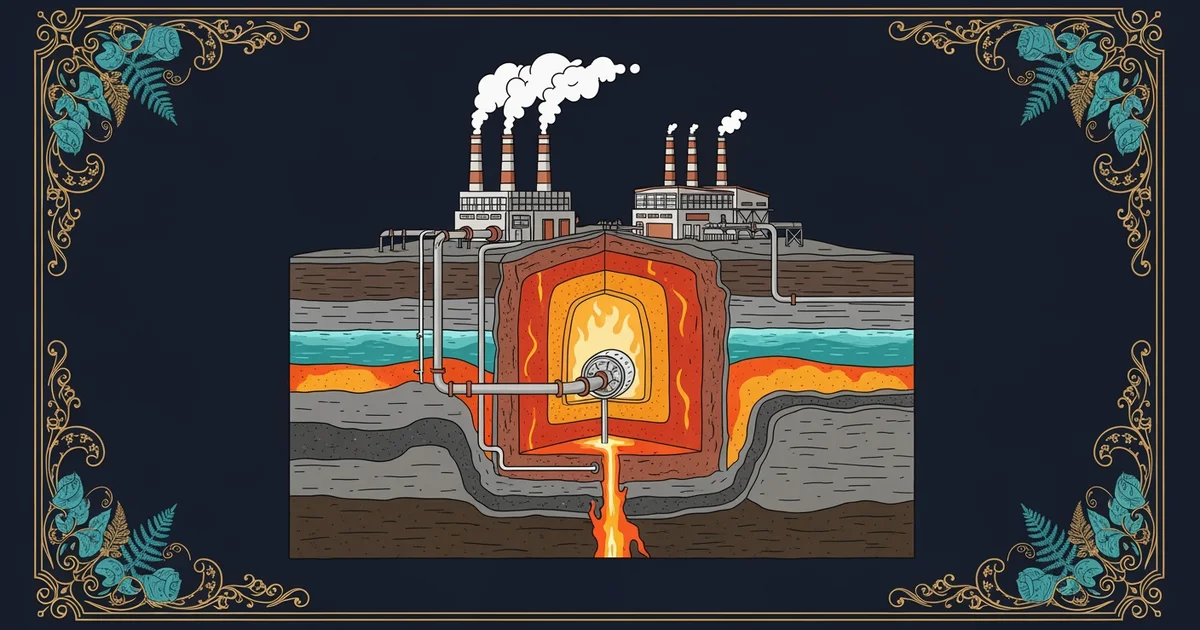
When cities tap into geothermal heat, they create a District Heating Network to move thermal energy efficiently. This system functions like a giant radiator that spans across entire neighborhoods to provide consistent warmth. Engineers drill deep wells to reach hot water, which then flows through insulated underground pipes into local distribution hubs. These hubs act as heat exchangers, transferring the energy into smaller secondary loops that reach individual homes. By circulating this water through a closed loop, the system keeps the heat contained until it reaches the radiators in your bedroom. This process mirrors how a commercial building uses a central boiler, but it scales the operation to cover thousands of buildings at once. Because the energy source is constant and steady, the city avoids the price swings associated with fossil fuel deliveries.
Key term: District Heating Network — a centralized system that distributes heat from a single source to multiple buildings through a network of insulated pipes.
Scaling Infrastructure for Efficient Delivery
Building these networks requires careful urban planning to ensure that heat loss remains minimal during transit. Engineers must insulate pipes heavily to prevent the hot water from cooling before it reaches the end user. If the pipes are not properly protected, the city wastes precious energy and increases the cost for every resident connected to the grid. To manage this, planners often group buildings together to shorten the distance that water must travel from the main source. This layout creates a dense web of connectivity that maximizes the thermal efficiency of the entire urban landscape.
Cities often categorize their heating systems based on the temperature of the water delivered to the buildings:
- High-temperature systems provide water above ninety degrees Celsius to supply older buildings that require intense heating power.
- Low-temperature systems distribute water below sixty degrees Celsius to modern, well-insulated homes that retain heat very effectively.
- Hybrid systems combine various heat sources to ensure that supply meets demand during the coldest weeks of the winter season.
This tiered approach ensures that every building receives exactly the amount of energy it needs for comfort. By matching the supply temperature to the building requirements, the city minimizes waste and lowers the overall operational expense.
Comparing Energy Distribution Methods
| Feature | District Heating | Traditional Electric | Fossil Fuel Boiler |
|---|---|---|---|
| Source | Geothermal | Power Grid | Natural Gas Tank |
| Efficiency | Very High | Moderate | Low to Moderate |
| Maintenance | Centralized | Decentralized | Individual User |
When you compare these methods, the benefits of using a unified geothermal network become very clear to urban planners. Traditional electric heating often loses energy during transmission across long distances, making it less sustainable than local geothermal loops. Similarly, individual boilers require regular maintenance and create local emissions that degrade the air quality in crowded city centers. A district network removes the need for individual furnaces, which simplifies home maintenance and improves safety for all residents. This shift represents a transition toward communal utility management that prioritizes long-term resource stability over short-term convenience. Because the infrastructure is built to last for decades, it provides a stable foundation for future urban growth and sustainable living.
District heating networks transform geothermal energy into a reliable utility by using insulated pipes to deliver warmth directly to thousands of buildings from a single source.
But this model breaks down when the geological conditions prevent the extraction of enough heat to support an entire city's demand.