
Binary Cycle Plants
Imagine trying to heat your house by running boiling water through pipes that never actually touch your radiators. This clever method keeps the messy, mineral-rich water trapped in a closed loop while still delivering the heat you need for comfort. Binary cycle plants work exactly like this to generate clean power from geothermal heat sources that are too cool for traditional steam systems. By using a clever heat exchange process, these plants unlock energy from water that would otherwise be considered useless for electricity production.
The Mechanics of Heat Exchange
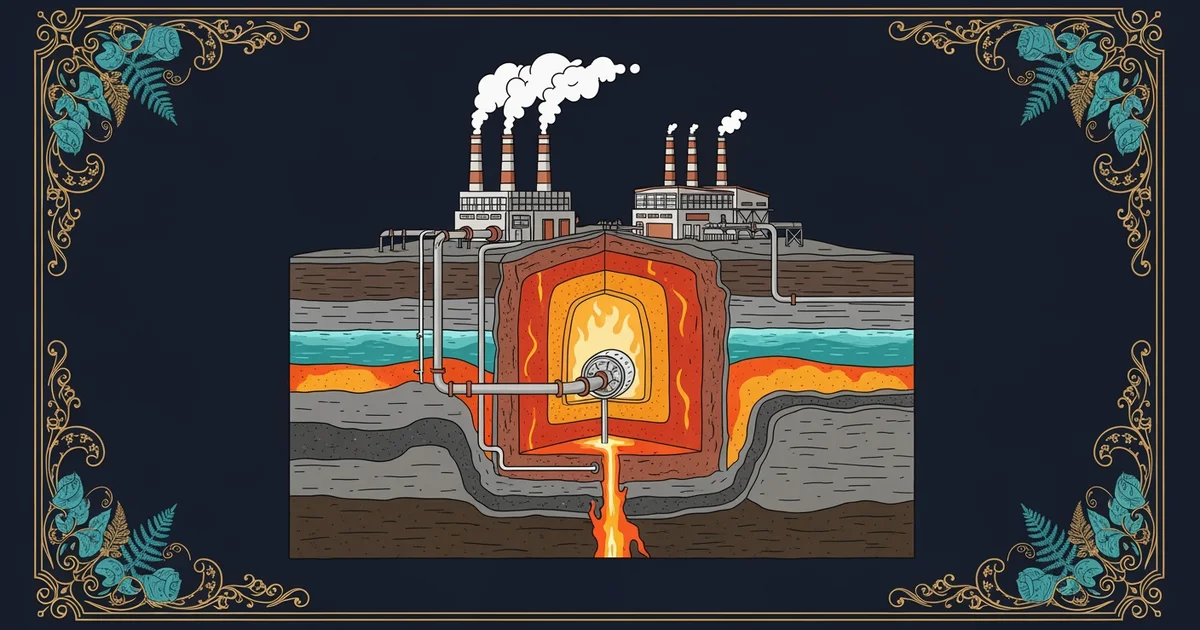
When geothermal water rises from deep underground, it often carries dissolved minerals that can clog pipes and damage turbines. To solve this, engineers use a heat exchanger to transfer thermal energy without letting the fluids mix together. The hot geothermal water flows through one side of the device while a secondary fluid flows through the other side. Because the geothermal water stays in a sealed, pressurized pipe, the minerals remain contained and do not cause costly maintenance headaches. This separation allows the plant to operate continuously without the risks associated with raw geothermal fluids.
Key term: Heat exchanger — a device designed to transfer thermal energy between two fluids without allowing them to mix or touch.
Once the heat moves into the secondary fluid, the system relies on the unique properties of that liquid to drive the generators. This secondary fluid is chosen specifically because it has a much lower boiling point than regular water. When the heat from the geothermal source reaches the secondary fluid, it turns into high-pressure vapor almost instantly. This vapor acts like a powerful spring that pushes against the blades of a turbine to create rotational energy. As the vapor moves through the turbine, it spins a generator to create the electricity that powers our homes and local businesses.
The Role of Secondary Working Fluids
Because the secondary fluid is the engine of the entire process, its chemical properties are vital for efficiency. Choosing the right fluid ensures that the plant can extract power even when the underground water is relatively cool. These fluids circulate in a closed loop, meaning the plant uses the same liquid over and over again. This process is highly efficient because very little fluid is ever lost during operation. The following table highlights why different fluids are chosen for these specialized energy systems:
| Fluid Type | Boiling Point | Primary Benefit | Typical Use Case |
|---|---|---|---|
| Isobutane | Low | High pressure | Small scale plants |
| Pentane | Moderate | Stable vapor | Industrial power |
| Refrigerant | Very Low | Fast boiling | Low heat sources |
After the vapor finishes spinning the turbine, it must be cooled down to return to a liquid state. This cooling step often involves using large fans or cool water from nearby sources to remove the remaining heat. Once the fluid cools, a pump pushes it back into the heat exchanger to begin the cycle again. This continuous, circular motion is the hallmark of a binary cycle system. By repeating this process thousands of times per day, the plant maintains a steady flow of electricity regardless of the external weather conditions.
Because the geothermal fluid is cooled and then sent back into the ground, the system is also environmentally friendly. It avoids releasing steam or gases into the atmosphere, which helps protect local air quality. This closed-loop design ensures that the underground reservoir remains pressurized and sustainable for many decades of future use. The ability to harness lower temperatures makes these plants a critical tool for expanding geothermal energy into new regions across the globe. We essentially treat the earth like a giant battery that we can charge and discharge through these clever mechanical loops.
Binary cycle plants use a closed-loop heat exchange process with a low-boiling secondary fluid to generate electricity from moderate geothermal temperatures.
But what does it look like in practice when we need to find these specific heat sources deep beneath the surface?