
Cognitive Models of Invention
Imagine you are trying to solve a complex puzzle without knowing what the final picture looks like. You might start by sorting the pieces by color, then by shape, and finally by trying to fit them together through trial and error. This process represents a basic cognitive model of invention, where the brain navigates a vast space of possibilities to find a meaningful solution. Machines, much like humans, rely on these structured approaches to explore information and generate new ideas from existing data.
The Mechanics of Search and Selection
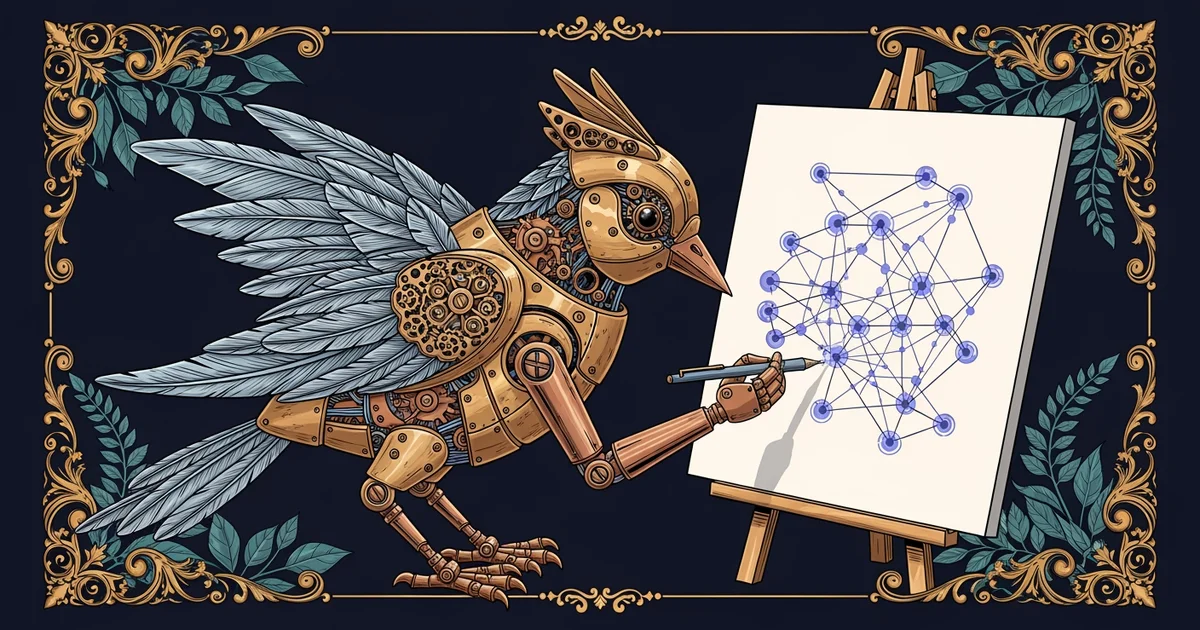
When we talk about invention, we often focus on the spark of genius that creates something entirely new. However, cognitive models suggest that invention is less about magic and more about systematic search through a mental landscape. Humans use heuristics, or mental shortcuts, to narrow down choices and focus on the most promising paths. A computer operates in a similar way by using search algorithms to traverse large datasets. It evaluates different combinations of information to see which ones meet specific goals. Think of this process like an artist choosing colors for a canvas. The artist does not try every possible shade in existence. Instead, they select a limited palette that fits the mood of the work. Similarly, a machine uses a predefined set of rules to filter out irrelevant combinations. This allows the system to focus its computational power on outcomes that actually provide value. By limiting the search area, both humans and machines can reach creative results without becoming overwhelmed by the sheer scale of the task.
Comparing Biological and Artificial Discovery
To understand the difference between human and machine invention, we must look at how each system handles the concept of novelty. Human brainstorming often involves connecting unrelated ideas through personal experience or emotional context. We might combine a childhood memory with a modern problem to create a unique solution. A machine, however, lacks personal history and emotional depth. It relies on mathematical relationships to identify patterns that are not immediately obvious to us. This is where the analogy of an economic marketplace becomes useful. In a market, different companies compete to offer the best product for a specific consumer need. The market functions as a search engine for value. If a product fails, the company pivots to a new strategy based on feedback. In the world of machine invention, the algorithm acts as the company, and the data acts as the market. The machine tests various configurations and keeps the ones that generate the highest score based on its objective function.
Key term: Objective function — a mathematical formula that tells the computer which results are considered successful or valuable during the search process.
While humans might prioritize intuition, machines prioritize optimization. This means that a computer can often find solutions that are technically perfect but lack the human touch. We can compare these two approaches through the following table:
| Feature | Human Brainstorming | Machine Search |
|---|---|---|
| Primary Driver | Intuition and memory | Mathematical logic |
| Error Handling | Learning from failure | Adjusting weightings |
| Scope of Search | Broad and imaginative | Focused and iterative |
This comparison shows that machines are not replacing human creativity. Instead, they are providing a different way to explore the landscape of invention. By combining our ability to assign meaning with their ability to process massive amounts of data, we can reach new heights. Machines excel at finding hidden patterns, while humans excel at deciding why those patterns matter. This partnership is the true core of modern computational invention.
True invention in machines relies on structured search processes that mimic human goal-setting while leveraging the speed of mathematical optimization to identify valuable new patterns.
The next Station introduces Latent Space Exploration, which determines how computers map and navigate the complex relationships between these discovered patterns.