
Generative Adversarial Networks
Imagine a master painter working in a studio while a harsh critic watches every single brushstroke. The painter wants to create a perfect portrait that looks completely real to the human eye. Meanwhile, the critic constantly inspects the work to find even the smallest flaw or mistake. This intense relationship between the painter and the critic eventually forces the artist to improve their technique dramatically. Over time, the art becomes so realistic that the critic can no longer tell the difference between the painting and a real photograph. This dynamic tension is the foundation for a powerful type of artificial intelligence known as a Generative Adversarial Network.
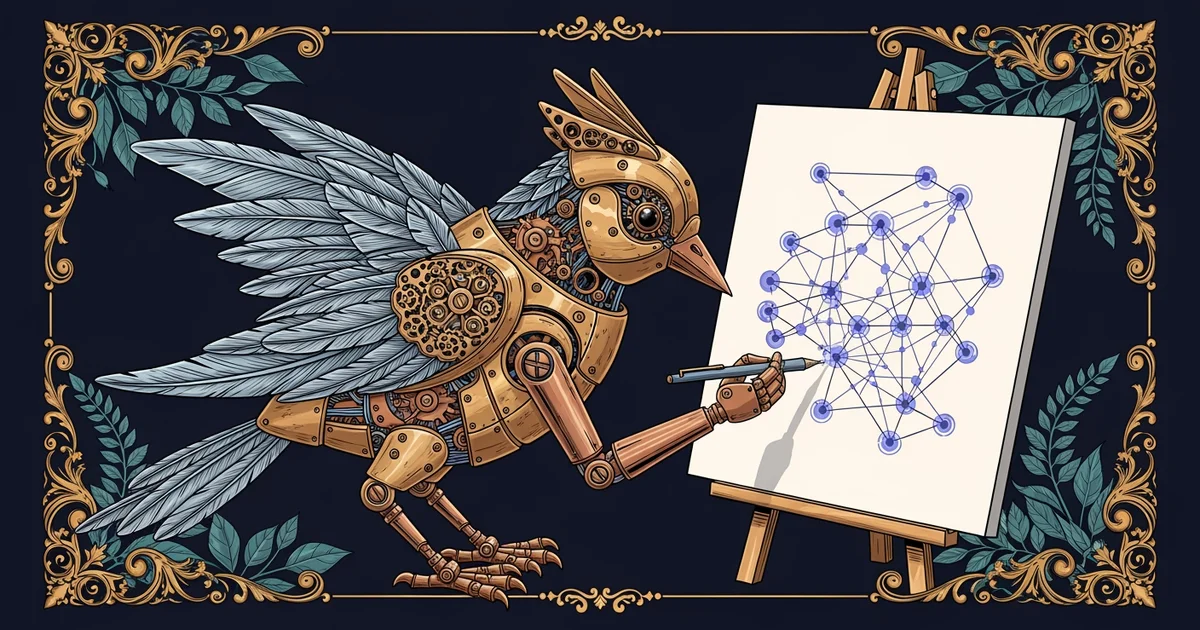
The Architecture of Competition
A Generative Adversarial Network, or GAN, relies on two separate neural networks that compete against each other. The first network is called the generator, and its primary job is to create new data. It starts by taking random noise and transforming it into something that resembles a specific set of training data. The second network is the discriminator, which acts as the judge in this digital process. It receives both real data from a set and fake data from the generator. The discriminator must decide if the input it receives is authentic or a synthetic forgery.
Key term: GAN — a machine learning framework where two neural networks contest with each other in a game to produce high-quality data.
These two systems learn by playing a zero-sum game that pushes both networks toward higher performance levels. If the discriminator becomes too good at spotting fakes, the generator must improve its output to stay competitive. If the generator becomes too skilled, the discriminator must refine its detection methods to keep up with the improvements. This cycle continues through thousands of iterations until the generator produces data that is nearly indistinguishable from the real samples. The entire system functions like an arms race where both sides constantly adapt to the tactics of their opponent.
The Training Process in Action
To understand how these networks function during training, consider the steps taken to generate realistic images. The training process follows a specific loop that allows the system to refine its internal logic over time. Both networks receive feedback based on the success or failure of their most recent attempts at their tasks.
- The generator creates a batch of images from random input noise to fool the system.
- The discriminator reviews both the real images and the fake images to verify their source.
- The system calculates a loss function to determine how well the discriminator performed its job.
- Both networks adjust their internal parameters to improve their accuracy for the next round of training.
This diagram shows the flow of data as the generator tries to create believable content. The discriminator acts as a gatekeeper that forces the generator to refine its output quality. When the discriminator correctly identifies a fake, the generator receives a penalty signal to change its approach. If the discriminator fails to identify a fake, the generator receives a reward for its successful deception. This constant feedback loop ensures that the system evolves without needing direct human intervention for every single step of the process. The complexity of the output grows as the networks learn to identify subtle patterns in the training data.
Generative Adversarial Networks use a competitive feedback loop between two neural networks to produce highly realistic synthetic data.
The next Station introduces Stochastic Processes in Design, which determines how random variables influence complex creative outputs.