
Locomotion Mechanics Analysis
Imagine a snake sliding across smooth desert sand while a lizard nearby scurries quickly over jagged rocks. These two animals use very different body designs to achieve the same goal of moving across the landscape. While the lizard relies on four sturdy limbs to push against the ground, the snake must generate force using its entire body length. Understanding how these creatures navigate their environments requires looking at the physics of friction, body mass, and muscle leverage. This analysis reveals how evolution solves the problem of movement without relying on a single universal blueprint for all species.
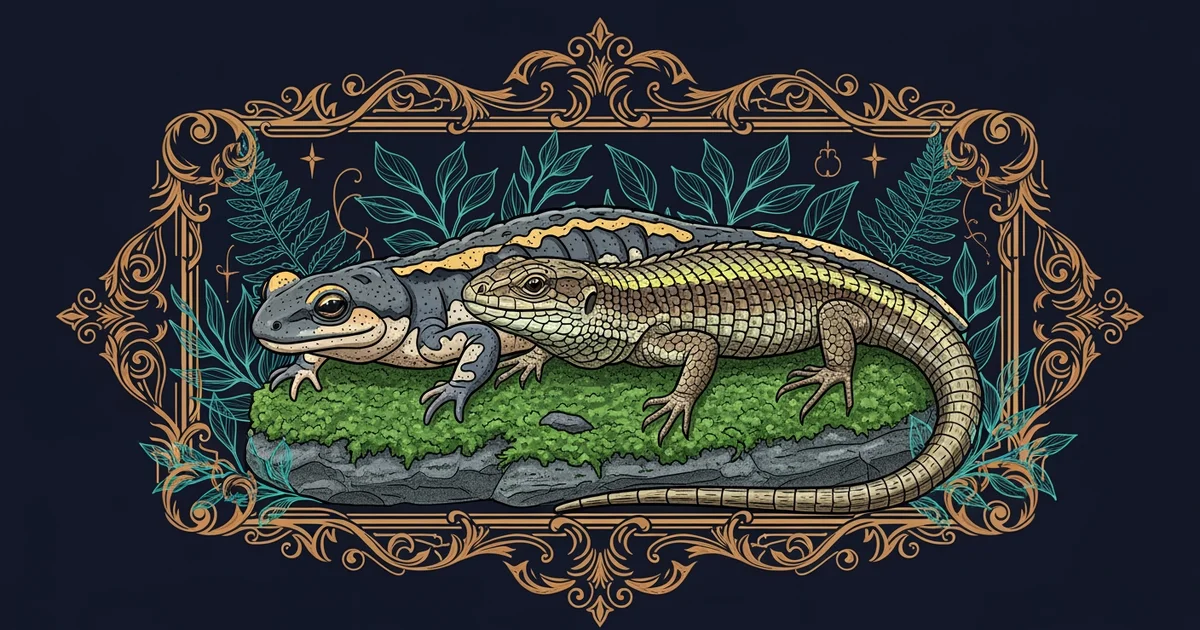
Mechanics of Limbed Locomotion
When we observe lizards or salamanders, we see a system of levers that move the body forward. These animals use their limbs to create points of contact with the ground, which allows them to push against the surface. Think of this like a person using oars to row a boat across a lake. The oars act as the limbs, and the water acts as the ground. By pushing the oars against the water, the rower creates a reaction force that moves the boat in the opposite direction. Reptiles and amphibians use their muscles to pull their limbs toward their bodies, creating a stable platform for movement. This method is highly efficient for climbing, digging, or sprinting across uneven terrain where grip is essential. The strength of the limb bones determines how much weight the animal can support while it moves.
Key term: Kinematics — the branch of mechanics that describes the motion of points, bodies, and systems without considering the forces that cause them to move.
Lizards often move using a sprawling gait, where the limbs extend out to the sides of the body. This creates a wide base of support that keeps the animal stable on rough or slippery surfaces. As the animal moves, it bends its spine in a side-to-side motion to increase the stride length of each limb. This lateral undulation of the spine works in harmony with the limb movements to maximize the distance covered with every step. The combination of flexible vertebrae and strong limb muscles allows these animals to adjust their posture quickly when they encounter obstacles in their path.
Strategies for Limbless Movement
When limbs are absent, animals must find other ways to interact with the environment to produce forward motion. Snakes use their scales to grip the ground and push their bodies against small irregularities in the surface. This process is similar to a person trying to climb a chimney by pressing their hands and feet against the walls. By creating tension between two points, the person can lift their body upward without a ladder. Snakes perform a similar feat by forming loops with their bodies to create multiple points of contact. They push against these points to propel themselves forward, which allows them to travel over sand, through grass, or even up trees.
Different species of snakes have evolved specific movement patterns to suit their unique habitats and body shapes:
- Lateral undulation involves the snake pushing its body against surface features like rocks or roots to move forward in a wave-like motion — this is the most common form of movement for many species.
- Concertina movement requires the snake to anchor its tail while extending the front of its body, then pulling the rear forward to repeat the process — this is effective for moving through narrow tunnels.
- Sidewinding allows the snake to lift parts of its body off the ground to minimize contact with hot sand — this specialized technique helps the animal move quickly across shifting surfaces.
These methods show how the absence of limbs is not a limitation but a shift in mechanical strategy. By using their entire body as a tool, limbless reptiles can navigate environments that would be difficult for animals with rigid limbs. The efficiency of this movement depends on the friction between the scales and the ground. If the surface is too smooth, the snake struggles to find enough grip to push itself forward. Evolution has provided these animals with specialized belly scales that provide the necessary traction for survival in diverse ecosystems.
Understanding how body structures interact with the environment allows animals to master diverse habitats through specialized movement mechanics.
But what does this look like in practice when we observe these animals foraging for food in the wild?
Want this with sources you can check?
Premium Learning Paths for Biological Sciences are researched against open-access libraries — PubMed, arXiv, government databases, and more — with their distinctive claims cited to real sources and independently checked.
See what Premium includes