
Neural Signaling
Bright sunlight hits your eyes each morning to trigger a complex chain of events inside your head. This process acts like a silent alarm clock that resets your internal rhythm for the entire day ahead. When photons strike the back of your eyes, they start a journey that controls your alertness and sleep. Understanding how this light travels is the first step toward mastering your own daily energy levels. You can think of this pathway as a high-speed fiber optic cable carrying data from the outside world to a central server.
The Retinal Pathway
Light enters the eye and travels through the lens to reach the back layer called the retina. Specialized cells known as photoreceptors capture these light waves and convert them into tiny electrical signals. While rods and cones help you see shapes and colors, a unique set of cells called intrinsically photosensitive retinal ganglion cells detects overall brightness. These cells do not help you see pictures but instead report the intensity of light to the brain. This specific signal tells your body whether it is time to be awake or time to wind down.
Key term: Photoreceptors — special cells in the eye that change light energy into electrical signals for the brain.
Once these cells catch the light, they send a message along a path called the retinohypothalamic tract. This bundle of nerves acts like a direct wire connecting the eye to the master clock in the brain. The signal travels quickly because the brain needs instant updates about the environment to keep your timing precise. Think of this signal like a stock market ticker tape that constantly updates the central office about changing conditions outside. Without this constant stream of data, the internal clock would drift out of sync with the actual rotation of the earth.
Processing the Signal
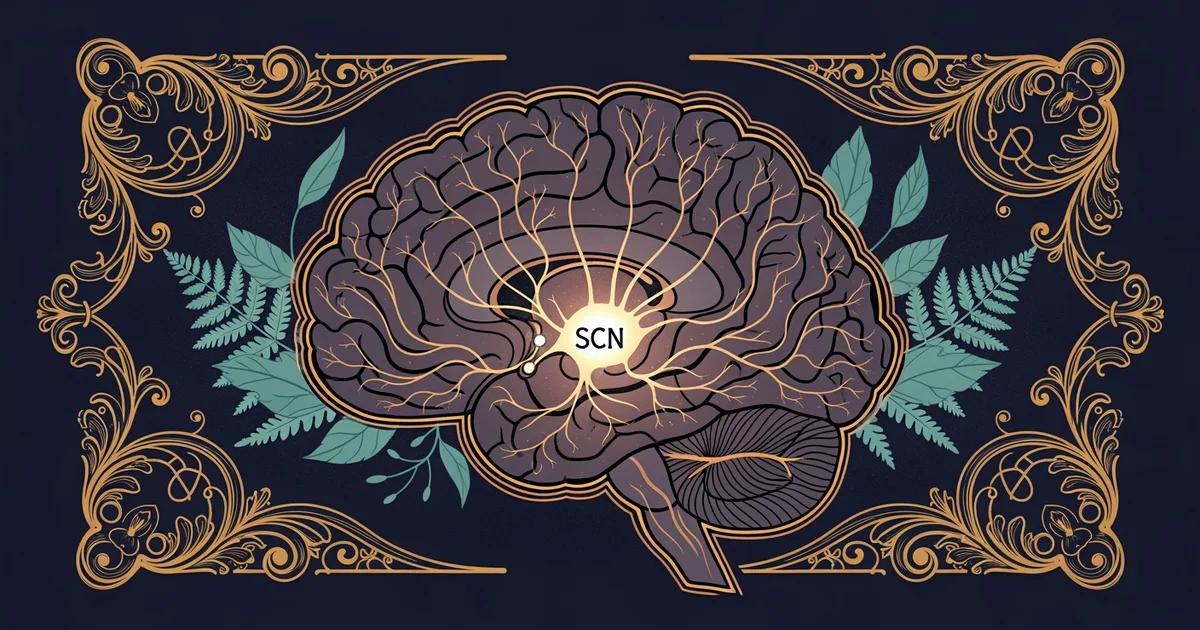
After the signal leaves the eye, it arrives at a tiny region called the suprachiasmatic nucleus. This structure serves as the main control center for your body's timing and daily biological functions. The cells inside this region process the incoming light data to adjust your hormone levels accordingly. When the signal indicates high light intensity, the brain suppresses the production of sleep chemicals to keep you alert. This timing mechanism ensures that your body remains active during the day and prepares for rest when the sun goes down.
| Signal Stage | Location | Primary Action | Result |
|---|---|---|---|
| Detection | Retina | Catch photons | Start signal |
| Transmission | Tract | Move current | Reach brain |
| Integration | Nucleus | Process data | Set rhythm |
The table above shows how the signal moves through your system to keep you on track. Each step relies on the previous one to ensure that the timing information remains accurate and reliable. If the transmission fails at any point, the brain loses its connection to the external day and night cycle. This loss of connection often leads to feelings of grogginess or confusion because the body does not know when to perform its basic tasks. Maintaining this neural pathway is essential for your long-term health and your daily mental performance.
The brain uses light signals from the eyes to adjust internal timing and maintain a steady rhythm for your daily health.
But what does it look like in practice when this signaling process gets disrupted by modern lifestyle choices?