
Hormonal Regulation
Dimming the lights in your living room acts as a signal for your brain to start preparing for sleep. This simple daily action triggers a complex physiological process that dictates your energy levels throughout the night and into the following morning.
The Production of Sleep Signals
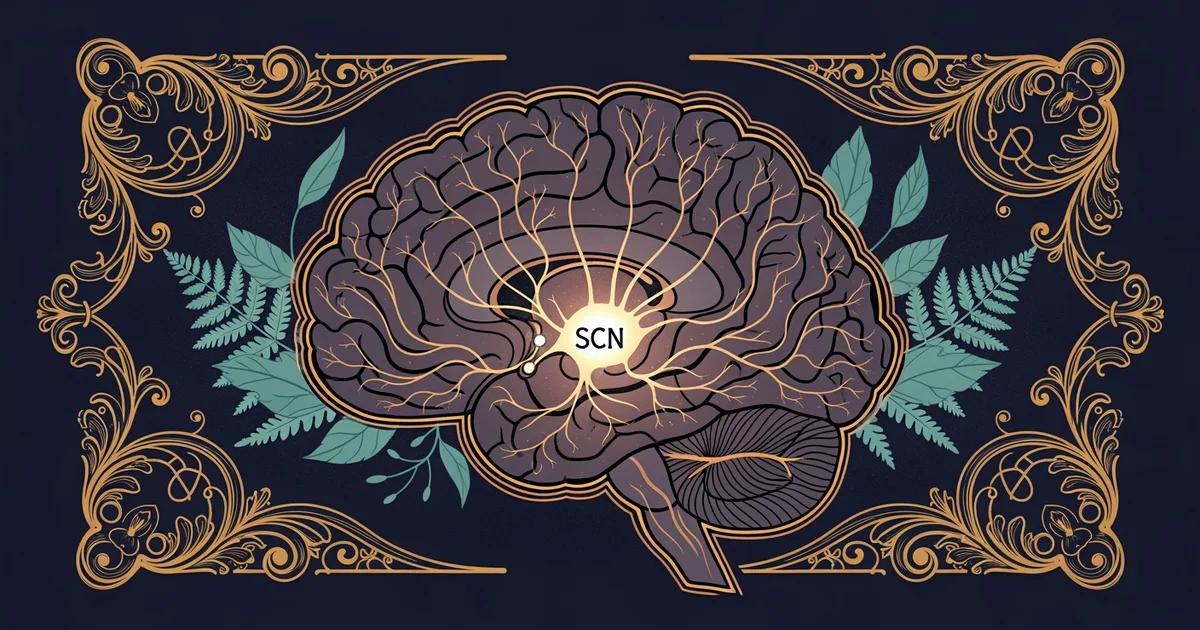
When darkness falls, the brain initiates a specific chemical pathway to help you wind down. The pineal gland receives messages from the optic nerve regarding the absence of light in your current environment. This gland begins to synthesize melatonin, which is a natural hormone that serves as an internal cue for sleep onset. Think of this process like a thermostat in a house that turns on the furnace when the outside temperature drops below a certain point. The hormone does not force you to fall asleep immediately, but it creates the ideal biological conditions for your body to transition into a restful state. Without this chemical nudge, the brain remains in a state of high alertness that makes falling asleep difficult.
Key term: Melatonin — a hormone produced by the pineal gland that signals to the body that it is time to prepare for sleep.
This production cycle relies heavily on the timing of light exposure throughout the day. If you remain in bright environments during the late evening, the pineal gland may delay the release of this sleep-promoting hormone. You might feel wide awake at midnight simply because your environment is still mimicking the visual cues of midday. This delay can shift your internal schedule and make waking up the next morning much harder than it should be. Maintaining a consistent darkness schedule allows the body to predict when it should begin its nightly wind-down process for optimal health.
Comparing Biological Signals
Effective regulation of your sleep-wake cycle requires a delicate balance between light intake and hormone secretion. The body uses these signals to differentiate between the active phase of the day and the restorative phase of the night. The following table outlines how different environmental factors influence your internal biological responses during the transition from day to evening hours.
| Environmental Factor | Biological Response | Effect on Energy | Timing Impact |
|---|---|---|---|
| Morning Sunlight | Cortisol spike | Increases alertness | Resets the clock |
| Afternoon Light | Stable production | Maintains focus | Sustains the day |
| Evening Darkness | Melatonin release | Promotes relaxation | Initiates sleep phase |
These responses show that your body is constantly reacting to external data to adjust its internal chemistry. When you understand these mechanisms, you can better manage your daily habits to support your natural rhythms. The interaction between light and hormone production is not just about sleep, as it also influences your mood and cognitive focus during the day. By controlling your light exposure, you essentially act as the manager of your own internal biological clock.
Consistency remains the most important factor when you are trying to regulate these hormonal shifts for better performance. If you expose yourself to artificial blue light late at night, you are effectively telling your brain that the day is still ongoing. This confusion forces the body to suppress the natural release of sleep hormones, which leads to fragmented rest and lower focus the next day. Small changes in your nightly routine, such as dimming overhead lights or using softer lamps, can make a significant difference in how quickly you fall asleep. Your body is a biological machine that thrives on predictability, and consistent signals lead to much more reliable results for your long-term health.
The timing of your light exposure directly dictates the release of hormones that manage your ability to fall asleep and wake up.
But what does this hormonal timing look like when we consider the complex way our bodies process food and energy throughout a full day?
Want this with sources you can check?
Premium Learning Paths for Biological Sciences are researched against open-access libraries — PubMed, arXiv, government databases, and more — with their distinctive claims cited to real sources and independently checked.
See what Premium includes