
Defining Chronobiology
Imagine waking up at the exact same time every morning without needing an alarm clock. Your body feels alert and ready to start the day before the sun even rises. This internal precision is not just luck but a result of complex biological systems working in sync. These systems manage your energy levels and focus throughout the day based on ancient rhythms.
The Mechanics of Biological Timing
Living things maintain internal clocks because the planet offers a predictable cycle of light and dark. This cycle dictates when plants open their leaves and when animals hunt or sleep for safety. By tracking these external changes, organisms prepare their internal functions to match the environment. Think of this like a store manager setting the lights and doors to open before customers arrive. If the manager waited until people were already outside, the store would lose precious time and sales. Similarly, your body prepares hormones and enzymes before you actually need them for food or activity. These internal mechanisms allow life to anticipate the future rather than just reacting to the present. This foresight is the fundamental reason why every living creature possesses some form of biological timing.
Key term: Chronobiology — the scientific study of internal biological rhythms that allow living organisms to anticipate environmental changes.
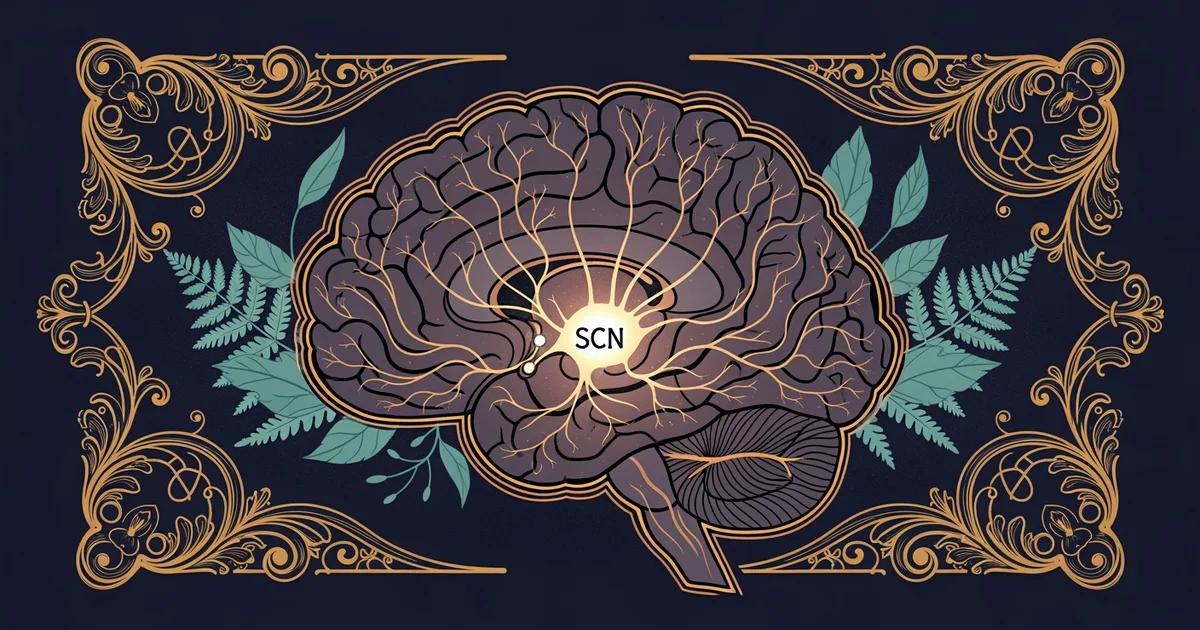
Most people experience these rhythms as a daily routine that feels natural and easy to follow. You likely feel hungry at specific times or notice your energy dipping in the late afternoon. These patterns are not random accidents but are controlled by a central clock in the brain. This master clock synchronizes smaller clocks located in almost every cell throughout your entire body. When these clocks align, your heart rate, blood pressure, and metabolism function at peak efficiency. When they fall out of sync, you may feel tired or struggle to focus on simple tasks. Maintaining this harmony is essential for long-term health and daily performance in our fast-paced modern world.
Why Internal Clocks Matter for Survival
Nature rewards organisms that can predict the arrival of food or the danger of predators. An animal that knows exactly when to hide before a predator wakes up has a better chance of survival. This evolutionary advantage explains why these clocks exist in everything from tiny bacteria to complex humans. If you ignore these signals, you essentially fight against millions of years of biological refinement and adaptation. Your body expects certain behaviors at certain times, such as eating during daylight and resting during darkness. When you ignore these expectations, you create a conflict between your biology and your lifestyle choices. This internal friction can lead to poor sleep, reduced mental clarity, and even long-term health challenges over time.
There are several key benefits that these internal timing mechanisms provide for all living creatures:
- Energy conservation occurs because the body lowers its metabolic rate when activity is not required, saving precious fuel for essential tasks.
- Optimal metabolic timing ensures that your digestive system is ready to process nutrients at the exact moments you typically consume your meals.
- Environmental synchronization allows the organism to align its internal temperature and hormone production with the predictable rising and setting of the sun.
Understanding these systems helps you make better decisions about when to work, eat, and sleep for maximum benefit. You are not just a collection of parts but a highly tuned machine that runs on a schedule. By learning how your internal clock operates, you gain the ability to work with your body instead of against it. This knowledge empowers you to improve your daily output and your overall quality of life significantly. By the end of this path, you will understand how to manage your biological timing to optimize your health and performance in a modern world.
Internal biological clocks act as a predictive system that aligns your body's essential functions with the rhythmic changes of the environment.
By the end of this path, you will understand how to manage your biological timing to optimize your health and performance in a modern world.